Unknown's avatar

About Dimitri @ The Last Piece of Cake

A greedy Greek boy who shares his passion for food and recipes on his blog, thelastpieceofcake.com

Folklore in the kitchen.

It has been one heck of a Christmas and believe me when I say that it is highly unlikely that anyone in the Northern Hemisphere was the recipient of more chutney than me.  I’m in the enviable position of needing more and more things to put the chutney on.  Spicy tomato chutney vies for my attention with rich, roasted flavours and a chilli kick. Pear and honey chutney jumps out with sweetness and subtlety.  What to do?  Decisions, decisions.  It gets tougher still:  good friends presented me with a chutney packing a real punch.  A chutney simply known as Folklore–  chunky, fruity and full of depth from the dark, yet noble real ale that it is made with.  It is formidable to say the least.

Cast into this fruit-filled arena a newcomer, an unknown from the cupboards of a kitchen in the north of England.  It was time to make my own chutney, one that I would be proud of, one that I could share with you and my family at Christmas.  I’m very happy with what I came up with.  It contains all of the flavours that I love at Christmas with a little chipotle for  fun and goes particularly well with my pork and apricot terrine.  Without further delay, I present to you my Christmas chutney and wish you all the very best for the New Year!

Christmas chutney

250ml red wine vinegar

230g soft light brown sugar

200ml cider vinegar

200g dried apricots (chopped)

1 onion (chopped)

1 chipotle chilli

3 cloves garlic (chopped)

2 tblspoons grated ginger

2 tspoons coriander seeds

zest and juice of 1 orange

1 tspoon salt

Before you begin this recipe, be aware that your kitchen will smell of vinegar from the moment you begin heating the mixture.  You may want to open the windows at the beginning.

Put everything except the coriander seeds into a pan and heat gently until the sugar has dissolved.  Meanwhile, heat the coriander seeds in a dry pan until they begin to crackle (but not burn) and then grind them using a pestle and mortar.  Add the powder to the chutney pan.

Bring the mixture to the boil and then simmer gently for an hour with the lid on.  Stir the chutney every now and again. Take the chutney off the heat when you are happy with the consistency.  Chunky and tender with not too much liquid is best.  Transfer to a glass jar to cool and thicken and remember to remove the chipotle.  Serve with your favourite meat and cheese.  This chutney is great with pork.  Liven up your sausage sandwiches or pair it with a pork pie!
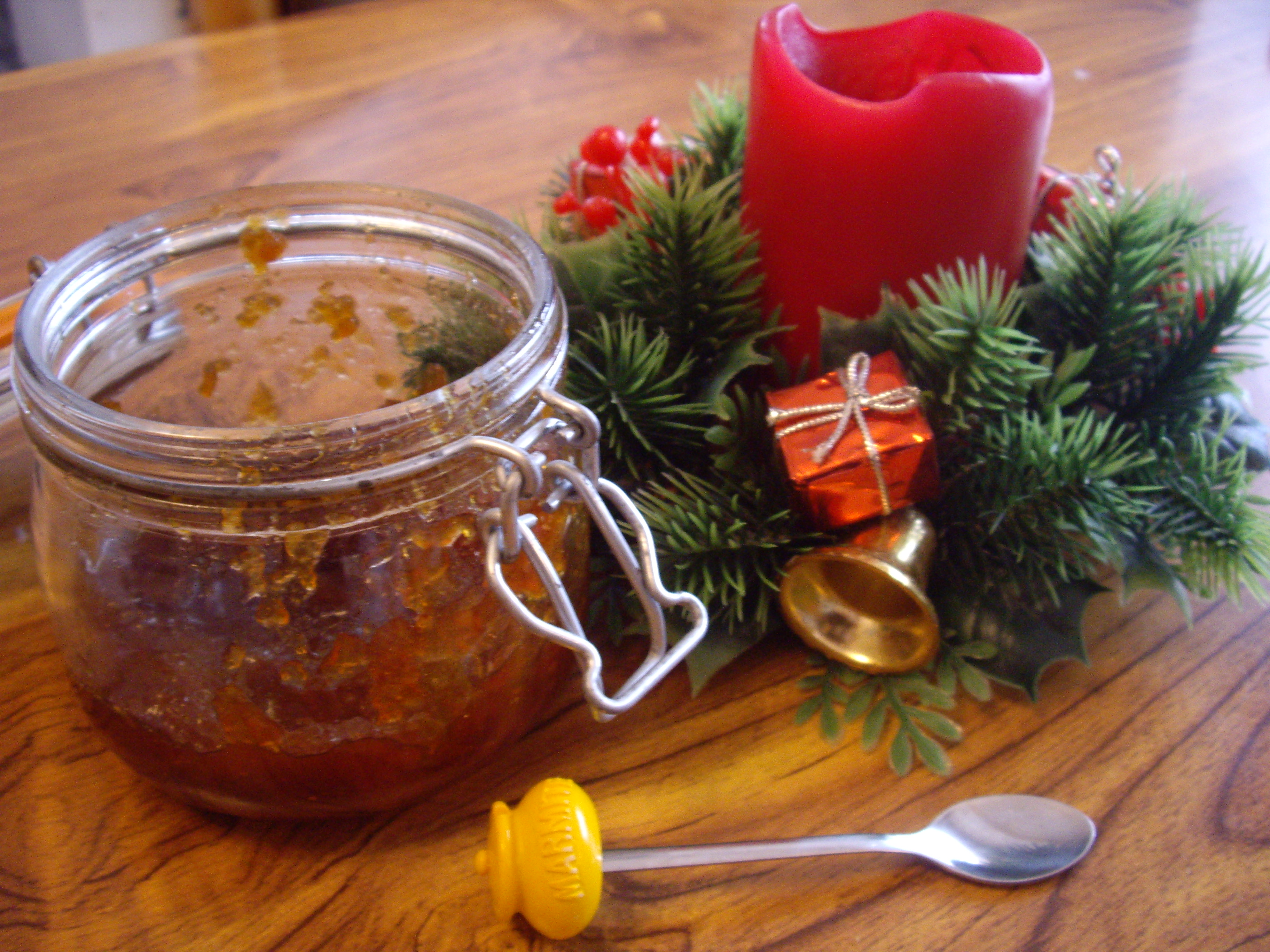
Oh, you expected a full jar nicely labelled? Sorry, this chutney is in constant use!

Use your loaf (tin).

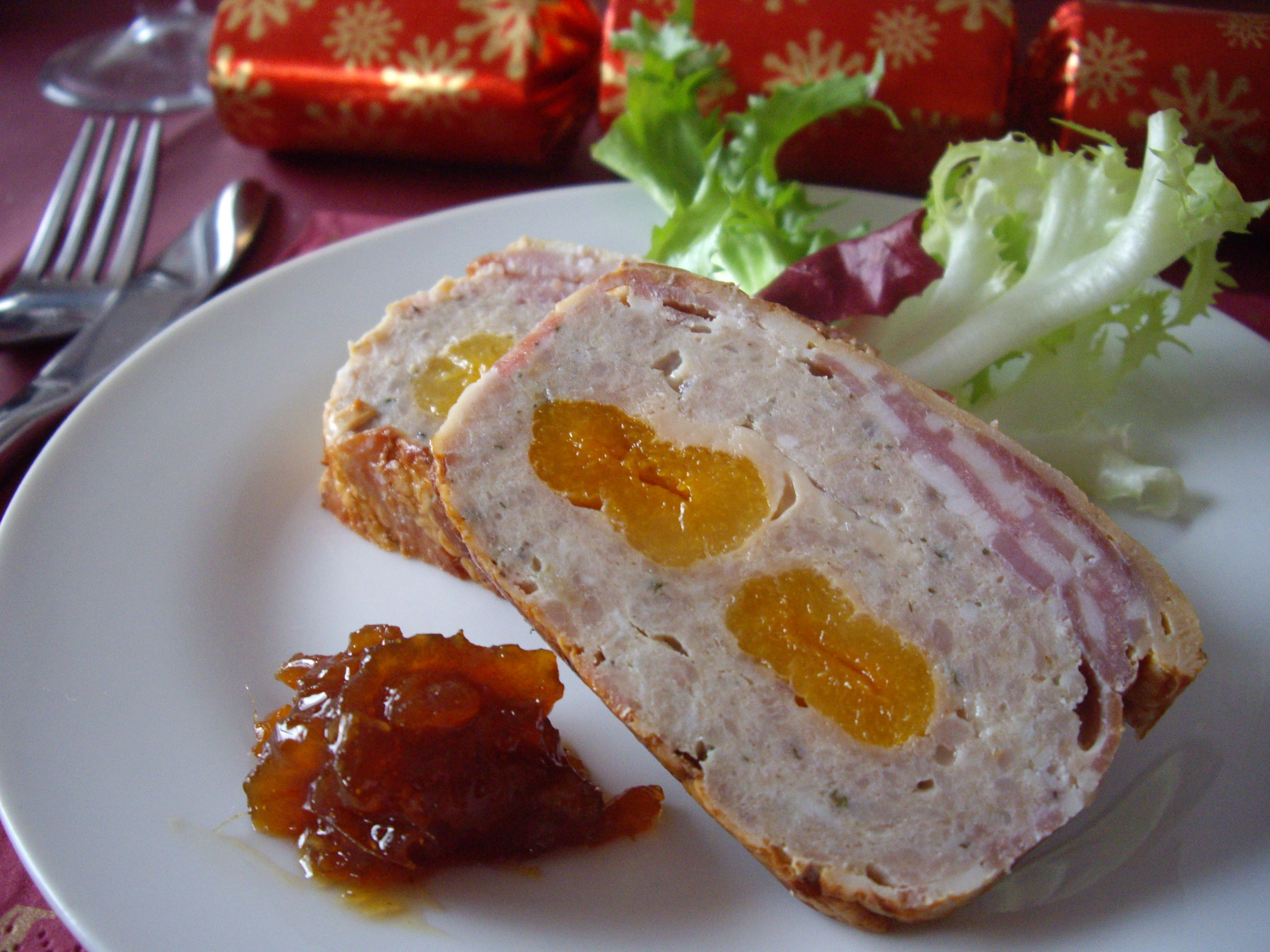
I trust your Christmas was filled with family, joy and inevitable chaos.  Mine too, hence the late post.  Despite the passing of the big day, I’m going to share the recipe for my very own pork and apricot terrine.  It’s perfect for a buffet and I make one (sometimes two) every Christmas.

You can easily adapt this recipe so that your own Christmas flavours are represented.

Pork & apricot terrine

500g sausage meat

14 slices streaky bacon

14 dried apricots

1 egg

2 tblspoons ground black pepper

1 tblspoon fresh thyme (chopped)

a pinch of ground allspice

a pinch of mace

a pinch of cinnamon

plenty of sea salt for seasoning to taste

olive oil

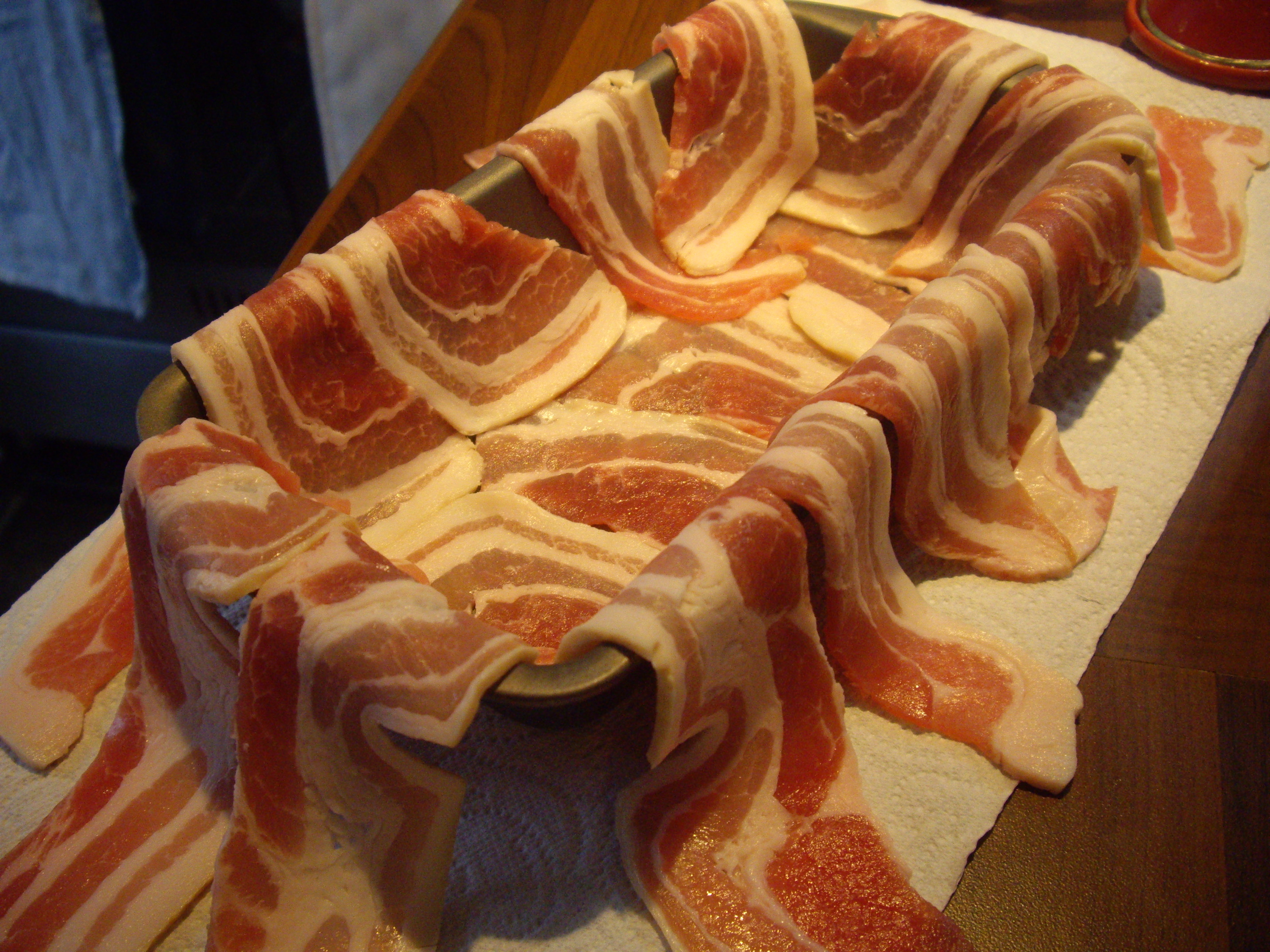
You have to admire the humble loaf tin.  So useful!  Line one with the bacon so that half of each slice is in the tin and the other half is draping over the sides.  The bacon keeps the terrine together as it cooks and will tighten up as water evaporates from it.

Grind plenty of black pepper into the lined tin.  Next, in a medium bowl, combine the remaining ingredients by mashing them together with the back of a fork.  A drop of olive oil into the mixture helps to keep it moist.  Tip half of the sausage mixture into the loaf tin and spread it evenly with the fork.  Gently press the apricots into the meat in pairs.  This will ensure that the apricots form part of each slice as you cut the terrine.

Top the apricots with the remaining sausage meat and once again, use the fork to even out the surface.  Now all you have to do is lift each bacon slice to cover the terrine and overlap them to form a parcel.  You can store the terrine as it is in the fridge until you are ready to cook it, or you can cook it immediately.

Place the terrine in a roasting tin and pour enough hot water into the surrounding tin to reach almost the top of the terrine.  Cover the loaf tin with foil and keep the edges sealed tightly.  Place in the middle of the oven at 180C for an hour.  The water surrounding the loaf tin will ensure even cooking and the foil will trap steam to help cook the meat without drying it out.

After an hour, remove the foil and continue to cook the terrine until the bacon on top is nicely done to your liking.  Using oven gloves, lift the loaf tin out of the water and drain of the excess fat rendered through cooking.  You may want to keep this fat and roast some potatoes in it later!  The meat will have shrunk away from the edges of the tin; this is normal.  Use a pair of tongs to turn the meat over.  Keep the meat in the little loaf tin and return it to the oven to brown and crisp up.

Once done, remove the meat and let it cool for quite some time.  When it is cooled, it will be firm and easy to slice.  Serve the terrine cold with a nice Christmas chutney.  You don’t have any Christmas chutney?  No problem.  Watch this space!


Making it mine.

I don’t always feel like blazing a trail.  Every now and again, it’s nice to follow in the footsteps of those who share a passion for similar things and are willing to create and share with the kind of gusto that I secretly hope I have.  My thanks, then, to Nigella Lawson for her commitment to artery-blocking sweet treats and flavours that pack a punch.

Not many Christmas’s ago, the plucky, self-acclaimed domestic goddess shared her recipe for Christmas rocky road bars.  I enjoyed making them and have adapted them each year since to suit my own taste.  This year, I’ve been most happy with the addition of glace ginger.  I knew it would come in handy at some point!  The following recipe is extremely simple, in the same way that the no bake chocolate cake was.  A great one to make with children and so quick to put together.  With only a day or so before the big day, you could easily empty your cupboard of fun stuff and combine it in syrup, butter and chocolate!

Festive rocky road bars (Adapted from Nigella Lawson)

300g dark chocolate

170g butter

125g milk chocolate

100g glace cherrries

100g glace ginger

100g amaretti biscuits

100g almonds

100g marsh mallows

4 tblspoons golden syrup

1 tspoon vanilla extract

Melt the butter and chocolate in a deep saucepan over a low heat.  Stir in the vanilla and the syrup.  Pour in the almonds, cherries and ginger and stir until coated.  Next, crush the biscuits, but not too finely, and mix into the chocolate.

Take the pan off the heat and stir in the marsh mallows.  Tip the mixture into a tin lined with baking paper and refrigerate for a couple of hours until set.  Cut into bars and dust with icing sugar.  Sneak into the kitchen at every opportunity to stuff one into your mouth.

Tomorrow, my sausage and apricot terrine!

Soup to start…

Coco doesn't mind the cold weather.

Brrrrr!  It hasn’t been too warm recently, but that only serves to fuel my efforts in the kitchen in a bid to warm our bones and lift our spirits.  My love of soup is no secret, but with the festive season in full and jolly motion, I couldn’t possibly post a meagre soup recipe and wish you all the best.  So, I’ll begin with soup and then move onto some more substantial treats like my tasty terrine and some festive rocky road bars!  Yay!

I’m sure that if you’re a fan of soup, you’ll have your own winter favourite that springs to mind when thinking of a dark and icy evening.  My perfect winter warmer is French onion soup, but it hasn’t always been that way.

The very first time I tried French onion soup was not in France.  Sadly, no charming tale will follow of soup made by a gentleman in a small French village as the snow gently buried our broken-down car.  Instead, a chilly evening in Hong Kong (if such a thing existed), as I gingerly pushed open the door to Jimmy’s Kitchen.  The restaurant was dimly lit and the dark wood and old photographs added to the atmosphere.  I ordered the onion soup and delighted in the deep, warming flavours.  I’ve never looked back.  Winter night?  Onion soup.

Serving the soup is fun if you add a chunk of French bread and melt cheese over everything.  This time, I resisted.  The following recipe is simple and guaranteed to banish the winter chills.

French onion soup

3 red onions (sliced)

3 white/brown onions (sliced)

1 pint beef stock

1 glass red wine

butter

sea salt

pepper

Begin by gently frying the onions in a little butter on the lowest heat.  The onions should cook very gently and caramelize.  This takes a while and when done, the onions will be brown, but not burned.  If the onions begin to burn, turn the heat down and add tiny amounts of water or stock.

Next, transfer the onions to the pot that you intend to cook the soup in (if they aren’t in it already).  Pour in the stock and the wine and boil rapidly for a minute or two.  Reduce the heat and simmer gently for at least fifteen minutes (and up to thirty).  Season the soup to taste.  I sometimes add sprigs of thyme at this stage for a final flavour.  I told you it was simple!  As long as you cook the onions for long enough, you’ll have a dark soup with bags of flavour.  You can easily make it with fewer onions too.  I like a lot.  God bless the onion!

Tomorrow, festive rocky road bars (with pics, I promise)!

All’s fair in love and cheesecake.

Which wonders of the food world make you salivate at the mere thought of them?  For me, it’s a good pizza, a slice of bougatsa, Japanese curry, Cajun shrimp, souvlaki or egg and chips- probably all served on separate plates, but not necessarily.

For my favourite little food guinea pig (N), it’s likely that white chocolate cheesecake will make the list.  Alongside blondies, white chocolate cheesecake is one of my few creations that provokes such an excited reaction from her.  I always have white chocolate and cream cheese on hand in case there’s trouble at the ranch.

Perhaps there are wives or husbands across the world right now, preparing a favourite meal for their spouse: a tasty cushion to soften the blow of some bad news, an apology for dessert.  Perhaps there are families gathered around their go-to dish for particular events.  Does anyone else have an “In case of emergency eat this” dish?

I’m happy to report that I’ve not needed to break the glass on the emergency white chocolate for a long time.  In fact, it’s been over a year since the cake has made an appearance (and even then, it was to brighten up a rainy weekend).  Time then to share with you that most precious of recipes: the recipe that puts smiles on me and my dearest no matter what.  Her smile for the cheesecake, mine for her smile.  “For goodness sake!  He’s supposed to be writing about  food!  What’s is he playing at?”  Relax, here’s the oh-so easy recipe.  Enjoy.

White chocolate cheesecake

300g cream cheese

200g white chocolate

175g digestive biscuits

100g caster sugar

120g butter (melted)

60ml double cream

1 tspoon cinnamon

1 tspoon vanilla extract

Begin by crushing the biscuits and stirring in the melted butter and cinnamon.  Press the biscuits into the base of an eight inch round cake tin and place in the fridge for at least thirty minutes.

Next, use an electric whisk to combine all of the sugar, vanilla, cream cheese and cream in a bowl.  Melt the white chocolate gently over a pan of hot water and blend into the cream cheese mixture.

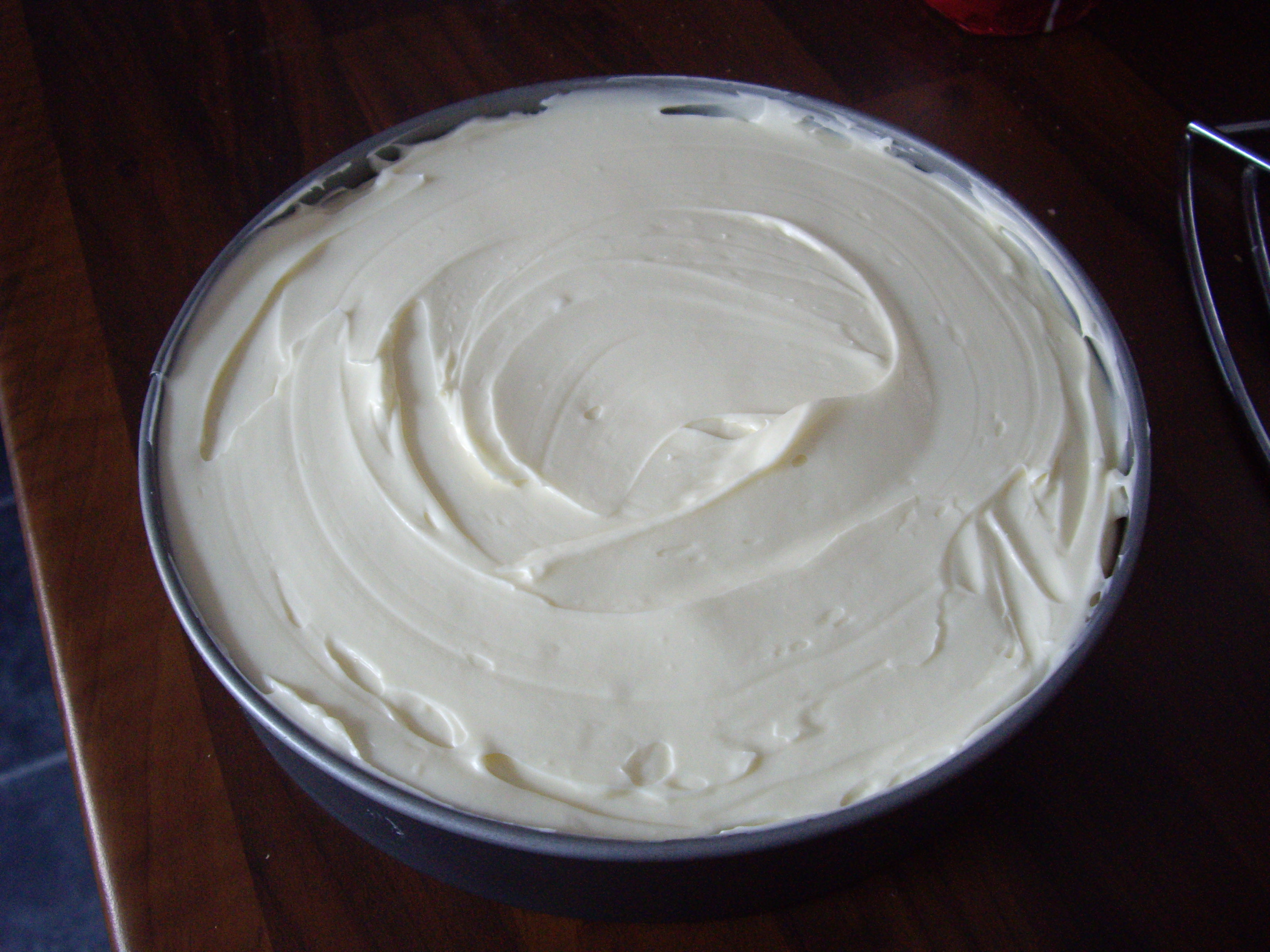
Tip the mixture onto the biscuit base and spread evenly using a plastic spatula.  Place the cake in the fridge for an hour or more to make it firm and easier to cut.  You can now decorate it in any way you wish, but I’ll be honest, I never get as far as that stage.

Pastitsio vs Stifado

“You can’t beat a good stifado” he said, pointing at me and grinning mischievously.  Years later, surrounded by the aroma of tomato and beef infused with cinnamon, I’m tempted to say that the maths teacher was right.

At high school, I had a perfectly friendly maths teacher who did his best to get his pupils to where they should be, but every now and again, a colleague of his would stride into the classroom and on his way in or out, would strike up some friendly banter with me about the merits of various Greek dishes.  His opening line was always the same: “Had any stifado recently?”

Having guessed that my origins were Greek from my name, this chirpy maths teacher (Mr. J) enjoyed sharing his memories of beef stifado and seemed to like hearing about my own affections for pastitsio: a dish that my mum made and that I still make now with a mixture of love and utter glee.  Note to self: must update the recipe to include my own bechamel sauce which has been perfected recently.

The maths teacher and I would continue our faux argument over which dish was champion until it was time for him to let the lesson continue and for me to focus once more on things more likely to help me gain qualifications.  I wished that the stifado enthusiast was my teacher, but he wasn’t and so our conversations rarely moved beyond sauce and seasoning.

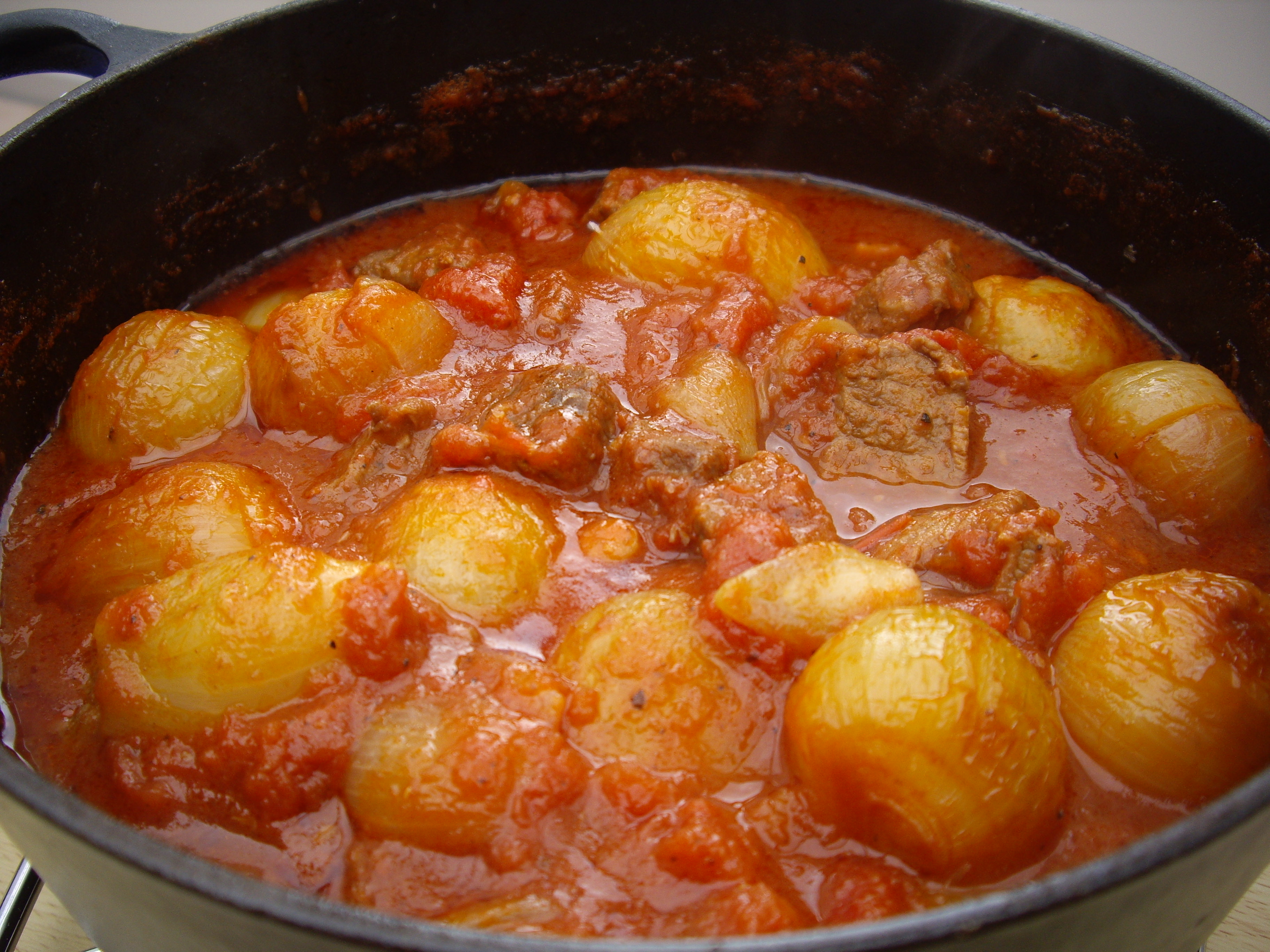
Stifado is essentially pieces of meat cooked slowly in tomatoes and red wine with baby onions.  I like beef stifado, but it can also be made with rabbit.  It’s a wonderfully warming dish with a rich sauce and satisfying flavour.  I wonder what Mr. J would make of my version of the classic Greek dish?  I dare say he’d prefer it to my first attempts at high school maths.

Beef stifado

500g best braising beef

500g baby onions

1 glass red wine

2 tins chopped tomatoes

half cup olive oil

4 cloves garlic

2 tspoons ground cinnamon

1 tblspoon dried oregano

If you want to marinate the beef in red wine and garlic overnight, be my guest.  It does help.  If you don’t have that kinda time or forethought, then begin by shallow frying the peeled baby onions until golden.  Remove from the oil and set aside.

Next, brown the beef in the onion oil and add the cinnamon and oregano.  Pour in the chopped tomatoes and bring to the boil.  Add the red wine and boil for a minute or so to burn off the alcohol.  Drop some cloves of garlic into the pot.  I usually give them a quick bash with the back of my knife so that they release their flavour during cooking.

Simmer with the lid on for an hour.  Keep the heat low enough not to burn everything in the pot, but just high enough to keep everything on a gentle simmer.

After an hour, add as much black pepper as you dare and plenty of salt to taste.  Tip the onions in and cook uncovered for at least another hour until the beef is very tender and the sauce thick.  If the sauce reduces too much, just top up with water or stock.  Eventually, you’ll end up with a nice thick sauce, melt-in-your-mouth beef and beautifully flavoured baby onions.

Stifado goes well with potatoes and I sometimes have a fresh cabbage salad on the side because it has quite a rich sauce.  You’ll certainly need plenty of your favourite bread to mop it all up!

No bake chocolate cake.

I can only apologise for the delay in food action this week.  Preparation for my baby boy’s baptism have given me little or no time to get close to my beloved oven.

There’s no way that I can resist making something, so it was a real guilty treat to knock together my no bake chocolate.  Essentially, it is nothing more than melted chocolate and some tasty bits, but it does the trick.

No oven, no special techniques or weird ingredients.  Just plenty of chocolate and a gorgeous cake in no time at all.  Been promising to try a recipe out, but not had the time?  Perhaps this is the one for you.  Enjoy!

No bake chocolate cake

250g dark chocolate

230g butter

200g chocolate digestive biscuits

60g demerara sugar

4 tblspoons black coffee

100g pecans

100g glace cherries

100g mini marshmallows

half tspoon vanilla extract

Melt the butter, chocolate and sugar together in a pan and then stir in the vanilla extract.  Crush the biscuits, but not too finely.  Plenty of biscuit chunks is what you’re looking for.  (Plain digestives work just fine, but I’ll take any excuse to get more chocolate into the recipe!)

Stir the biscuits and cherries and pecans into the chocolate.  Add the marshmallows last so that they don’t melt into the chocolate, but keep their shape.

Tip the mixture into a lined loaf tin and place in the fridge until it is set.  Cut thin slices and serve with coffee.


I will raise you as my own.

The English have big love for pies.  Sweet or savoury, pies are well represented on English plates.  I’ve made fruit pies sprinkled with sugar and I’ve made pies filled with meat and gravy, but I’ve never attempted a pork pie.  The classic buffet and picnic pie of choice for the English has always been something of a mystery to me.  Probably made by wisened old artisans whose knowledge of pie-making has been inherited and protected with the kind of secrecy alluded to in low-brow Templar fiction.  Or are they mass-produced vehicles for the less palatable parts of a pig?  It was time to learn something new and in the process, perhaps make something special.

First of all, what’s the appeal of a good pork pie?  The pastry is special.  A golden brown with an attractive glaze and a crumbly promise of savoury comfort.  Okay, too poetic, but pork pies are made with a hot water crust that contains lard.  This makes it tasty and gives it a wonderful texture upon baking.  The pastry is pressed against the sides of whatever it is baked in to form walls.  The walls get higher until they are ready to be filled.  Raising the pastry in this way produces what is known as a hand-raised pie.

Secondly, pork pies are good when they’re hot and even better when they’re cold.  Pickles, chutneys and relishes are fantastic with pork pies and the fact that their contents doesn’t ooze out makes them a perfect travel companion.

I looked at a few online recipes for the pastry before I attempted to make it.  In the end, I chose to use Delia Smith’s recipe for the pastry.  The contents of the pie, however, were a very successful little experiment and as I type, I’m finding it very difficult to contain my pride.  If you want a treat, go and buy a Melton Mowbray pork pie.  If you want to experience the joy of creating something tasty and beautiful (in the most rustic of ways), then it’s about time you made your very own hand-raised pork pie.

Hand-raised sausage & bacon pies

(Pastry adapted from Delia Smith)

225g strong white flour

75g lard

25ml milk

pinch of salt

black pepper

1 egg yolk (to glaze)

(For the filling)

275g sausage meat

6 slices smoked bacon

150g smoked ham

1 tspoon fish sauce

half tspoon ground allspice

half tspoon ground mace

black pepper

pinch of salt

It’s best to make the filling first so that you can work quickly with the pastry before it dries out.

I fried the bacon until crispy and then mixed it with the rest of the ingredients until well combined.  If you want to check the seasoning, you can fry a little of the filling and taste it once cooked.

As in Delia’s recipe for the pastry, begin by heating the milk and lard in a pan.  Add 25ml of water and bring everything just to the boil.  Pour it into a bowl containing the flour and use a wooden spoon to combine everything.

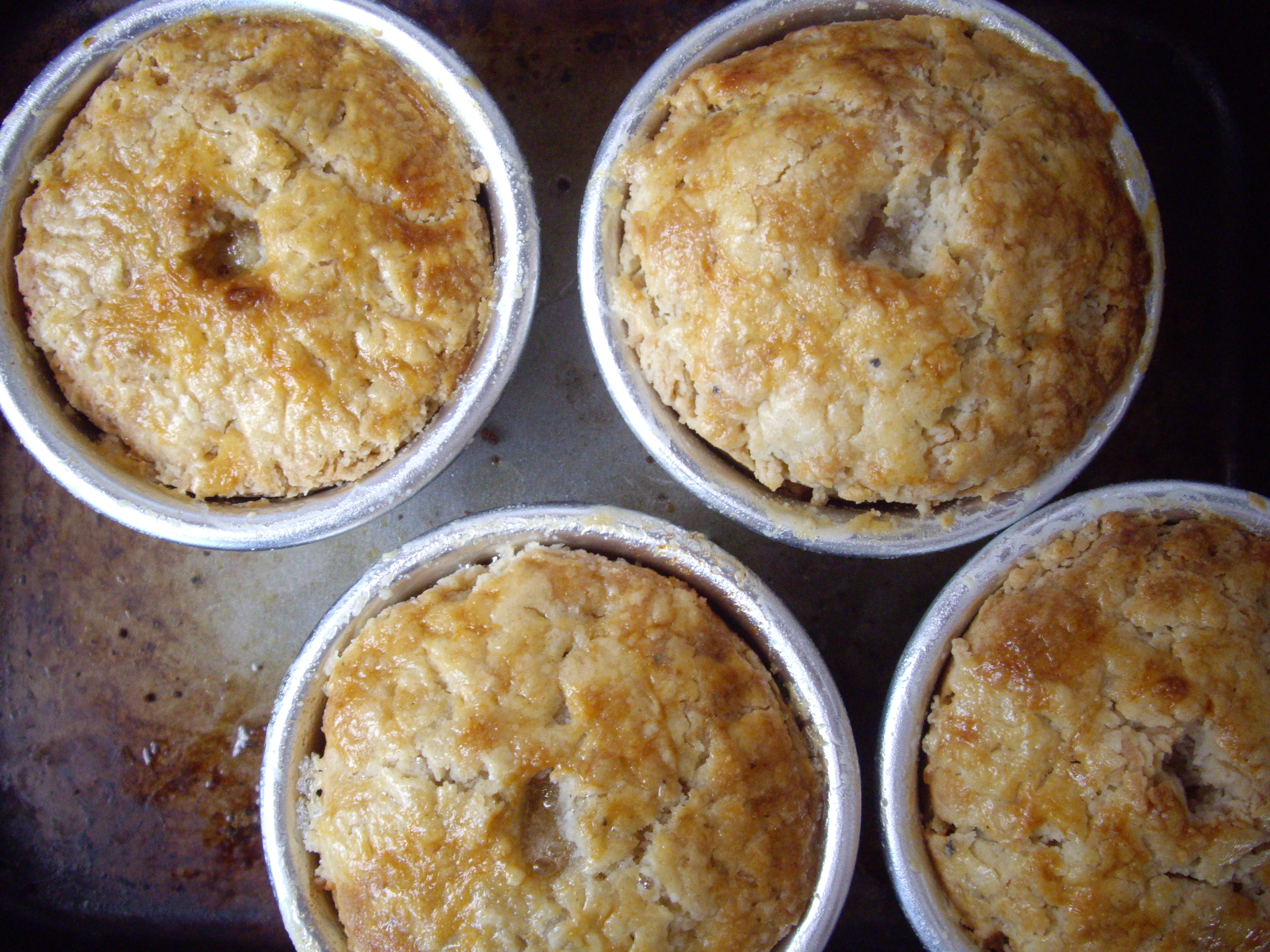
Now it’s time to build up the pastry crust ready to be filled.  I used little stainless steel pudding moulds.  I pressed a little ball of pastry into the base and began adding more pastry and forming the sides of the pie.  When I got to the top, I overlapped the edges and filled the pies with the filling, making sure that I pressed down firmly using the back of a spoon.  Once level, I folded the edges of the pastry in and made a little hole for steam to escape through during baking.

I used the beaten egg yolk to glaze the top of each pie before sliding them into the oven at 180C for half an hour.  I then carefully removed the pies from the molds, glazed the sides with more yolk and put them back on a baking tray to finish in the oven for another twenty-five minutes.  This made the crust golden and firm.

The pie filling looks quite pink in the photographs, but this is just the bacon.  I can assure you that the pies were firm and fully cooked through.  Their spicing was just right and the crumbly pastry was delicious.  I ate mine with lots of Branston pickle.  One thing’s for sure, I’ll be making these at Christmas and serving them with lots of chutney, cheese and some strong red wine.  Then in the spring, they’ll be coming with me to the beach and the park for some picnic action.  All in all, I’m glad I tried my hand at making these.  You will be too!

Greek food tastes best the day after it’s made: The two-day tray.

Thank goodness that mum learned to cook lots of Greek dishes while in Crete.  It allowed me and my brother to keep our links with Greece during a confusing and rather chilly time.  Moving to England was strange and the comfort of familiar flavours was important.

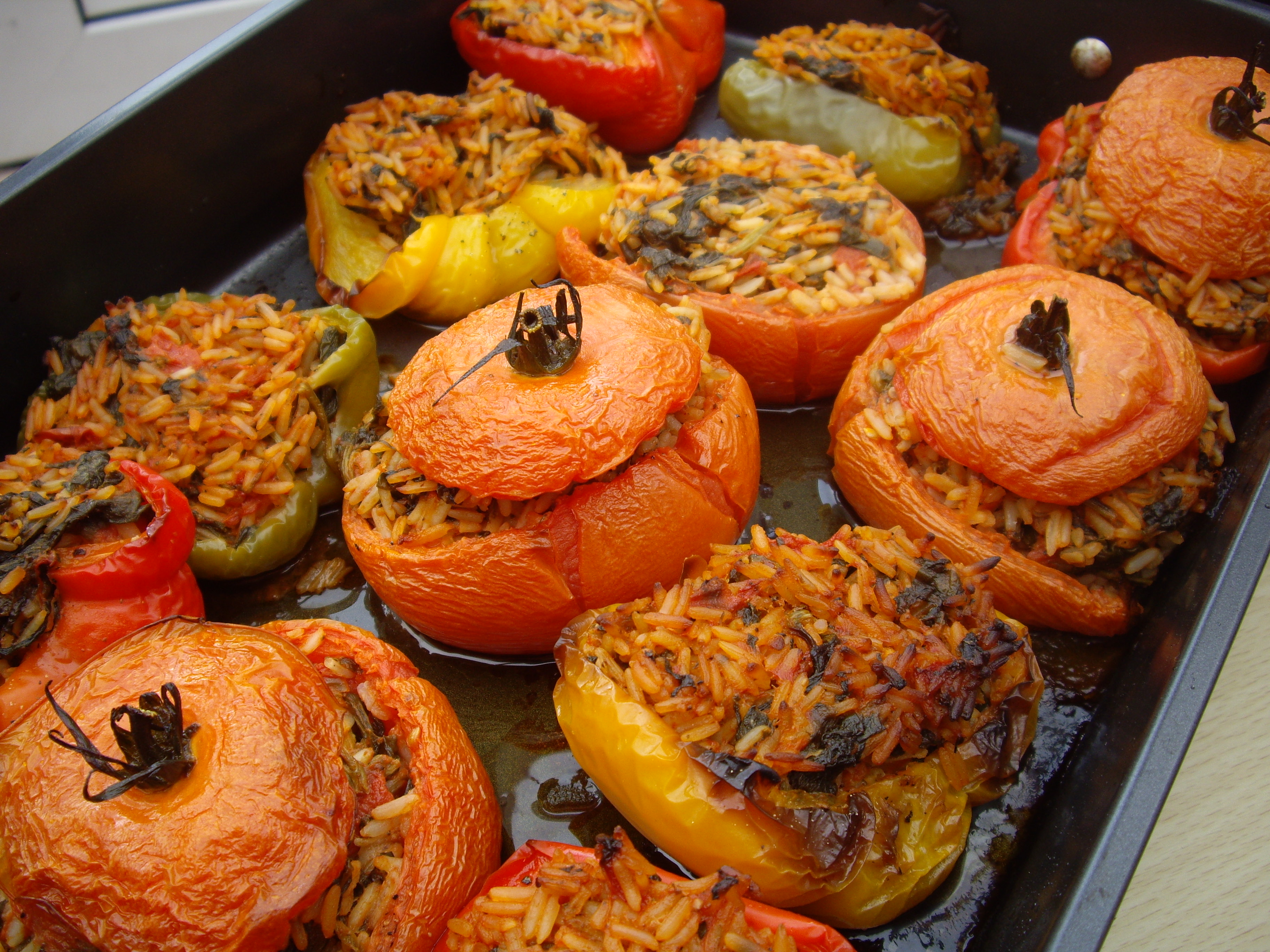
One of the dishes that has graced mum’s dinner table over the years is stuffed vegetables.  Mum would spend time preparing the mixture of beef and rice with herbs and then cook a range of peppers and tomatoes in a roasting tin until the aromas filled the house with the memory of warmer days.

As children, the variety was a big draw and the colours brought excitement to the table.  For once, vegetables were the centre of the meal.  We didn’t care what mum served the stuffed vegetables with.  Often we’d have them on their own or with a salad.  They are quite filling and cheap to make; another reason why mum made them regularly.  The best part though, was knowing that we’d be eating them the next day too.  Mum always made what I came to regard as a “two-day tray”.  God bless you, mum!

Something I’ve enjoyed making is spanakorizo, which is a mixture of rice, spinach and tomatoes.  It makes a lovely side dish, but I decided to use the spanakorizo to stuff some tomatoes and peppers and roast them in the oven like mum used to.  We ate the vegetables over two days and really enjoyed them.  I hope you do too!

Spanakorizo-stuffed vegetables

4 peppers (halved)

3 beef tomatoes

350g long grain rice

350g spinach

1 tin chopped tomatoes

chicken stock

1 tblspoon dried oregano

1 tblspoon fresh mint (chopped)

1 tbslpoon tomato puree

olive oil

sea salt

pepper

Cook the rice in the chicken stock until it has absorbed the liquid and cooked through.  Add the chopped tomatoes and oregano and bring to the boil.  Add the spinach and tomato puree and simmer until the liquid has reduced.

At this point, I usually pour in a good glug of olive oil and stir it through the rice.  I also season the rice with sea salt to taste.  Grind plenty of black pepper over the rice and mix in.  Finally, stir in the chopped fresh mint.  Now you’re ready to stuff the vegetables.

Cut the peppers in half and drizzle some oil in each half before adding spoonfuls of the spanakorizo to them.  Cut a lid off each of the beef tomatoes and scoop out the seeds and flesh.  Drizzle some oil inside and then fill with the spanakorizo.

Roast the vegetables in the middle of the oven at 160C until the rice is beginning to brown and go crispy on top.  I love olive oil, so I usually drizzle all of the vegetables with more oil and season them again before they roast.  As the juices in the tin collect, baste the vegetables every now and again.  This keeps the flavours in your vegetables.

If you want the rice on top of the tomatoes to crisp up, just take the lids off for a while in the oven.

Caramel monster cake.

The first Halloween at The Last Piece of Cake!  I’ve been determined to make something special for Halloween, but I promise to spare you the awful puns and themed vocabulary.

The marketing monsters have really cranked Halloween up in England and not a shop is without a splash of orange, a little purple or a cobweb in the window.  Yes, I think America would be proud of the influence it has had on Halloween festivities here.  Soon, however, the plastic spiders, the chattering skulls and glow-in-the-dark witch’s fingers will be packed away and quickly replaced with snowy scenes and glitter-covered dangly decorations.

Swiftly then, let’s get onto the good stuff!  As I’ve mentioned before, my mum is The Queen of Puddings.  It’s not an official title and to be fair, it’s likely that somewhere in the world, there is a genuine Queen of Puddings who would become rather flustered if she were to hear me bestowing the title on my mum in a food blog.  The fact is, my mum lives for everything that is sweet in this world and far from simply gorging on it, she also creates a fair amount of sugary awesomeness for her adoring family.

This week, mum made some very chocolatey brownies to welcome us back from a trip to London.  Yesterday, she visited with the rest of the brownies because there were too many for her to get through.  You can see how hard my life is, can’t you?

My childhood was one long list of amazing birthday cakes and scrumptious bakes as mum enjoyed being creative and serving up beautiful, warm, joy fresh from the oven.  Birthday cakes ranged from wonderfully iced squares with our name and age to WWF (as it was then) wrestling rings complete with sugar laces for ropes and marshmallows for turnbuckles.  Whatever me and my brother were into at that time, mum would find a way to make a cake from that theme.  She did it with so much love and it has always touched me that she used her creativity in such a wonderful way.  It’s something I’d like to do for my family and I’ve got a feeling that this caramel monster cake will be making an appearance beyond Halloween.

I’d spotted the red food colouring weeks ago during a re-shuffle in my ingredient cupboard.  I knew there and then that the cake I’d make for Halloween would be bright red, but I didn’t know what kind of cake it would be.  Where to start?  Well, red velvet cake is pretty simple to make, but doesn’t really taste of anything.  I wanted a cake that was tasty and not just a novelty because of how it was decorated.  My mum’s cakes always tasted fantastic, regardless of the theme.  Why make a cake that isn’t full of flavour?

For some reason, the internet is awash with recipes involving caramel and salt combinations recently.  No complaints from me, but I’m not sure where the trend has come from.  I love caramel and I thought it might be cool to cover the cake with caramel frosting.  Now that would be tasty!  Plenty of salt crystals would keep me happy and stop me from reaching for the peanut butter (which I think would be a brilliant base for some frosting).  I didn’t want a peanut flavour, I wanted pure caramel.  It was an experiment from start to finish, but I’m happy with this little monster.  Maybe I can scare away the trick-or-treaters with it!

Caramel monster cake

200g self-raising flour

200g butter (softened)

100g dark muscovado sugar

100g demerara sugar

4 eggs

2 tblspoons milk

1 tblspoon ground cinnamon

2 tspoons red food colouring

1 tspoon baking powder

(For the frosting)

1 tin (390g) sweetened condensed milk

100g demerara sugar

60g dark muscovado sugar

2 tblspoons butter

2 tspoons red food colouring

1 tspoon vanilla extract

The cake itself is similar to a basic sponge cake.  The method is certainly the same.  Begin with a bowl of the flour and baking powder and cinnamon.  Add the eggs, milk and sugar and beat until smooth with an electric hand mixer.  Add the food colouring.  You may need to add more to get a really good red.

Divide the mixture between two 20cm sandwich tins lined with baking paper.  Bake in the centre of the oven at 180C for about twenty-five minutes.  The middle should be springy and a skewer should come out clean when the cakes are done.  Cool them on a wire rack until ready to decorate.

To make the frosting, heat all of the ingredients in a small pan until the butter has melted and the sugar dissolved.  Stir constantly to avoid burning the pan.  Make sure the heat is not too high so as to prevent the sugar from burning.  I was careless and burned the bottom of the pan- what can I say?  I’m a genius.

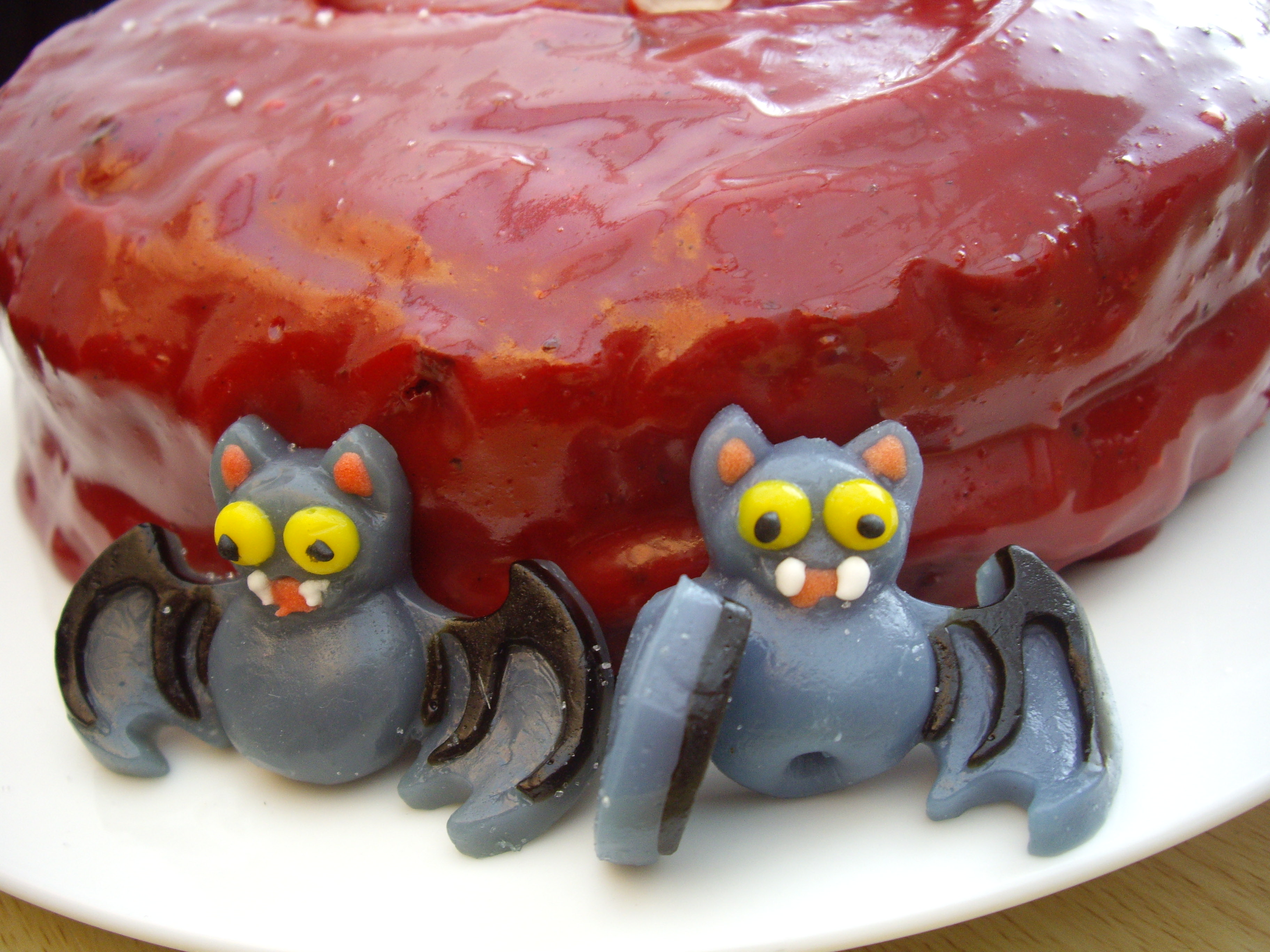
Bring the caramel to the boil and cook for two minutes.  Take it off the heat and continue to stir as it cools.  At this point, I sprinkled lots of sea salt into the pan for extra texture and the lovely saltiness that complements caramel so well.  The caramel will begin to set so you need to start working with it while it is still warm, but not too hot.  I frosted between the two cakes to make a sandwich and then coated the entire cake once assembled.  All that was left to do was to add the mouth and eyes.  I used mini marshmallows for the teeth and found some Halloween jelly sweets for the eyes.  A final sprinkle of sea salt, and the caramel monster cake was complete.

How to ruin a low GI recipe.

I made a lovely low GI recipe and what was the first thing I did?  Buried everything under sugar.  Well done, Dimitri.

The glycaemic index is a ranking of carbohydrates in different foods and how quickly they are absorbed into the bloodstream.  Foods that release their energy slowly usually have a rank of fifty-five or less and are therefore low GI foods.  Apart from a lower calorie intake, the benefits of eating low GI foods is that your body will have energy for longer periods and a reduced risk of health problems.  Sounds good, doesn’t it?

As I’ve said before, I’m not a breakfast person, but this recipe has changed that…at least until the batter runs out.  I found a really cool low GI recipe for hotcakes and thought it would be fun to try one morning.  Of course, the original recipe lasted all of three minutes.  Well, this blog isn’t called The Last Piece of Fruit!  I wouldn’t have any readers if it was.  Truth is, I have a responsibility to you and to my taste buds and I take that responsibility very seriously.  Tasty food and nothing less.

I’ll certainly be writing about a true low GI recipe in the next few weeks, but until then, why not start a Saturday morning with a batch of these fruity hotcakes?  A jolly name for a jolly breakfast.

Fruity hotcakes

800g Greek yoghurt

280g wholemeal self-raising flour

250g frozen forest fruits

130g apricot jam

3 egg whites

1 egg yolk

 1 tspoon vanilla extract

Using an electric mixer, beat the egg whites until soft and fluffy.  In another bowl, mix the flour, yoghurt, fruit, vanilla, jam and the egg yolk.  Once combined, fold in the egg whites.

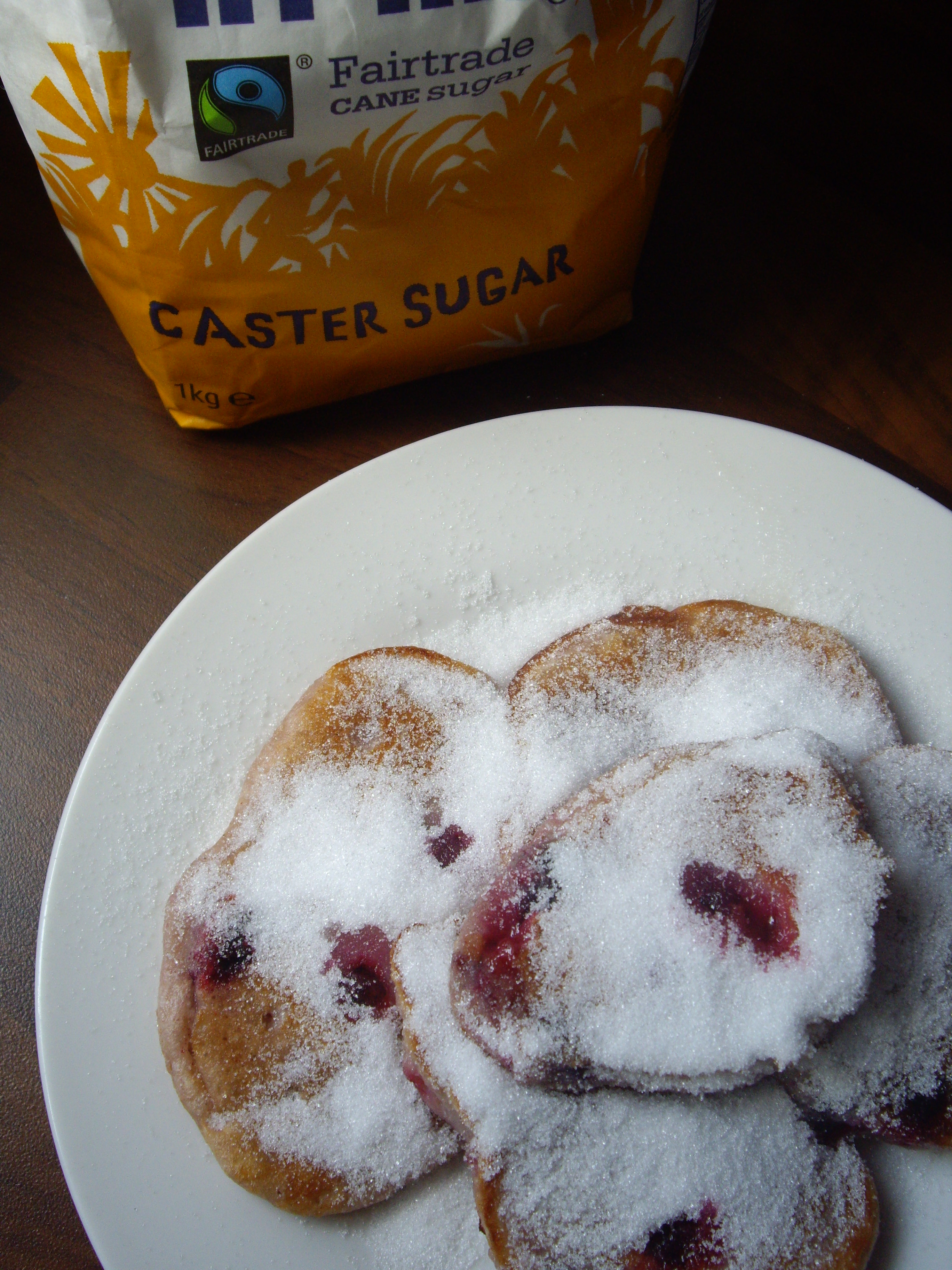
To cook the hotcakes, heat a little vegetable oil in a pan and drop spoonfuls of the batter in.  Let the hotcakes fry gently and turn them over as they begin to brown.  To completely ruin the low GI qualities of the hotcakes, sprinkle with lots of caster sugar and serve hot.

Deeply spiced, deeply missed.

I’ve spent all day wishing that I was back in bed.  I’m not well and all I’ve thought about at work is being snug in my cosy bed.  Arriving home, my wife told me to go straight to bed and get some rest.  Now I don’t want to go to bed.  It’s too early.  There’s only one thing that I want and I can’t have it, so I want it more than anything else!

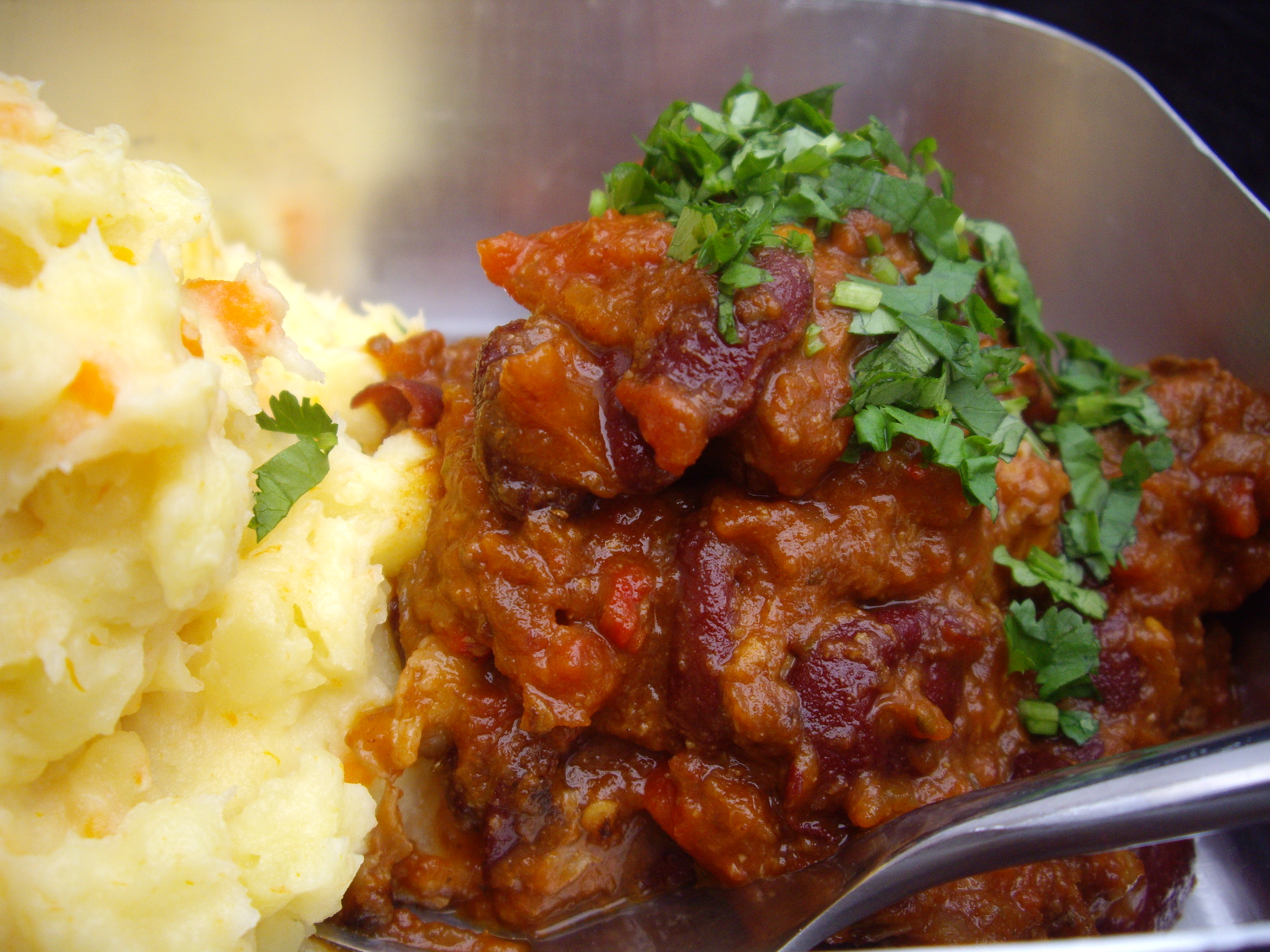
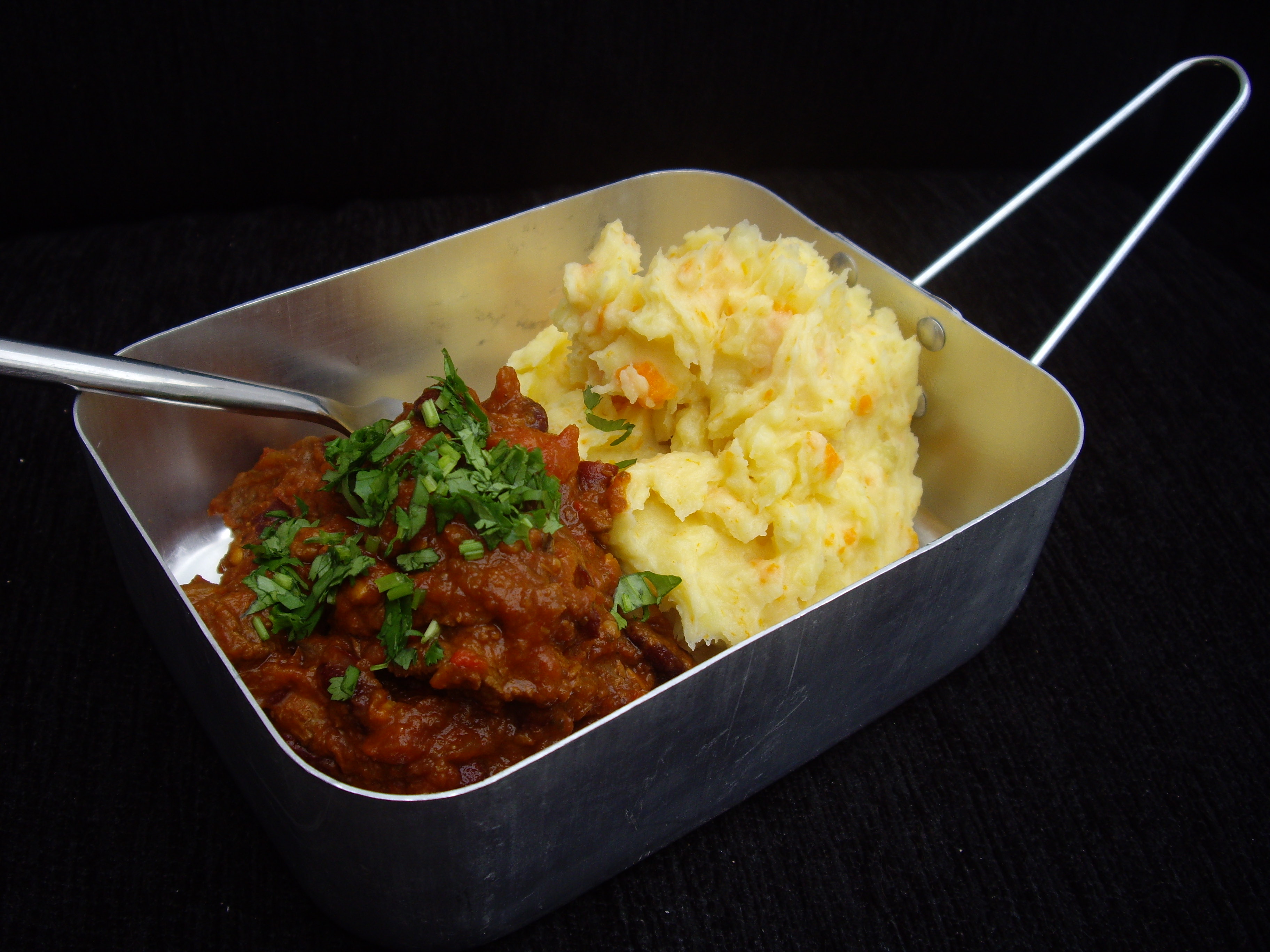
Chilli con carne.  No wait, come back!  I’m not talking about any old chilli con carne.  I’m not talking about the minced-up slop that gets dolloped onto baked potatoes, or the stuff that comes in tins and might as well be dog food.  What my ailing physical shell is crying out for is some deeply spiced, meaty chilli with plenty of satisfying mouthfuls of flavour and comfort.  What I want is my beloved chunky chilli con carne, and sadly, there’s no chance of me having that wish fulfilled.

I made the chilli last week and thoroughly enjoyed it because I don’t make it often.  There are some things that I can make quickly, but chilli con carne is not one of them.  I really take my time, slow things right down to snail pace.  We’re talking seriously slow food.

The night before I make it, I cover the beef in spices and garlic and put it in the fridge.  The next day, I pile up the flavour and give the chilli lots of depth and a long, slow cook.  By the time it’s ready to eat, the meat is tender, full of flavour and so good that it can be served alone.  As it is, my preference is to pair it with some beautifully buttery mashed potato.  This is by no means a traditional partner to chilli con carne, but it’s something I remember from my childhood and it’s such a perfect way to make sure that every last drop of chilli is mopped up.  The chilli and mash combo is so comforting and hearty that it’s no wonder my immune system is calling out for it.  A shame then, that all I have is the memory of last week and a recipe for my ultimate chilli con carne that may just knock your socks off.

My ultimate chunky chilli con carne

400g stewing beef (roughly chopped)

1 tin chopped tomatoes (400g)

1 tin red kidney bins (400g)

1 red onion (sliced)

1 Spanish onion (sliced)

3 cloves garlic

4 tblspoons dried oregano

2 tblspoons chilli flakes

2 chipotle chillis

1 red chilli (sliced)

2 tblspoons coriander seeds

2 tblspoons cumin seeds

2 tblspoons cumin powder

1 bunch fresh coriander

1 tblspoon tomato puree

1 tspoon cinnamon

olive oil

sea salt

Put the beef into a plastic container ready to go into the fridge.  Add the cinnamon, two tablespoons of oregano, two tablespoons of dried chilli flakes, two roughly chopped garlic cloves and a teaspoon of cumin powder.  Mix thoroughly and then seal the container.  Leave in the fridge overnight if possible.  A few hours will do if you don’t have the time.

The next day, let the meat come back to room temperature before cooking it.  Dry fry the cumin and coriander seeds in a hot pan, but don’t allow them to burn.  Toasting them will release their flavour.  Grind them to a powder and set aside.

Brown the beef in a couple of tablespoons of olive oil and then add both of the onions.  Tip the ground coriander and cumin seeds into the pot, add another clove of garlic and stir.  Allow the onions to soften and cook through without burning.  Add another couple of tablespoons of oregano and the red chilli.

Next tip the tomatoes in and stir.  Allow to cook for five or six minutes and then stir in the kidney beans and the tomato puree.  Add another teaspoon of cumin powder.  Finally, pour in just enough water to cover the beef and add the chipotles.  Make sure that everything is well mixed together.  Cover and cook on a low heat for an hour or so, stirring every now and again so that nothing sticks or burns.

The beef needs to cook slowly and become soft.  Once it is tender, take the lid off the pan and cook the chilli for another hour to allow the sauce to reduce and thicken.  If you’re into coriander like I am, chop a bunch and stir it into the chilli just before serving.  Don’t forget to remove the chipotles before tucking in.

A frangipane recipe for tough guys.

The stereotypical hunk: tall, dark, handsome and able to make a darn good frangipane.  I know what you’re thinking and the answer is no, I don’t quite fit the bill.  I’m short and my brother reckons he got all the looks.  Still, I rarely burn in the sun and my frangipane tartlets are as good as any you’ll find in these parts.  I can pretty much guarantee that last statement since I live in a part of the world that does not tolerate anything that is less than truly manly.  You’ll be surprised to learn that frangipane tartlets don’t rank very highly in the manly charts.  I know, I was as surprised as you.

A pint of bitter, a minced beef and onion pie, rugby and some sporadic sexism clock up way more in the manly stakes.  Funny then, that the top chefs in the world and some of the top pastry chefs are male.  There has always been a disparity between those who cook for a living and those who cook at home.  The former may be a cook with a modest repertoire and a list of previous employers longer than the menu of his current traditional English pub, or he might be a professional line cook with a good grounding in French cuisine and hopes of becoming his own boss one day.  Both at different ends of the spectrum, but equally understood as being dignified in their own way.

Then there’s the home cook.  Views on the male food enthusiast have begun to change over the last ten years.  For many, dad’s role was to carve meat and, if the weather permitted, cook a variety of sausages and burgers rather badly outside while the neighbours called the fire brigade.  The idea of men in the kitchen has been a source of mirth among housewives for decades.  Men not knowing their way around a kitchen, using every pot, pan and plate in the house to make even the simplest of meals and the dreadful offerings of heart-felt dross that grace tables every Valentine’s Day.  Sadly, some of these stereotypes have a firm historical truth.  In 2011, however, things are very different indeed.

As women have found their independence, so too have men found it necessary to fend for themselves in the kitchen.  Without writing an essay on social history, I think it’s safe to say that men and women have spent the last forty years re-defining their roles and the kitchen is one area that has changed dramatically.  It’s acceptable for men to cook for the family, women who lack any form of culinary knowledge are not embarrassed to say so, television chefs continue to make home-cooking a popular past time among young men and televised cookery competitions have no doubt inspired countless adolescents to pursue a career in a professional kitchen.

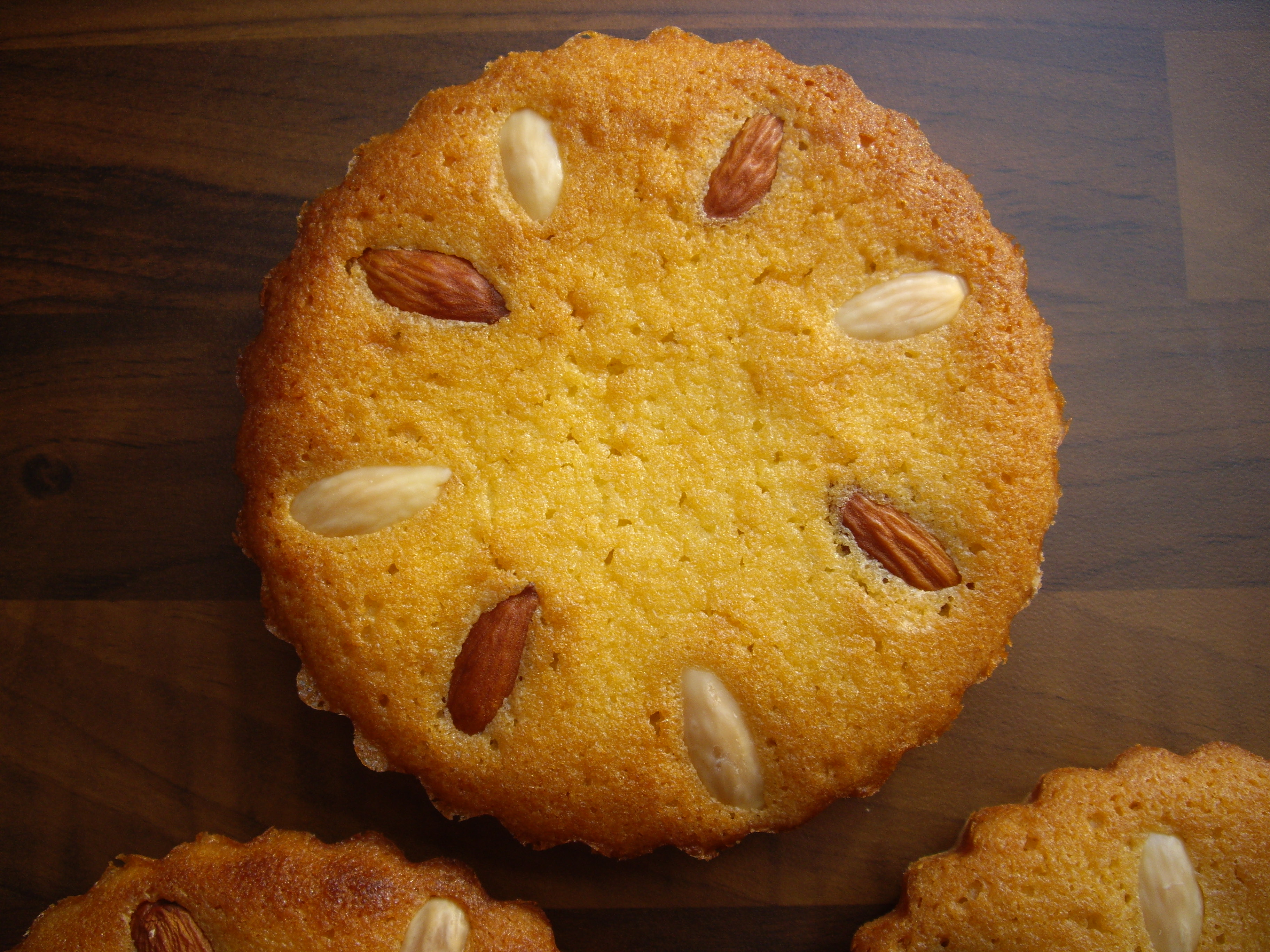
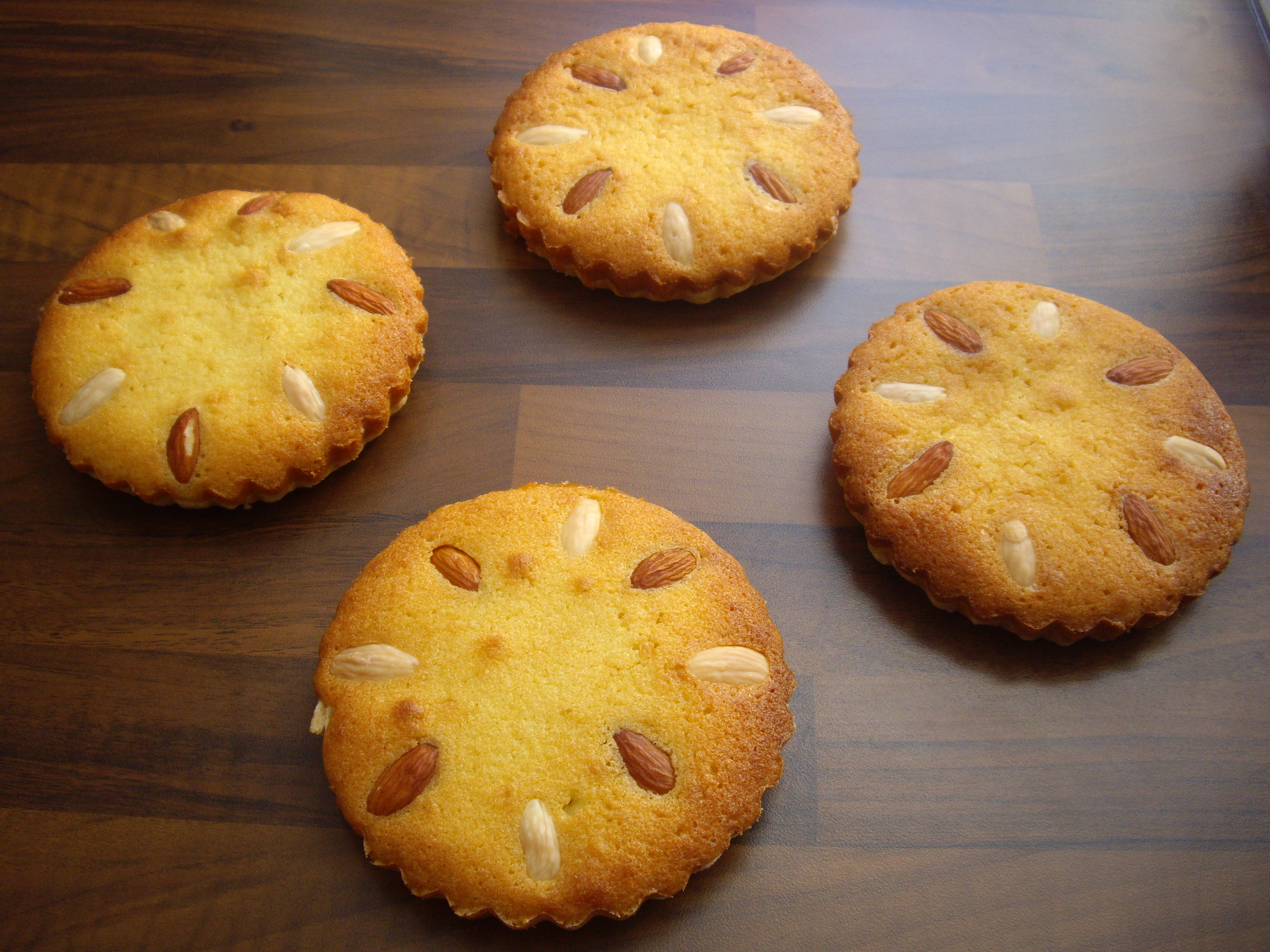
No matter how much things have changed, there is one thing that I suspect will not.  Your average bloke will not be boasting to the lads about his latest frangipane tartlet recipe over a pint of lager and a packet of pork scratchings.  Even with a wife and baby boy, a decent amount of self-esteem and the ability to eat my own body-weight in pizza, I feel slightly self-conscious about posting a recipe for apricot and almond frangipane tartlets.  They’re a delicate balance of flavour and texture and I think it’s impossible to make them at all manly.  Anyone for mangipanes?  Frangimans?  No, I didn’t think so.  Therefore, if my friends ask me what I’ve been making, I’ll just say something like beef brisket.

Almond and apricot frangipane tartlerts

250g shortcrust pastry

1 jar apricot jam

125g butter

125g icing sugar

125g ground almonds

40g plain flour

1 tspoon almond extract

whole almonds for decoration

Roll out the pastry and cut to the size of your tartlet trays.  Line each tray with the pastry and prick the base with a fork all over.  Trim the edges and place in the fridge until you’ve made the frangipane mixture.

To make the mixture, beat the butter and sugar together until fluffy and light.  Add the eggs and beat until well combined.  Next, add the almond extract and the ground almonds.  Beat again and finally add the flour.  Beat one last time and don’t worry about the mixture having small lumps in it.

Spread jam over the base of the pastry and then pour the frangipane mixture over the top.  Don’t fill the tartlet tins to the top because the mixture will puff up in the oven and will ooze over the sides.  Leave at least a centimetre between the mixture and the top of the pastry case.  Decorate with flaked or whole almonds.

Bake in the oven at 200C for between twenty and thirty minutes.  The top will be golden and firm when the tartlets are done.  Lower the heat if the tartlets begin to burn and make sure that you leave them to cool before serving.  The jam will be extremely hot.

Where’s the treacle?

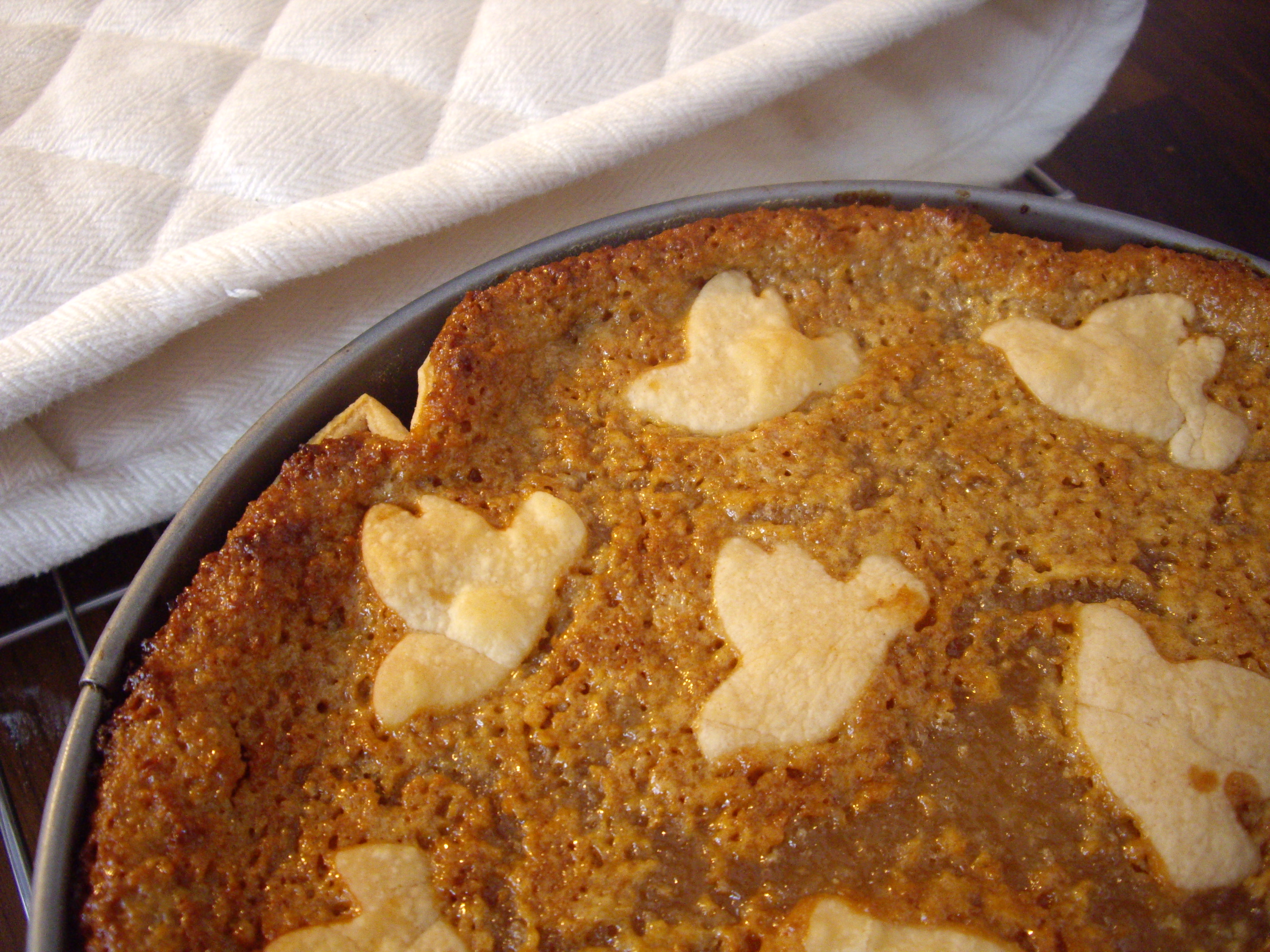
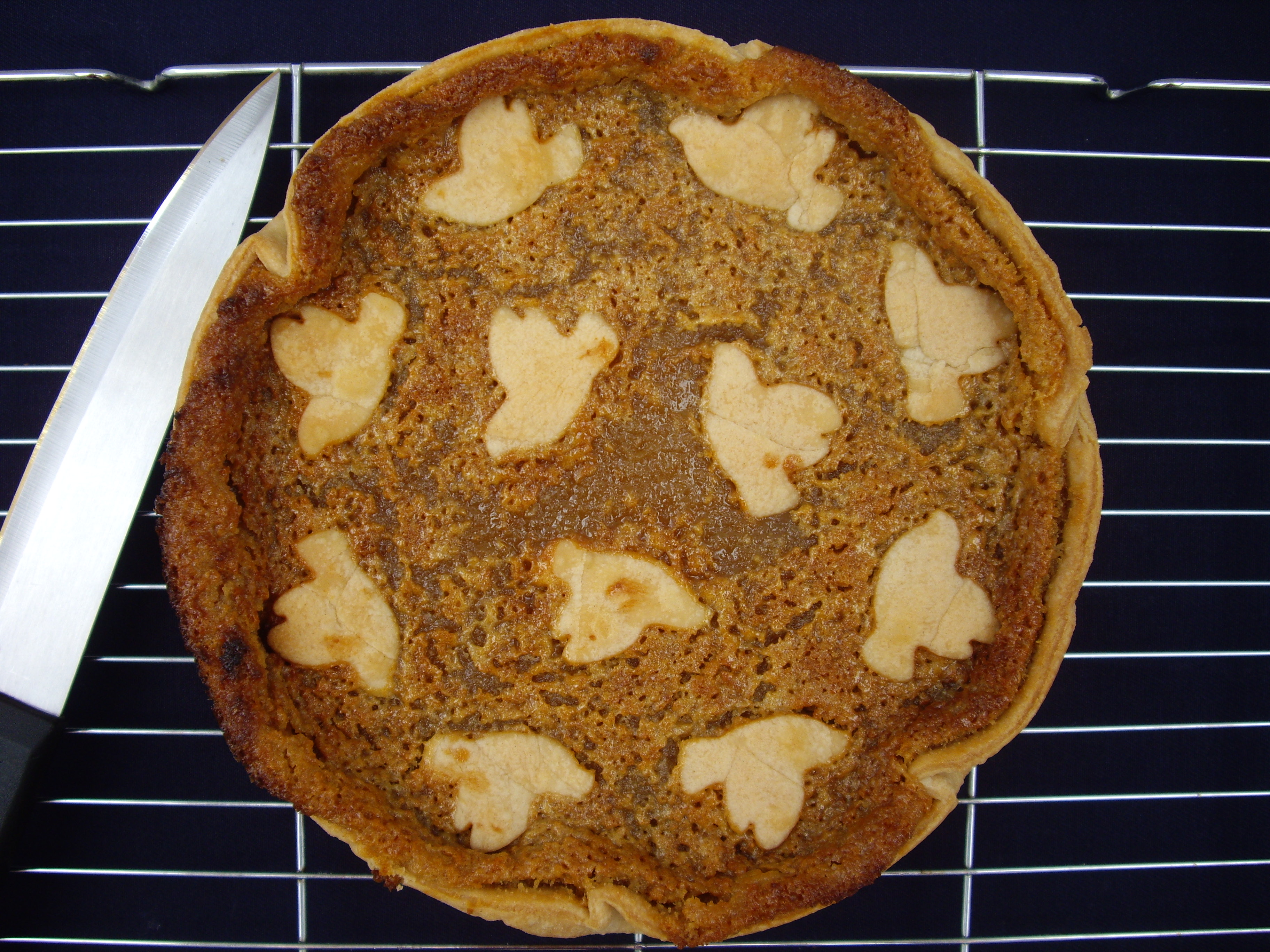
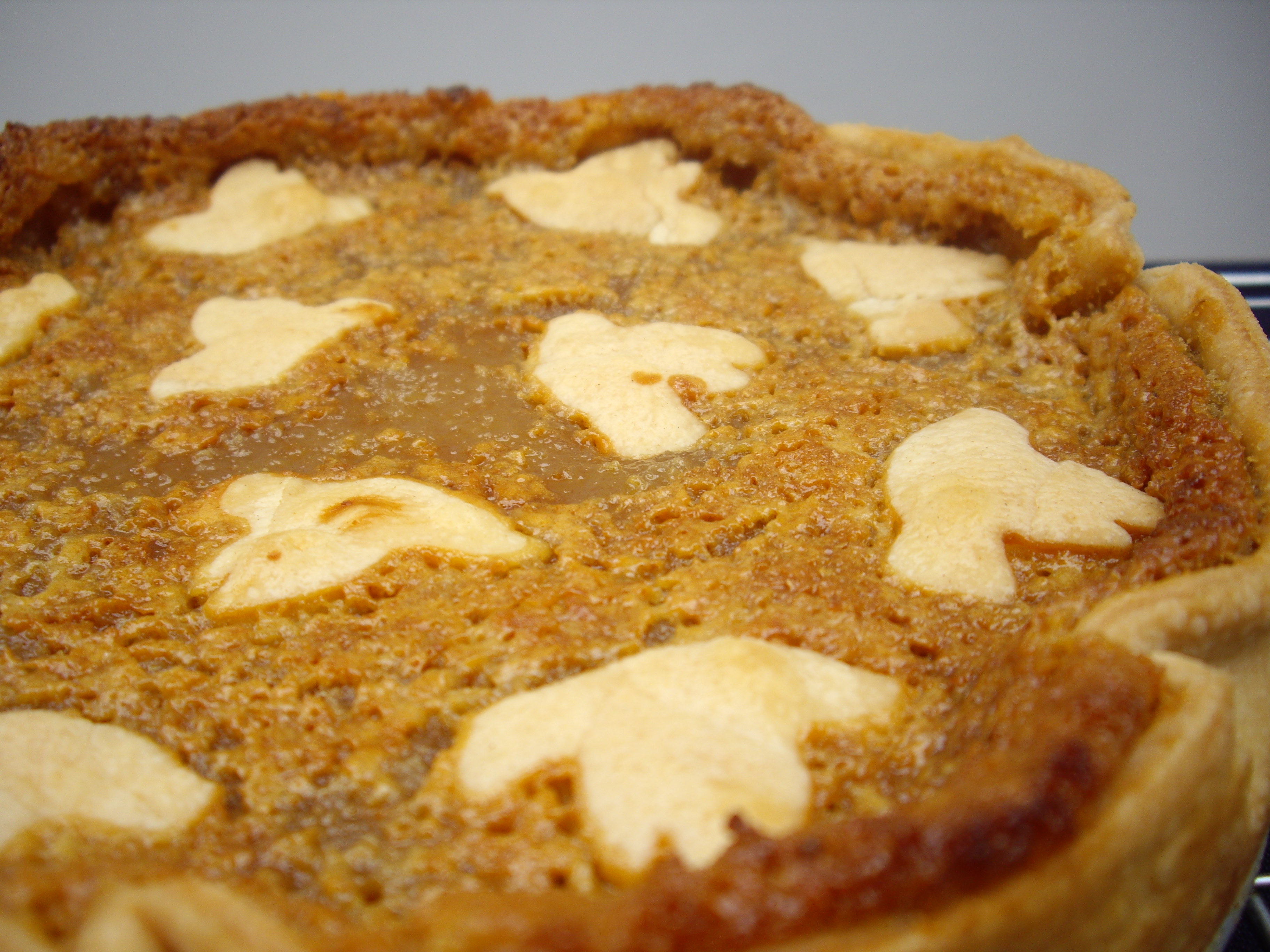
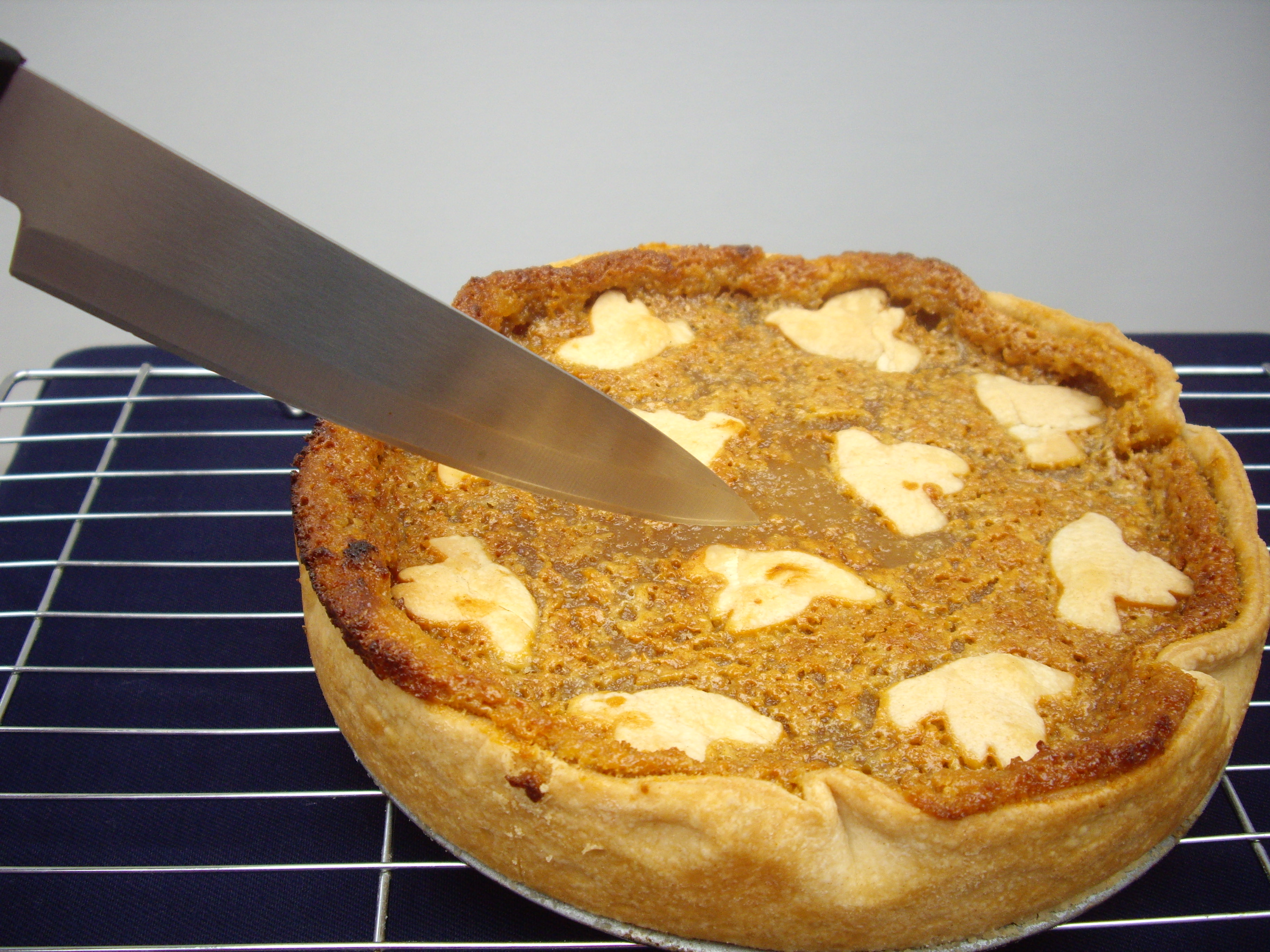
Is the following recipe any good?  Well, put it this way; it’s so good, that my wife went back for a secret slice and accidentally destroyed my beautiful, sugary creation.  It slid off the plate as N was putting it back (with an unnoticable slither missing) and was sadly reduced to a crumpled wreck.  It wasn’t intentional, but the fact remains: this is a treacle tart you’ll go back to again and (if it’s still in tact) again.

As a child, treacle tart held no appeal for me.  It was always served hot (a no-no for Dimitri) and didn’t look particularly exciting.  Nothing looks as exciting as chocolate cake.  Even the name of this super-sweet pudding seemed strange to me.  What on Earth is treacle and why would anyone eat it? 

As an adult, I’ve spent time discovering the food that I rejected at earlier intervals in my youth.  The dishes eaten by my parents and grandparents, the food that was popular before the advent of television chefs and giant supermarkets.  My mum is the Queen of Puddings and describes her favourites with delight and a wonderfully descriptive style.  Listening to her describe a good treacle tart is enough to inspire anyone to make this classic pudding.  The ingredients are simple, widely available and for me, surprising.  For a start, where’s the treacle?

Perfect treacle tart

350g golden syrup

250g shortcrust pastry

125g wholemeal breadcrumbs

125g double cream

1 tspoon vanilla extract

Roll out the pastry and use it to line a 20cm cake tin.  Trim the edges and prick the base with a fork repeatedly.  Put the tin into the fridge for half an hour and set aside the pastry trimmings.

Meanwhile, put the breadcrumbs into a medium bowl and pour in the syrup.  Add the cream and the vanilla extract and mix well.

Use the pastry trimmings to make some shapes that you can place on top of the tart before baking.

After thirty minutes, take the cake tin out of the fridge, pour the mixture into it and place your pastry shapes on top.  Bake on the middle shelf of the oven at 190 degrees Celsius for about thirty-five minutes.  The tart will be golden and just set when ready.

If you value your tongue, let the tart cool for some time before attempting to taste it.  When baking, the tart itself is hotter than the surface of the sun.  I like to serve it with ice-cream, but some double cream would be good too.

If you decide to get a sneaky slice when nobody is looking, be careful not to let the tart slide off the plate.  I forgave my lovely wife, but I got the impression that she felt the loss of the tart more deeply than the pang of guilt.  I don’t blame her!

Hip to be square…once in a while.

A dumping ground for leftovers and a chef’s favourite for Monday night specials, soup can be a disappointment if made without love.  Call me sentimental (at your own risk), but no amount of butter can make up for soup that has been made without love.

This has nothing to do with speed, however.  Making soup need not be a lengthy or laboured process.  It should be a fun and essentially satisfying experience.  It should begin with simple, fresh ingredients and end in a bowl that provides sustenance and a little of the season’s best.

I’ve mentioned my sinful tampering with perfectly good recipes, but today I wanted to show that I too can create something simple and honest.  A bowl of something that is proud of the ingredients it contains.  A spoonful of something that doesn’t need dressing up.  A mouthful of something that tastes exactly as you’d expect.  I’m serious!

The nights are drawing in.  The temperature is falling.  Salads just aren’t called for.  The season of soup has begun.  My love of chestnut mushrooms means it is time for me to share my version of a classic soup.  No twists and no surprises.  Just bags of flavour.

Classic cream of mushroom soup.

500g chestnut mushrooms (sliced)

1 pint chicken stock

quarter of a pint of semi-skimmed milk

40g butter

2 tblspoons plain flour

tonnes of black pepper

sea salt

a little double cream to serve

First of all, you’ll notice that there’s no onion, no garlic and no alcohol in the ingredients list.  This soup tastes of one thing and one thing only- mushrooms.  It’s creamy, it’s tasty and it needs no craziness.

Melt the butter in a soup pan and fry the sliced mushrooms on a high heat until they begin to brown.  At this point I like to grind lots and lots of black pepper over the mushrooms.  You can do this to taste.  I like a lot.  Don’t add salt yet.  If your butter is burning, add a drop of olive oil.

Next, add the flour and coat the mushrooms.  Cook it for a couple of minutes and then pour in the stock and milk.  Bring to the boil and then simmer for a few minutes.  You may need to whisk the soup to get rid of the lumps of flour.

Take the soup off the heat and blend with a hand blender.  Don’t make the soup too smooth; it’s nice to have the texture of the mushrooms.  Place the soup back on the heat and add salt if necessary to taste.

Ladle into bowls and pour some double cream in to serve.

Natural sugars don’t count- part 2: Raspberry & almond smoothie.

Some foods should not be tampered with.  Fresh, juicy tomatoes; a little salt, maybe some olive oil, but nothing more should detract from them.  Freshly made sweet pancakes; fresh lemon juice and a sprinkling of sugar to make them perfect.  Freshly baked bread; some good butter is all you need.

My problem, is that I mess things up by over-complicating them.  I look for new ways to enliven familiar dishes.  Putting twists on classic meals gives me a secret buzz, but inevitably ruins the meals I’m trying to bring to life.  There’s a reason that some things become “classic”.  They were good in the first place and they don’t require a tune up.  Why can’t I just leave things alone?

You know what I’m talking about, right?  That unnecessary topping on an otherwise perfect pizza.  One ingredient too many in the smoothie that would have been fine.  It’s sad to say, but I’m so guilty of messing up perfectly good combinations that it’s a wonder anybody in my family is still willing to try my creations.

There is, however, one bit of tampering that I don’t feel guilty about and one that yields good results every time.  It’s what I could refer to as “The Excess Sugar Technique”.  Spotting a legitimate opportunity for sugar, I simply crank up the amount until it is sweet enough to qualify as a dessert and therefore sweet enough for me.  Exhibit A; my raspberry and almond smoothie.

I realised that smoothies could be enjoyed in a way that is not really intended or endorsed by those with an interest in health.  It wasn’t long before I was having a ‘treat smoothie’ every now and again, instead of the usual healthy glass of fruit and yoghurt.  Far be it from me to recommend this as a regular alternative to your protein-packed blended wonders.  Instead, the next time you are feeling subversive, reach for the caster sugar and load up.

Raspberry & almond smoothie

300ml semi-skimmed milk

2 scoops raspberry ripple ice-cream

150g frozen raspberries

4 tblspoons caster sugar

2 tblspoons Greek yoghurt

1 tspoon almond extract

Blend everything together until smooth.  I sometimes add a couple of soft Amaretti biscuits before blending, but this is optional.

Natural sugars don’t count- part 1: Pear & pecan toffee crumble.

Given the amount of marketing that goes into promoting fruit and vegetables as the way to protect your heart and ensure longevity, it’s amazing how many adults still choose to eat nutritionally poor food on a daily basis.  We’ve never been more aware of the content and nutritional values of food, and yet, obesity is prevalent in a number of wealthy countries with high levels of literacy.  Why don’t people make the right food choices for their bodies?

In my humble opinion, I think choice itself is part of the problem.  Sugary food, food laden with flavourful fat and food containing too much of what we don’t need is often more appealing than healthier, natural options.  I adore peas, love broccoli, would kill for olives and feel incredibly happy when eating sweetcorn, but burgers, pizzas, chicken korma and anything covered in melted cheese is hard to resist.  What hope do greedy folk like me have?

The best thing to do is to treat yourself to the unnecessary sugary and fatty items every now and again and most importantly, to acknowledge that they are just that; a treat.  A couple of days of eating poorly is all it takes for me to get back on track.  Too many treats and they stop feeling like a treat and I enjoy them less.  Over the last few weeks I’ve been making an effort to cut down on the naughty things so that I begin to appreciate them again.  Baking every day is not conducive to this, so I’ve started giving away almost everything I bake to friends and family.  It feels good, but it’s hard to wave goodbye to the freshly baked goods as they leave my flour-covered hands forever.

Vegetables will always be on my plate, though and I love them.  However, what my diet has in vegetables, sadly, it lacks in fruit.  I’m just not a fruit fan.  I love watermelon and I’ll eat just about every fruit going, but I’ll never ask for it or make an effort to eat it.  For all the colour, variety and goodness in fruit, it just doesn’t register on my food radar.  And pudding?  No.  Fruit, no matter how nicely presented, is not and never will be an acceptable pudding.  Scanning a dessert menu, my eyes narrow scornfully should they come across fruit.  Disgraceful.  I want the finest sugars known to humanity and I want them now!

Natural sugars don’t count.  They don’t cut it with me.  I’ve decided to try to address the lack of fruit in my diet by incorporating fruit into my treats.  The first of these is about as sugary as it gets and so delightful, I almost talked myself out of giving it to my mum today.  I said almost.  Mum got the pudding to serve at dinner with my brother and uncle and I got to make what I believe is the nicest fruit-based pudding I’ve tasted.  It wasn’t too difficult to give it away because I’d made a test version last week and the poor pudding didn’t even see the next morning!  I’ll wait a few more weeks before making it again.  Moderation is the key.  Meanwhile, I’ll see what other ways there are to turn fruit to the dark side.  Watch this space…

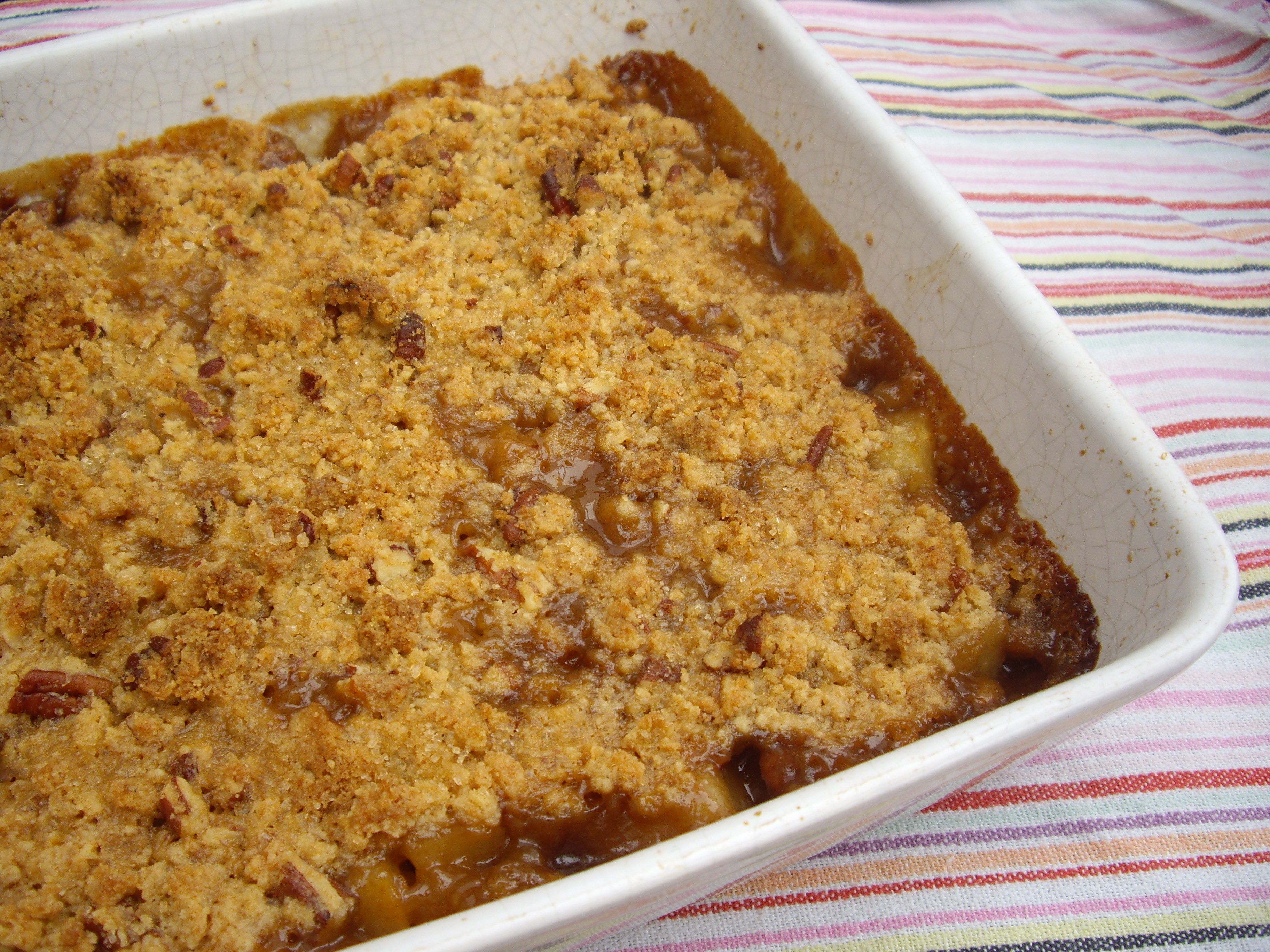
Pear & pecan toffee crumble

(For the filling)

6 pears (peeled and roughly chopped)

4 tblspoons demerara sugar

3 tblspoons golden syrup

2 tblspoons dark muscovado sugar

30g butter

1 tblspoon milk

(For the crumble topping)

120g self-raising flour

100g butter (diced)

5 tblspoons demerara sugar

2 tblspoons pecans (finely chopped)

Rub the flour and butter together to make the crumble topping.  They should look like breadcrumbs in yoru bowl when you’re done.  Pour in the pecans and the sugar and bake in the oven for five or six minutes at 200 degrees Ceslius until golden.

Next, make the toffee sauce.  In a milk pan, gently heat the syrup, muscovado, demerara, milk and half of the butter.  Once it has come to the boil, let it simmer for five minutes and stir constantly.

In another pan, cook the pears in the remaining butter for about five or six minutes.  Pour the toffee into the pan with the pears and cook for another five minutes on a gentle heat.  Stir the pears so that the toffee doesn’t burn.

Finally, put the mixture into an oven-proof dish and then spread the crumble over the top.  Sprinkle extra demerara sugar on top, if you’re a sugar fiend like me.

Bake in the oven at 200 degrees Celsius for twenty minutes.  The crumble should be golden brown, but not burned.  It might be a little too sweet for some, so a scoop of vanilla ice-cream is a good choice when serving.

The many faces of filo.

“Aah, filo pastry.  We have been expecting you.”  I can’t help feeling guilty when I make something using filo pastry.  First of all, pastry isn’t exactly a superfood and folk who take care of their bodies won’t thank you for a big ol’ pie.  Secondly, filo pastry is so versatile and easy to use.  Yes, I said easy!  Don’t let the television scaremongerers put you off experimenting with it.  Filo does dry out quickly and is very delicate, but it is also easy to cut, fold, layer and shape.  The fact that you can produce savoury or sweet dishes with ease, adds to the appeal.

Previously, I’ve had fun making chocolate filo parcels and when it comes to Greek puddings, filo is never too far away (that reminds me, I need to post a recipe for a lovely Greek pudding).  Filo has always been my go-to pastry for sweet stuff, but over the weekend, I found myself with some spare fresh filo and a box of beautiful chestnut mushrooms.  They have a wonderful nutty flavour and I’ve stocked up on them so that I can make my favourite mushroom soup.  However, we needed lunch in a matter of minutes and I wanted something interesting.  Filo to the rescue.

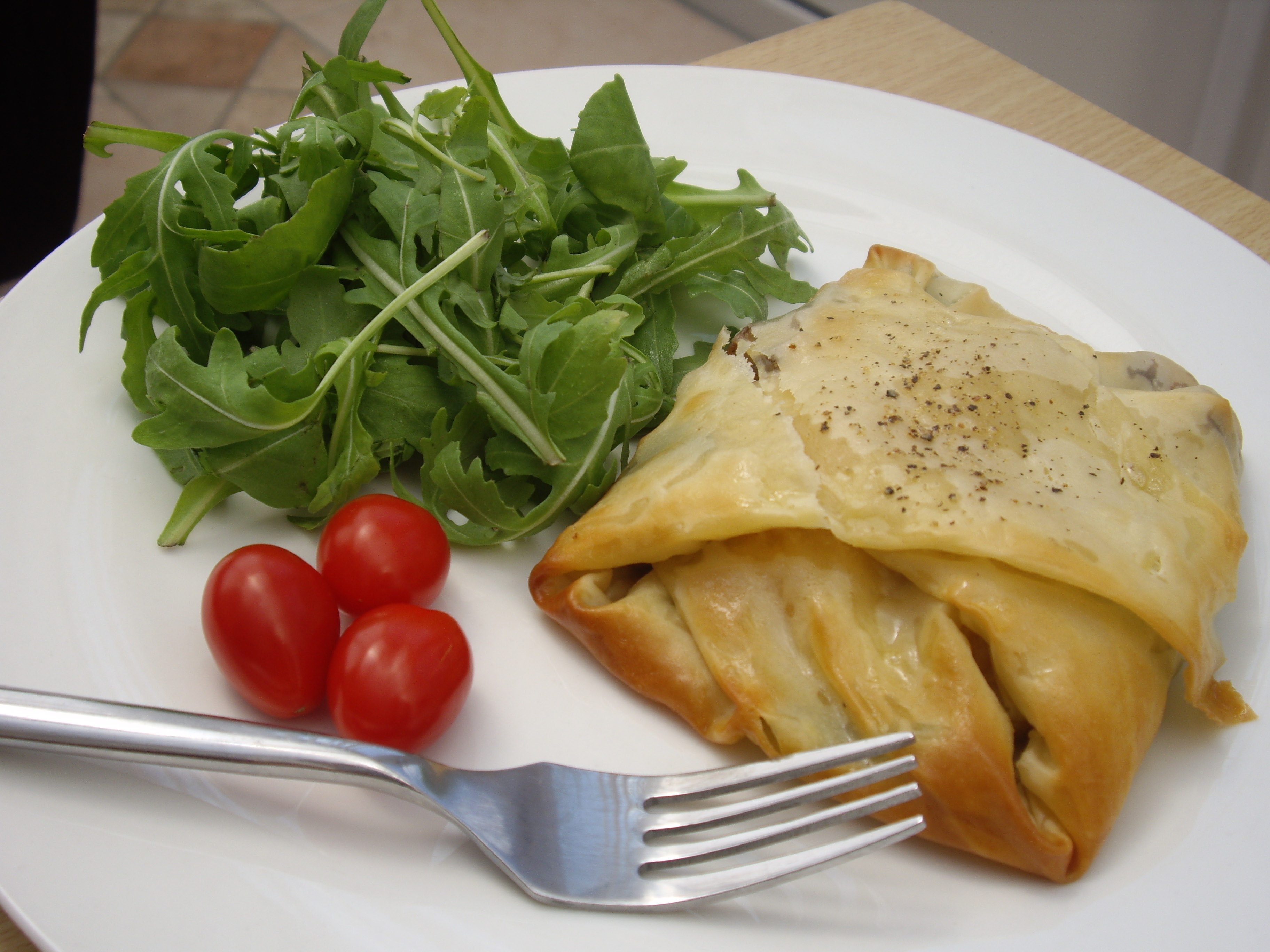
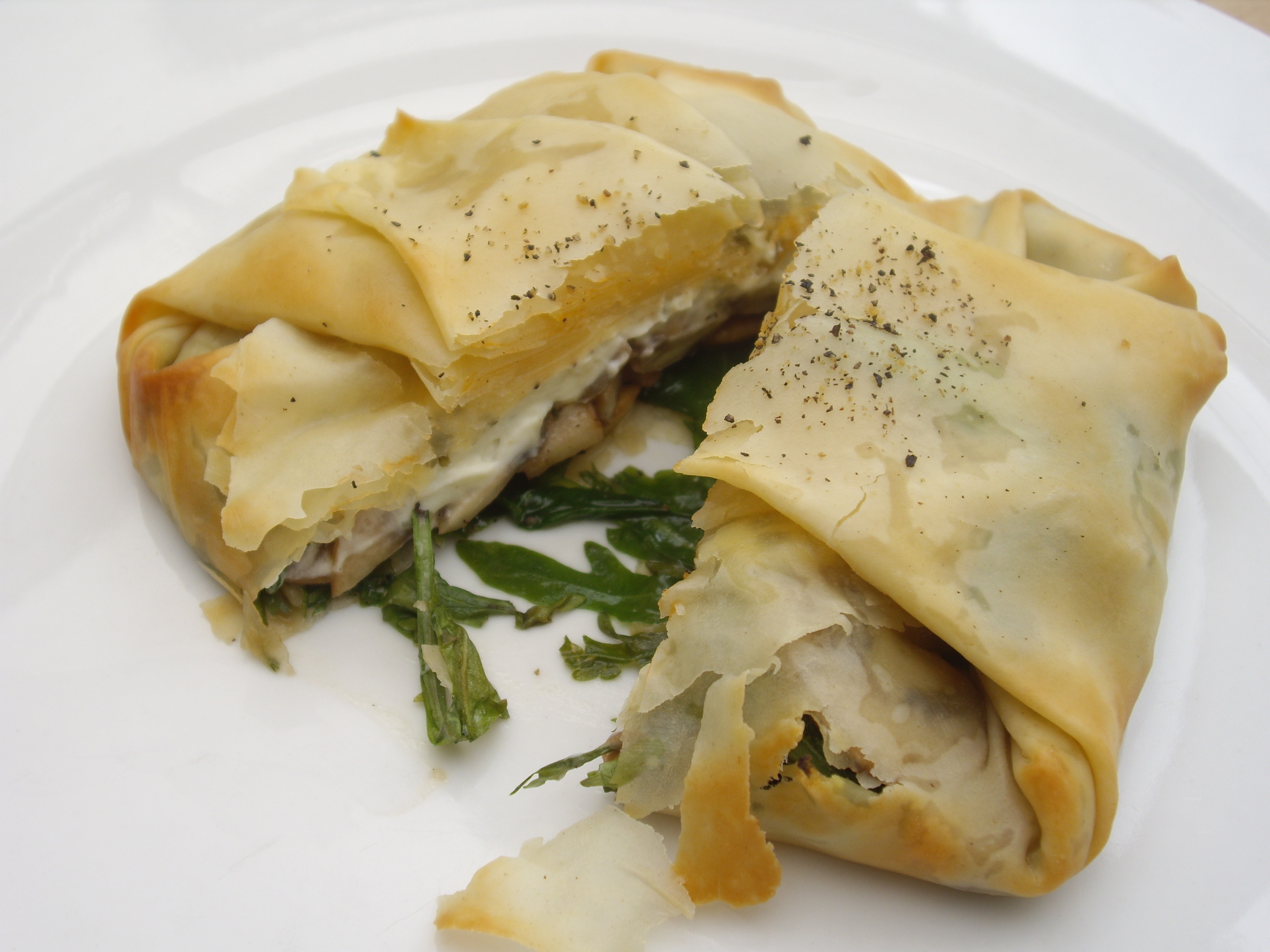
Le Roule & mushroom filo parcels

(Recipe makes 2 parcels)

2 sheets filo pastry

250g chestnut mushrooms (sliced)

2 small handfuls fresh rocket leaves

2 tblspoons Le Roule cheese

25g melted butter

salt & pepper

Begin by preheating the oven to 200 degrees Celsius.

Lay the sheets of filo out and cut them in half to form two squares.  Brush the squares with melted butter and lay a second filo square on top of each.  These will be your parcels.

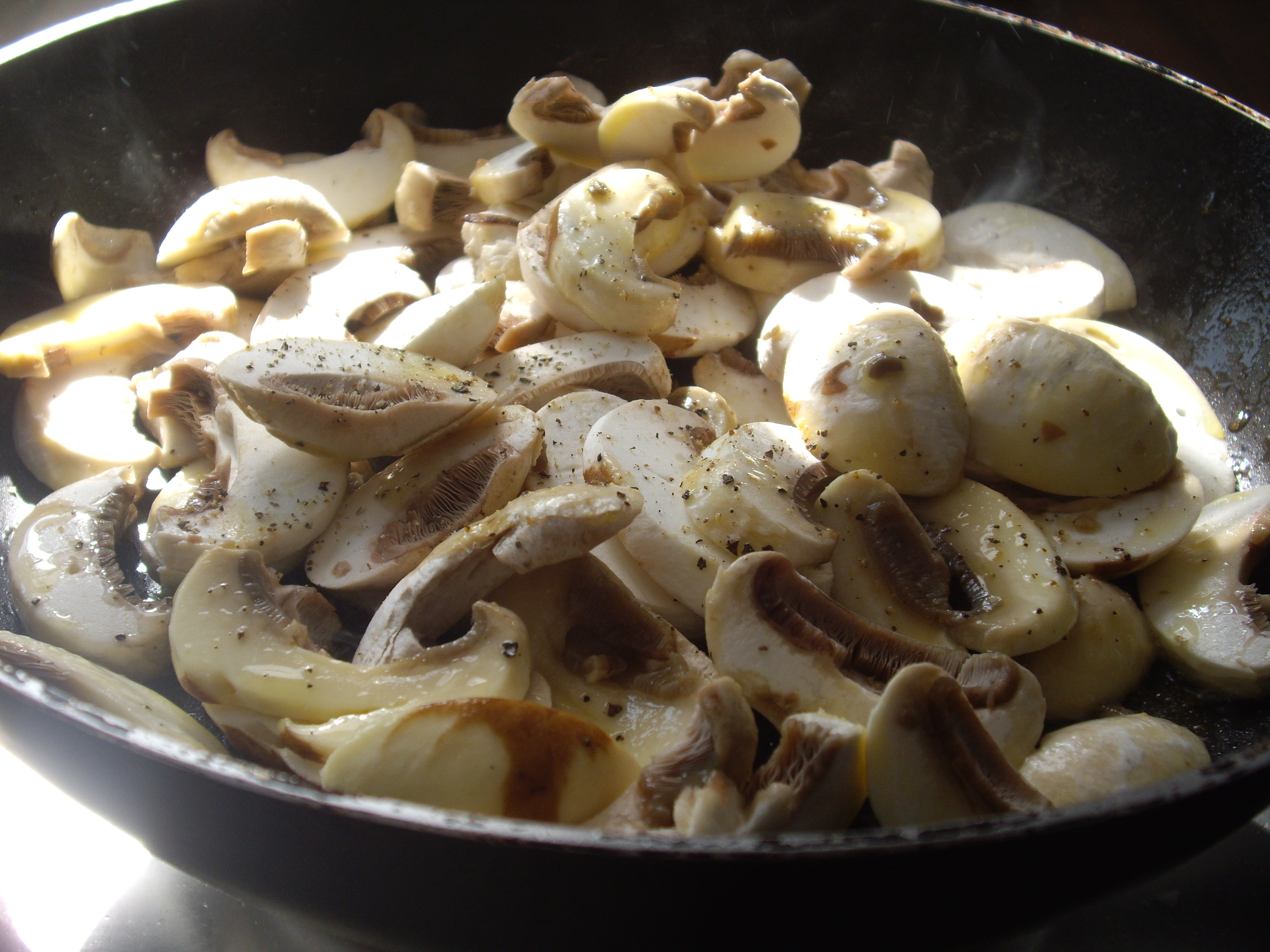
Meanwhile, fry the mushrooms in a little butter on a high heat until cooked through and beginning to brown at the edges.  Grind some black pepper over them, but  don’t add salt yet.  Salt draws out moisture from the mushrooms and makes them soggy.  Yuk!

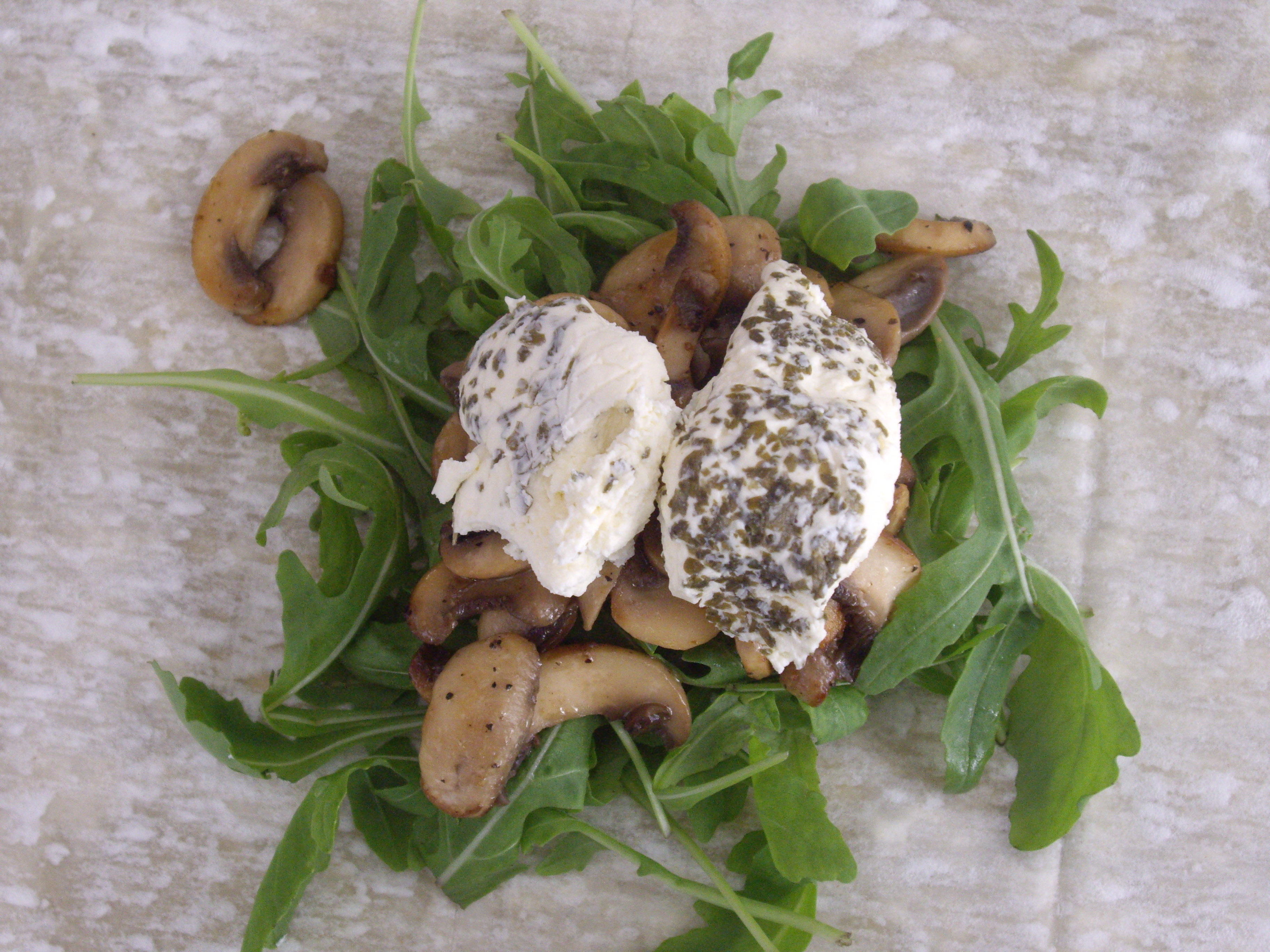
Put a little pile of fresh rocket onto the filo square and top with half of the mushrooms.  Season with salt.  Add a tablespoon of Le Roule on the top and then brush the edges of the square with melted butter.  Now bring two opposite corners of the square together, placing one under the other and brushing them with a little more butter.  Do the same with the remaining corners to form a parcel.

Brush the whole parcel with melted butter and place on a lined baking tray in the centre of the oven for about fifteen minutes or until the parcel is golden and the pastry crispy.  Be careful, the contents will be very hot.

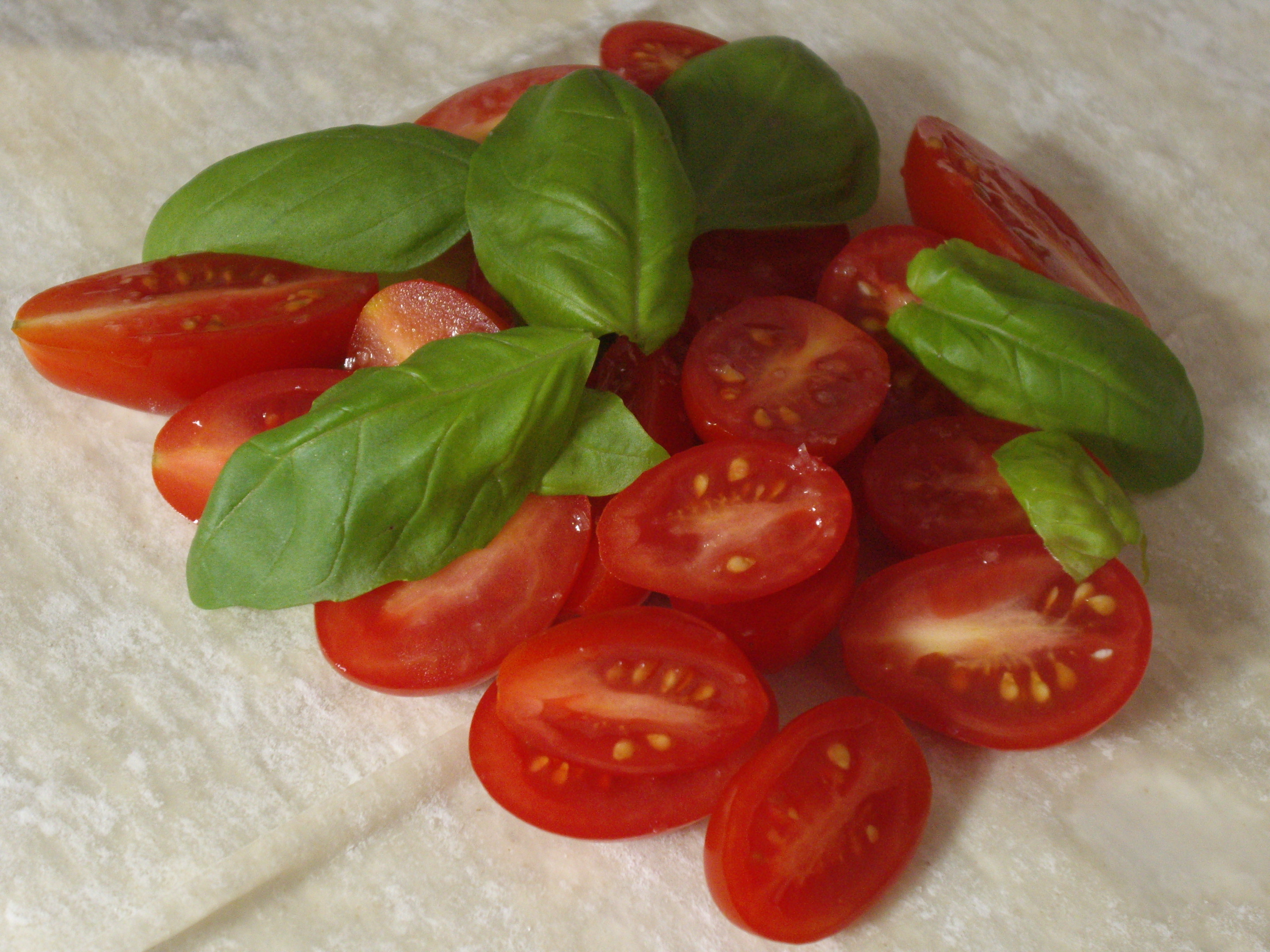
Feeling hungry, I went on to make another parcel using baby plum tomatoes and basil leaves.  I added grated Cheddar instead of Le Roule and sprinkled some dried oregano on for good measure.  The result was something like a little pizza parcel, so it goes without saying that I was enthralled.  Filo may not be forgiving, but it is rewarding.  Give it a go!

I’m so glad that my little brother hated vegetables.

Comfort food can take just about any form and who am I to try to narrow that category?  Whatever food makes you feel good and safe and happy is comfort food.  There are a few obvious examples of comfort food and my favourite has to be mashed potato.

Being a soft and fluffy food, mashed potato does all of the comforting as soon as you place it in your mouth.  Partnered with some good butter and a little milk, mashed potatoes will practically anaesthetise me and I guess you can’t ask anything more of a comfort food.

Why do I need comforting?  I don’t, but a good pile of mash on the plate next to sausages will put pay to any winter blues quicker than you can say “onion gravy”.  Lucky for me and the other members of my little, greedy family, winter is still doing a sound check and we probably won’t hear the opening bars for a few weeks yet.  That said, when N asked for mashed potatoes with our meal, I got a surge of joy at the prospect of seeing my old buttery friend again.

My mum used to mash up carrots with the potatoes in a bid to get another vegetable down the throat of my veggie-hating little brother.  We’ve loved carrot and potato mash ever since and I decided to make some (to please my inner child).  At the last minute, I realised that we had some coriander that needed to be used up.  Before I knew it, I was chopping fresh leaves (and stalks) and mixing them into the creamy mashed potatoes and carrots.  Carrot and coriander is a tried and tested combo, so I knew it was a safe bet.

We were delighted with the result and while I don’t think a whole recipe is necessary, I did want to share this mash with you.  Coriander is packed full of vitamin C and this was a fantastic opportunity to get some.  Go on, give your immune system (and your loved ones) a treat!

I will always love you.

I’m a big soup fan.  Since my student days when cooking whatever I had left in the fridge was a regular event, I’ve really enjoyed pairing ingredients in perhaps the most immediate way possible (except for the mighty sandwich).

Bad soup is common.  Good soup is everything that food should be: comforting, colourful and good for you.  Yes, I write a blog called The Last Piece of Cake, but that doesn’t mean that I prefer to eat unhealthy food all day long.  Eventually, that kind of eating will take its toll on your body and your moods.  Soup, if made with care and some well-chosen ingredients, can lift your spirits and contribute to your well being in ways that a pizza never could.

Don’t worry, Pizza.  I still love you as I always have.  It’s not you, it’s me.  I need some space.  No, there isn’t anyone else.  Me and soup are just friends.  Soup makes me feel good about myself.  What’s wrong with that?  Why should I feel guilty?  I’ve nothing to hide…except my paunch.

You know what vegetable is great for soup?  Sweet potato.  I love it.  My problem is that I often buy a lot of sweet potatoes and then I don’t use them because I’m never sure about what kind of meals to prepare them for.  Regular potatoes are plain enough to be paired with a huge variety of other foods.  Sweet potatoes need more careful deployment.  Therefore, I usually have plenty left in the basket and my solution is often to make soup with them.

Today was no different.  Some bacon in the fridge was calling out for a “Use me up” recipe and I thought, “Why not?  Sweet potato and bacon soup could be fun!”  Add to that a chipotle chilli and I had a heart-warming lunch for me and N to enjoy while we listened to the rain beating down.  I’m not saying it was pizza, but if you appreciate the warm contentment that fills you when you have a good bowl of soup, then you’ll enjoy this recipe.

Smokey sweet potato & bacon soup

3 sweet potatoes

2 slices smokey bacon

1 dried chipotle chilli

1 tblspoon vegetable oil

water/ stock

Peel and thinkly slice the sweet potatoes.  Fry the bacon until crispy in the pot you’ll use to make the soup, drain it and set aside to cool.  Add the potatoes to the vegetable oil and fat from the bacon and cook over a moderate heat.  Pour enough stock (chicken or vegetable) into the pot to cover the potatoes and bring to the boil.  Add the chipotle and simmer until the potatoes are falling apart.  Slice the bacon into strips and put a few strips aside to use as garnish.  Add the rest of the bacon to the soup.

Remove the chipotle and blend the soup with a hand blender.  Season to taste and put the soup back on the heat.  Return the chipotle and simmer gently for a few more minutes.  Just remember not to serve the chipotle!

Serve with crusty bed and garnish the soup with bacon strips.