Unknown's avatar

About Dimitri @ The Last Piece of Cake

A greedy Greek boy who shares his passion for food and recipes on his blog, thelastpieceofcake.com

Celebrity chefs; they’re just like us, ya know!

Ah, the life of a television chef.  A kitchen casually furnished with the most expensive utensils, pots of fresh herbs, a fridge so large it could lead to Narnia and not a bad camera angle in sight.  Then of course, there’s the lifestyle; endless socialising with every demographic imaginable, hours to kill at the local market and then the unconvincing  speeches about how they juggle a demanding career with family time.

As people have become more interested in food, so chefs have become more interested in our domestic lives.  There’s been a shift towards everyday cooking that seems to be a way of connecting to an ever-growing population of home cooks and food enthusiasts, who genuinely have to balance their food interests with work and family.  A quick look at the titles in the cookery section of the book stores [that folk used to visit] is testament to this;  Jamie’s 30-Minute Meals (Jamie Oliver), A Taste of Home: 200 Quick and Easy Recipes (Angela Hartnett), Real Fast Food (Nigel Slater), Mexican Food Made Simple (Thomasina Miers), River Cottage Everyday (Hugh Fearnley-Whittingstall), Cooking For Friends: Food From My Table (Gordon Ramsay), Nigella Express and Kitchen: Recipes From The Heart of the Home (Nigella Lawson).

A few months ago, I watched a repeat episode from the undisputed queen of comfort food, Nigella Lawson.  During the programme, Nigella talked about her perfect sun-downer and bowl of chips.  After a long day “at work”, her prefered method of unwinding is to drink an Americano cocktail and munch on some tortilla chips with her Jumbo Chili Sauce.  The recipe for the sauce is from her brother-in-law and it looked so simple that I decided to give it a go.  I thought that even I wouldn’t be able to mess it up.

It was good, but I thought it needed refining, so I spent a little time making it more palatable- more of a tickle than a slap.  In essence, what I loved about the dip (and it is a dip, not a sauce), was the amount of coriander in it.  I adore fresh coriander and I’m constantly trying to find vehicles for this wonderfully fragrant friend.  My better half is not keen on coriander at all, but even she has succumbed to it through this very addictive dip.  I now make this on a regular basis to get my coriander hit and I keep it in the fridge ready for that sun-downer moment.  I may not live the life of a celebrity cook, but that doesn’t mean that I don’t deserve some tortilla chips and an Americano.  Actually, make it a Mexican beer and I’ll unwind by telling you how difficult it is to juggle kids, cooking and a photo shoot.  If only.

My perfect nacho dip

1 jar roasted peppers

1 bunch coriander (about 40g)

1 clove garlic

1 red or green chili

1 lime

I always make this using a hand blender because it’s very quick and I can store the dip in the container it’s made in afterwards.  It’s simply a matter of blending everything together, so for taste, the order that you add everything is unimportant.  However, because I make this with a hand blender, I usually put the chili and the garlic in first to avoid them accidentally flying into my eye.
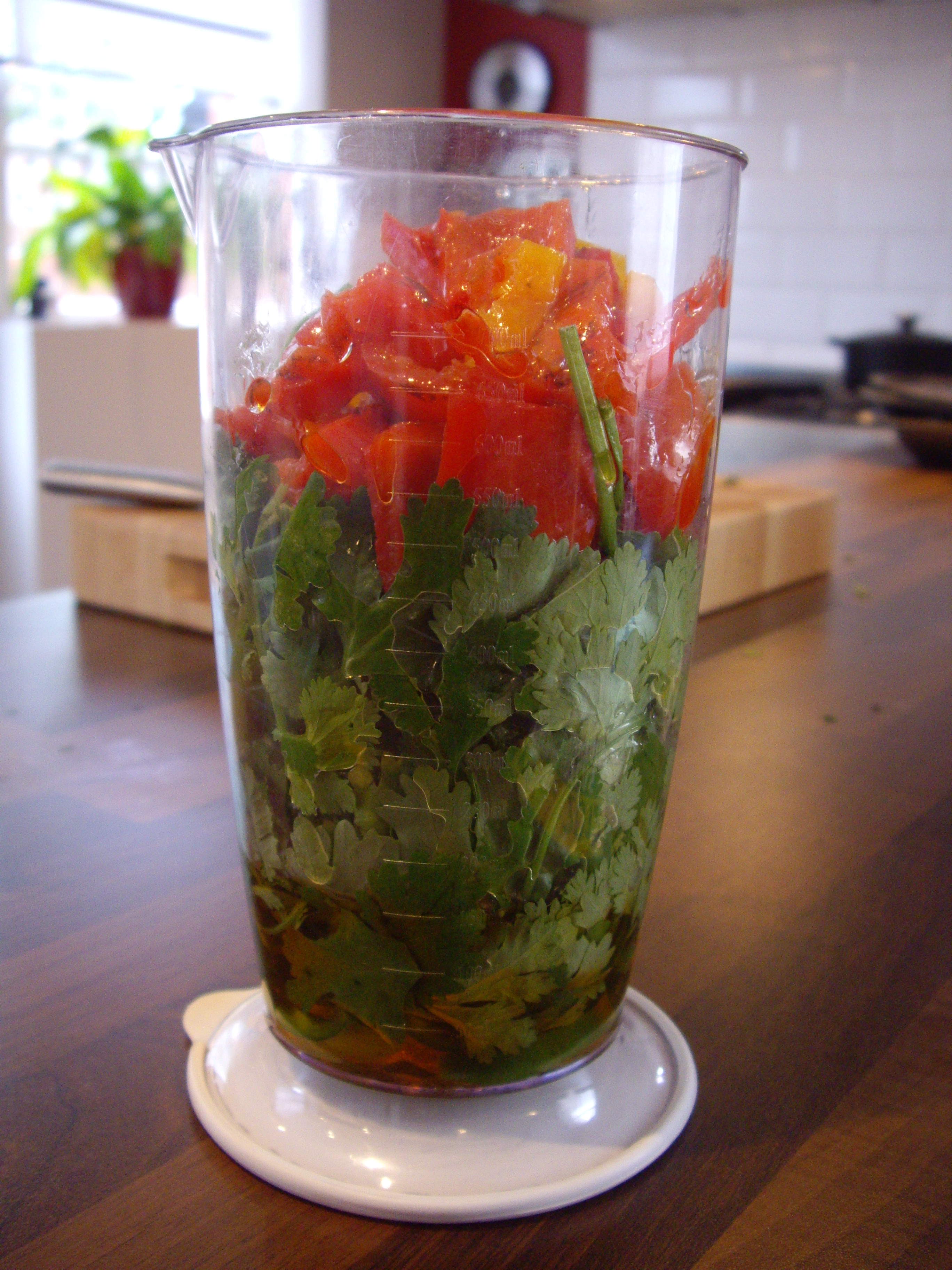
I roughly chop the chili and throw it in followed by the garlic and then all of the coriander.  You must add the stalks.  Too many people throw them away, but they contain the most flavour.  Next, tip in the roasted peppers.  Use peppers packed in oil, not vinegar, otherwise you’ll end up with a nasty after-taste.  Using peppers in oil also means that you don’t need to add any extra oil.  Cut the lime in half and squeeze the juice from one half into the colourful mix.

Now you’re ready to blitz it all.  Once it has reached a nice consistency, you’re ready for dipping!  The great thing about this dip is that you can tailor it to your own taste.  I don’t add salt because the tortilla chips will be salty enough.  I always use a whole bunch of coriander (up to 80g) because I love it.  If I’m in the mood, I’ll add more chilis and keep the seeds in for extra heat.  I love how quick it is to make and it keeps well in the fridge.  Yet another weapon in the battle against gloomy, rained out days!

Any pork in a storm.

As I write to you now, sheets of heavy rain are being whipped, driven and lashed against every single exterior surface of our house.  Garden furniture is rolling in different directions and the dog is doing her best to look casual, when in fact, she’s clearly cowering underneath the dining table.  So much for summer.  Welcome, ladies and gentlemen, to the North West of England.

In sunnier climes, families and friends are discussing what is on the barbecue and whether or not there will be enough potato salad for everyone.  Sigh.  What I need is some sunshine.  Instead, the bellowing storm is deafening the dog and threatening to tear away the side of our home to reveal each room like a giant dolls’ house.  Armadillo eggs to the rescue!

Armadillo what?  You heard me right!  I was surfing the web (there has to be a better phrase) and came across a recipe for Armadillo eggs.  Delving further, I found an abundance of recipes each with their own take on what is a common appetizer at American barbecues in the South West.  They’re actually jalapenos stuffed with cheese and baked in an oven.  Some recipes call for bacon to be wrapped around the outside of the pepper, others instruct you to mix cheese and sausage meat and use it to stuff the jalapeno before baking.  With so many opinions on what makes an Armadillo egg, I decided to create my own version.  Yeehaw!  Ahem.  They turned out very well and brought some well-needed comfort to me and one rather frightened fluffy friend.

Armadillo eggs

375g sausage meat

165g sweet peppers

130g Cheddar cheese

100g cream cheese

1 green chili (finely chopped)

1 tspoon smoked paprika

I began by mixing together the cream cheese with half of the grated Cheddar.  I used a sharp Cheddar that would give the filling lots of flavour.  In another bowl, I put the sausage meat, chopped chili, smoked paprika and the rest of the grated Cheddar and  squeezed it all with my hands until I was satisfied that it was completely mixed.  This would be the coating for the Armadillo eggs.

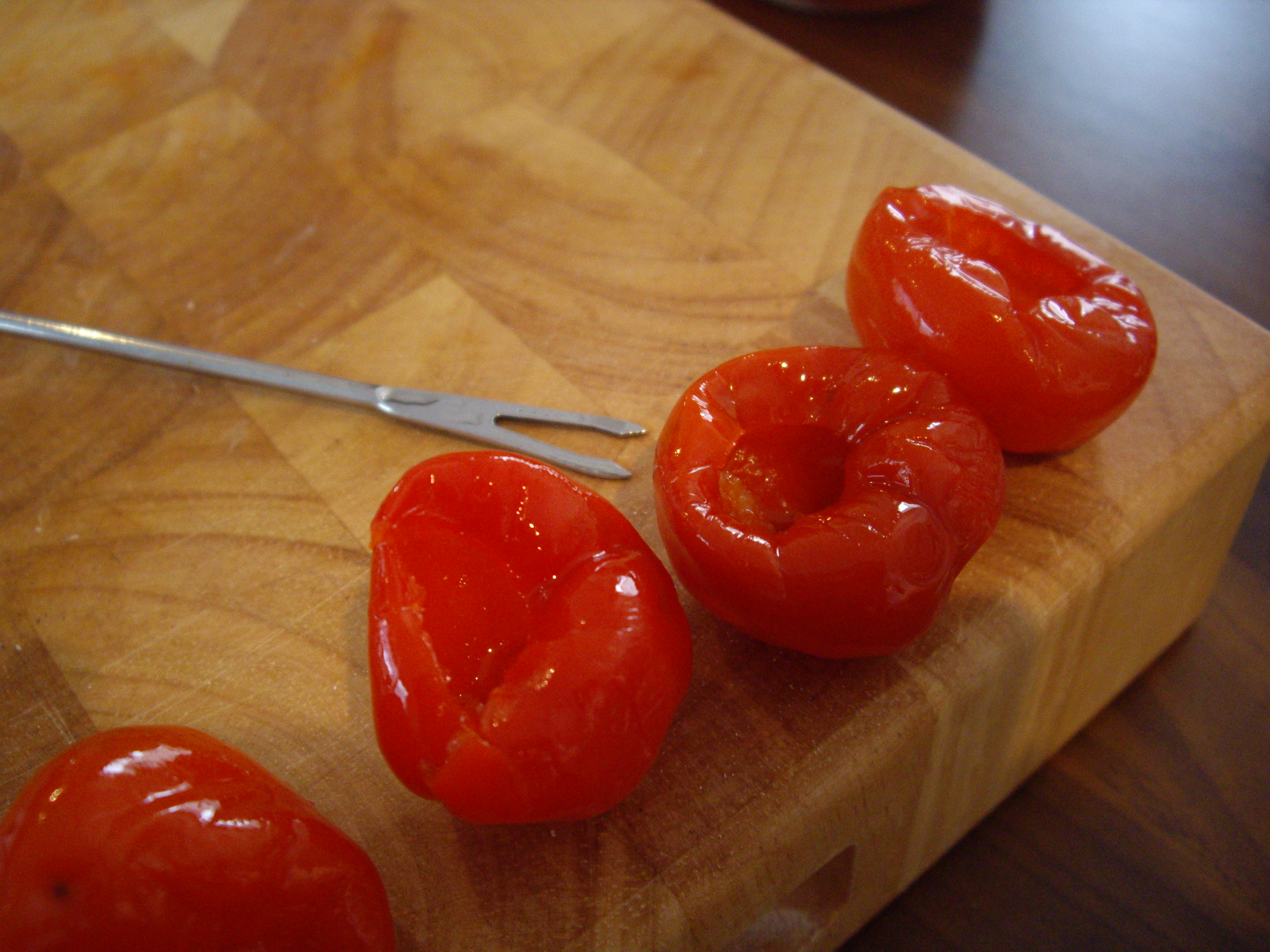
I didn’t use jalapenos for this recipe.  Instead, I used a jar of Peppadew peppers.  They’re small and sweet and red and are just made for stuffing!  They are available with more heat and also stuffed with cream cheese, but I don’t like the idea of cream cheese that’s been sitting in vinegar for weeks.  I drained the sweet little beauties and began to take bits of the cream cheese and Cheddar mixture to fill each pepper.  This was quite easy because the Cheddar gives the cream cheese more body and it is easy to handle.

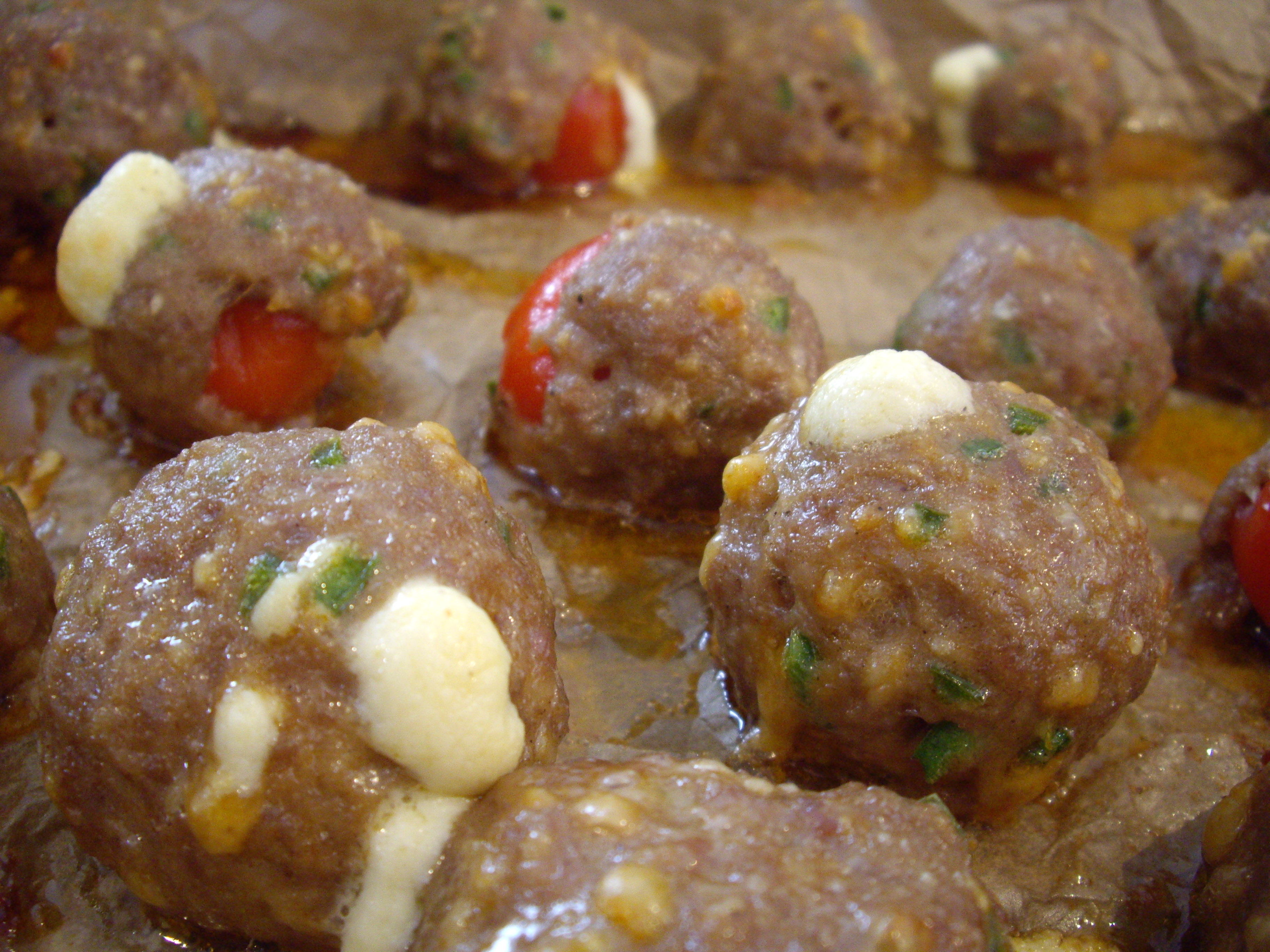
Once the peppers were full and all the cheese used, it was time for the tricky bit.  I thought that packing each pepper in sausage meat would be a doddle, but it took a little time and patience.  My first attempt was the size of a cricket ball.  After a few, they were looking more like meatballs, which is what I was aiming for.  I found that wetting my hands made it easier to handle the meat and stopped it sticking to my hands and breaking up.  My technique was to take some sausage meat, press it onto my palm, place a pepper on it cheese side down and then bring up the sides and mold it gently around.  Like I said, the first few weren’t great, but you kind of get a rhythm going by number five.  In the end, I made twenty Armadillo eggs.

I placed them gently onto a baking tray lined with baking paper.  I love using baking paper because foil often rips easily or sticks to meat.  Also, baking paper is an excellent barrier against grease and let’s face it, with sausage meat, there’s gonna be plenty of that around.

I cooked them in the oven, middle shelf at 170 degrees Celsius for thirty minutes.  They didn’t even need to be turned.  For once, I was patient and waited until they were slightly cooler before tucking in.  They certainly banished the stormy weather for a while.  I’ve kept some of my Armadillo eggs in the fridge- the weather forecast for tomorrow isn’t good.

Do blondes have more fun?

Being married to a greedy chap with a food obsession is frustrating at times, I’m sure.  There’s moaning when meals are dull, there’s a constant stream of food-related chat, large amounts of hard-earned pennies are spent on what seem to be random or unnecessary ingredients and every now and again, a meal is served that the hip kids would label as an “epic fail”.

Don’t get the violins out just yet.  N is a big fan of white chocolate and has the odd day where she completely lucks out.  There are actually two days when this happens.  One is white chocolate cheesecake day.  The other, is blondie day.  Today, it was definitely a blondie day.

Blondies are an alternative to brownies and while I don’t wish to give the impression that I would ever get tired of eating brownies, I do want to promote some thinking outside of that rich, chocolatey box.  I first came across this recipe a few years ago when I was going through what can only be described as a baking frenzy.  Having lived in Hong Kong for a couple of years without an oven, it was a total joy to be back in a kitchen that had more than a microwave and a wok burner.  The baking that followed is almost a blur to me now, but one thing has remained a part of our household since then.  My blondie recipe.  It’s so easy to make that I could burst out laughing just thinking about it.  It requires only two things of you.  The first is that you like white chocolate.  The second is that you like peanut butter.

Blondies (adapted from Rachel Allen)

200g white chocolate (chopped into little chunks)

200g light brown sugar

150g peanut butter

125g plain flour

100g butter

1 egg

1 tspoon baking powder

1 tspoon vanilla extract

If you’re gonna bother making something that relies heavily on two ingredients, it’s worth making sure that those ingredients are well represented.  I’ve adapted this recipe so that every piece and every bite is packed full of fun.  Let’s just say that I’ve cranked up the volume.  For me, there’s no such thing as too sweet.  I used crunchy peanut butter because it gives the blondies extra texture, but the recipe works fine with smooth.

Cream the peanut butter and butter together in a bowl.  In another bowl, combine the sugar, vanilla and egg.  Add this to the peanut butter mixture and stir.  Finally add the flour and baking powder.  It’s a good idea to use your hands to squeeze everything together and form a dough.  When you’ve got a dough, you can mix in the white chocolate.  My mum hates white chocolate, so at this point she would add something else.  Come to think of it, I don’t think she likes peanut butter either.  Hmmm… anyway, once you have a ball of stickiness, you’re ready to transfer it to a baking tray.

Don’t be alarmed.  The dough is not the sort that you can roll out and work with.  The best thing to do is to line a little tray with baking paper and then press the dough onto it.  I begin by putting the dough in the middle and using my palms to flatten and push the dough to the edges.  I use a tray with one inch sides because the blondies will rise during baking.  Upon finishing this stage of the recipe, I guarantee you’ll be full of doubt, but fear not.  Into the middle shelf of the oven at 160 degrees Celsius for about twenty minutes and you’re laughing.

Just golden, but not brown.

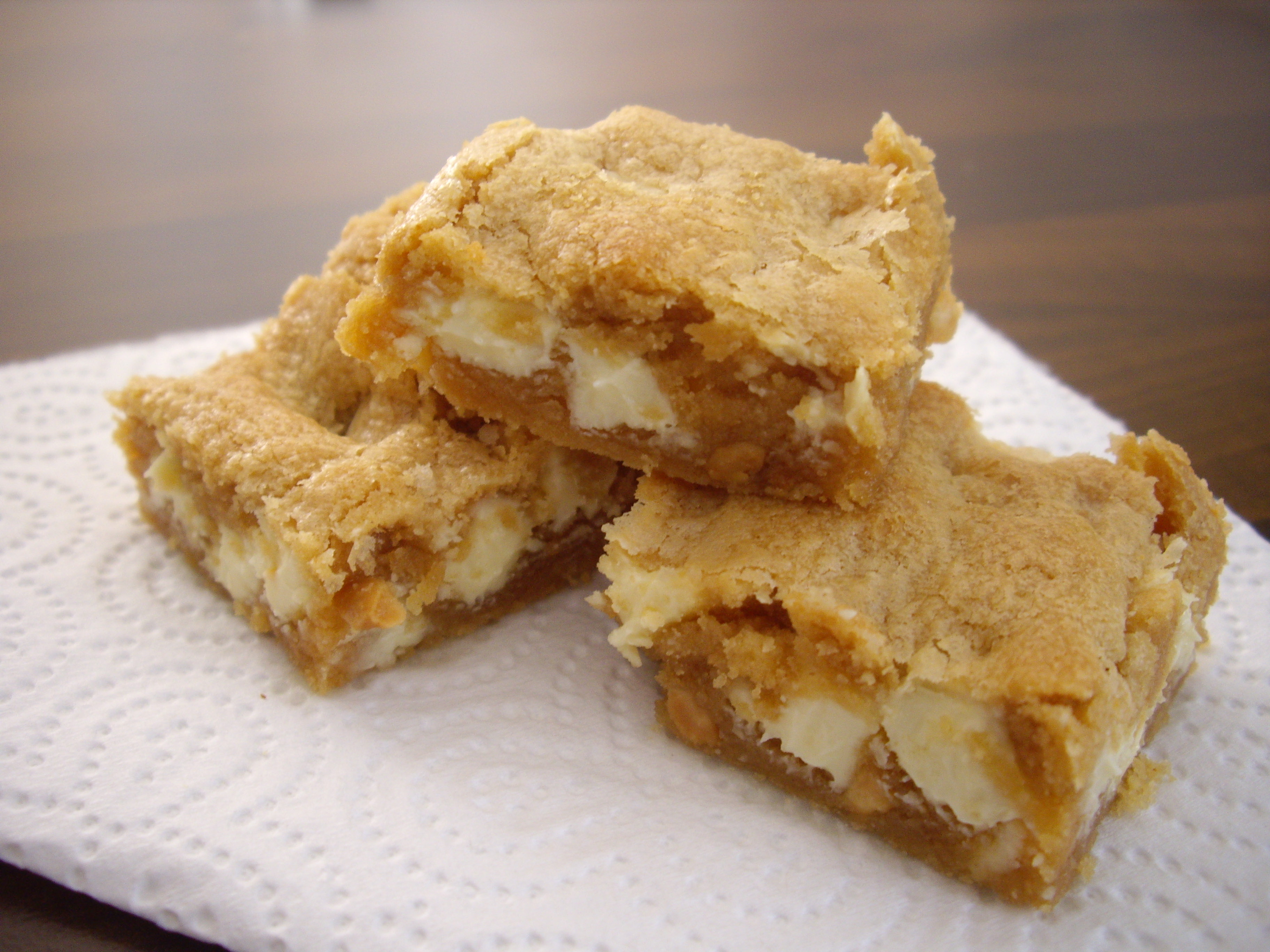
The blondies will puff up and turn ever so slightly golden.  Don’t allow them to brown.  The blondies will still be very soft when you take them out.  The hardest part is waiting for them to cool.  If you try to lift them out (and I have), they’ll break up.  If you try to cut them (and I have), they’ll be a mush.  If you prod them with your finger (and I have), well hey, it’s your finger, do what you like.  Once they are completely cool, they will have a wonderful soft, chewy texture and will hold their shape after being cut into little squares.  If your loved ones like white chocolate as much as my wife, you’ll earn major brownie points- or should that be blondie points?  Sorry, couldn’t resist.

Things got meze- part 2. My kingdom for a Greek meatball!

I’ll bet ten drachma that every self-respecting wife and mother in Greece has her own meatball recipe.  In Greece, you’ll find keftedes on the islands and the mainland in all shapes and sizes.  My mum has her way of making them adapted from my yiayia (grandmother).  My mum likes to brown the meatballs and then cook them slowly in a very rich tomato and red wine sauce.  We love her for it and I make a point of wearing something dark if I go round for some- the sauce is the reddest I’ve come across and permanently stains anything that it comes into contact with.

 My meatball recipe is very simple and that’s why I like it.  For the meze, I chose to make lots of small meatballs rather than the large ones that my mum would normally make for a main meal.  In a nod towards my Greek and English heritage, my perfect platter is a combination of the meatballs in that gorgeously rich lava of a sauce and a huge dollop of buttery mashed potato (with carrots in it).  A big bowl of crunchy cabbage salad helps to cleanse the palate if the sauce gets too much.  Here though, is my basic recipe for meatballs.  Perhaps mum will share the sauce recipe with me one day.  Here’s hoping!

Keftedes (Greek meatballs)

500g minced beef

2 eggs

2 slices white bread

1 onion (finely chopped)

150ml water

1 handful fresh parsley (finely chopped)

1 handful fresh mint (finely chopped)

1 tblspoon dried oregano

salt

black pepper

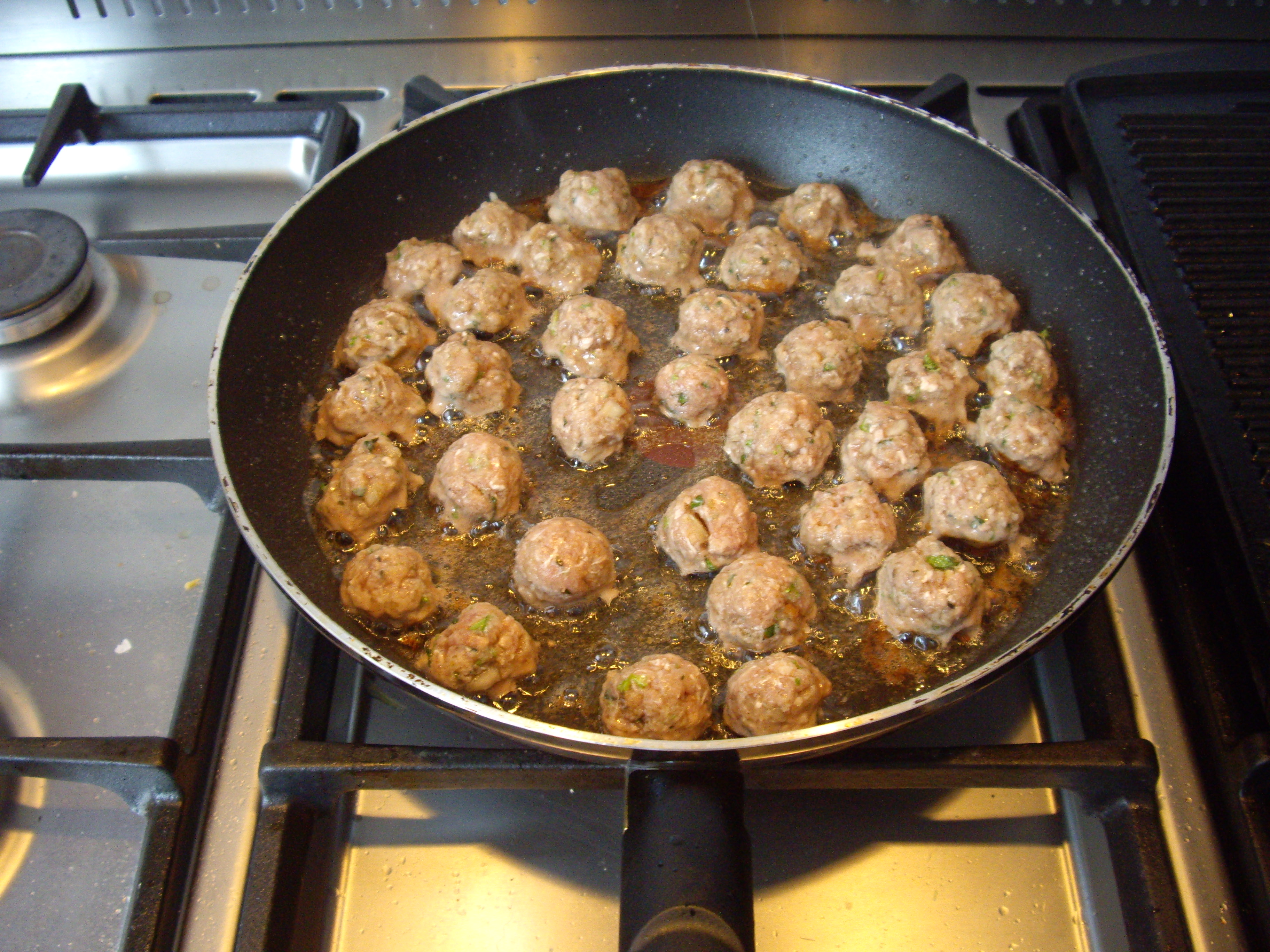
The keftedes begin to cook.

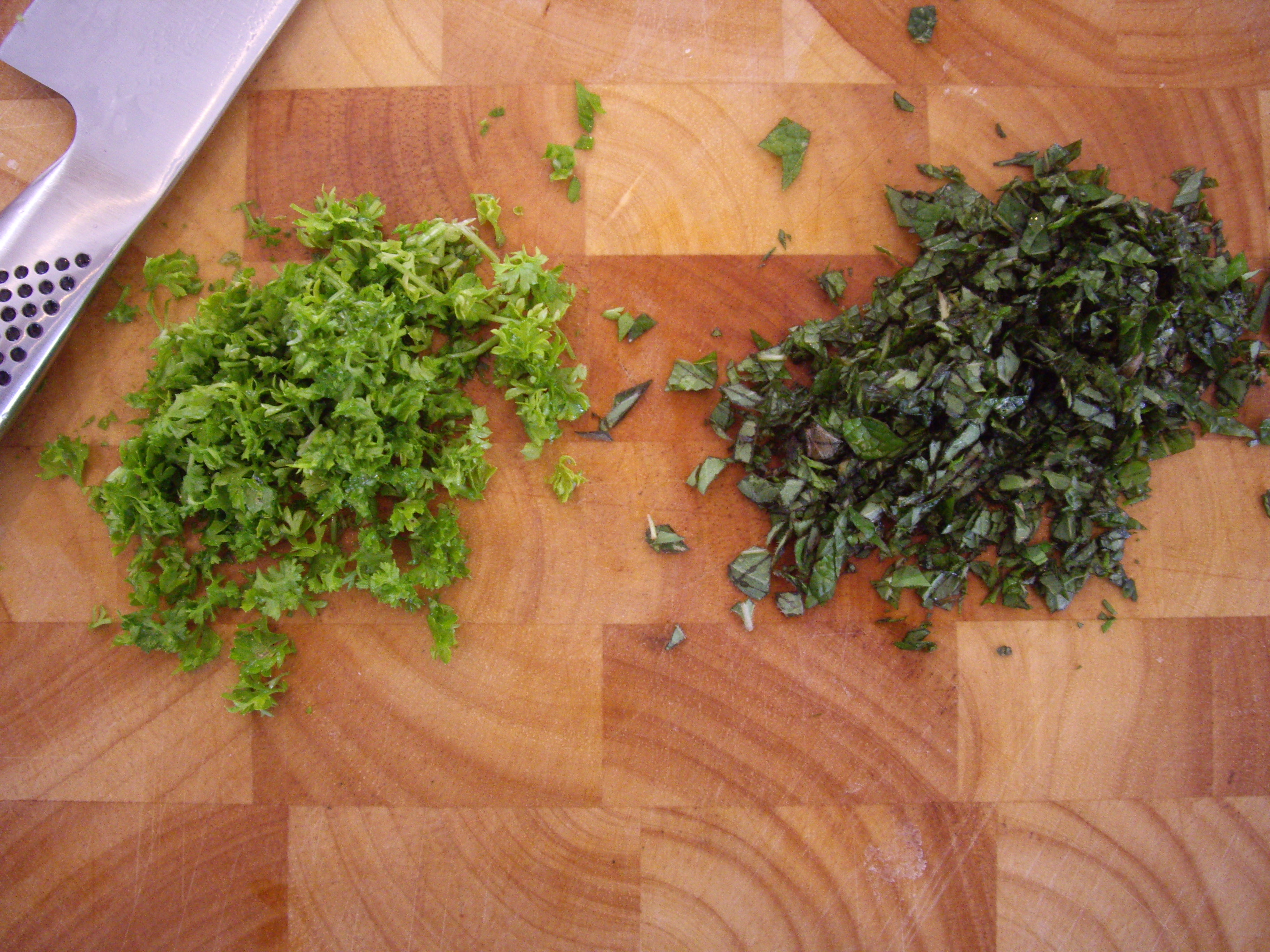
Soak the bread in the water for a little while and when it’s soggy, break it up into small mushy bits.  Combine the bread and all of the other ingredients in a bowl by rolling your sleeves up and going to work on it with your hands.  Season the meatball mixture well and heat plenty of oil in a large frying pan ready to fry the meatballs in batches.You’ll need at least enough oil to completely cover the base of the pan, but ideally, the oil would come half way up the meatballs.  Not a recipe you’ll find in weight loss handbooks, but great as an occassional treat.

It's easy to see which batch needs turning next.

Roll the meat into little balls and place gently into the hot oil.  The trick here is to leave the meatballs alone.  Poke and prod them at your peril.  They will crumble and break if you mess with them.  A couple of minutes should be enough to brown them and allow you to turn them over without destroying them.  At this point, it is worth mentioning that if you haven’t chopped the onion very finely, you’ll have a harder time keeping the meatballs together. If you’re going to cook the meatballs in a sauce, you need only brown them.  Since I was serving the meatballs with a little lemon juice and tzatziki, I had to make sure they were cooked all the way through.  You don’t wanna mess with mince.  Meatballs that are pink in the middle?  Not a chance.

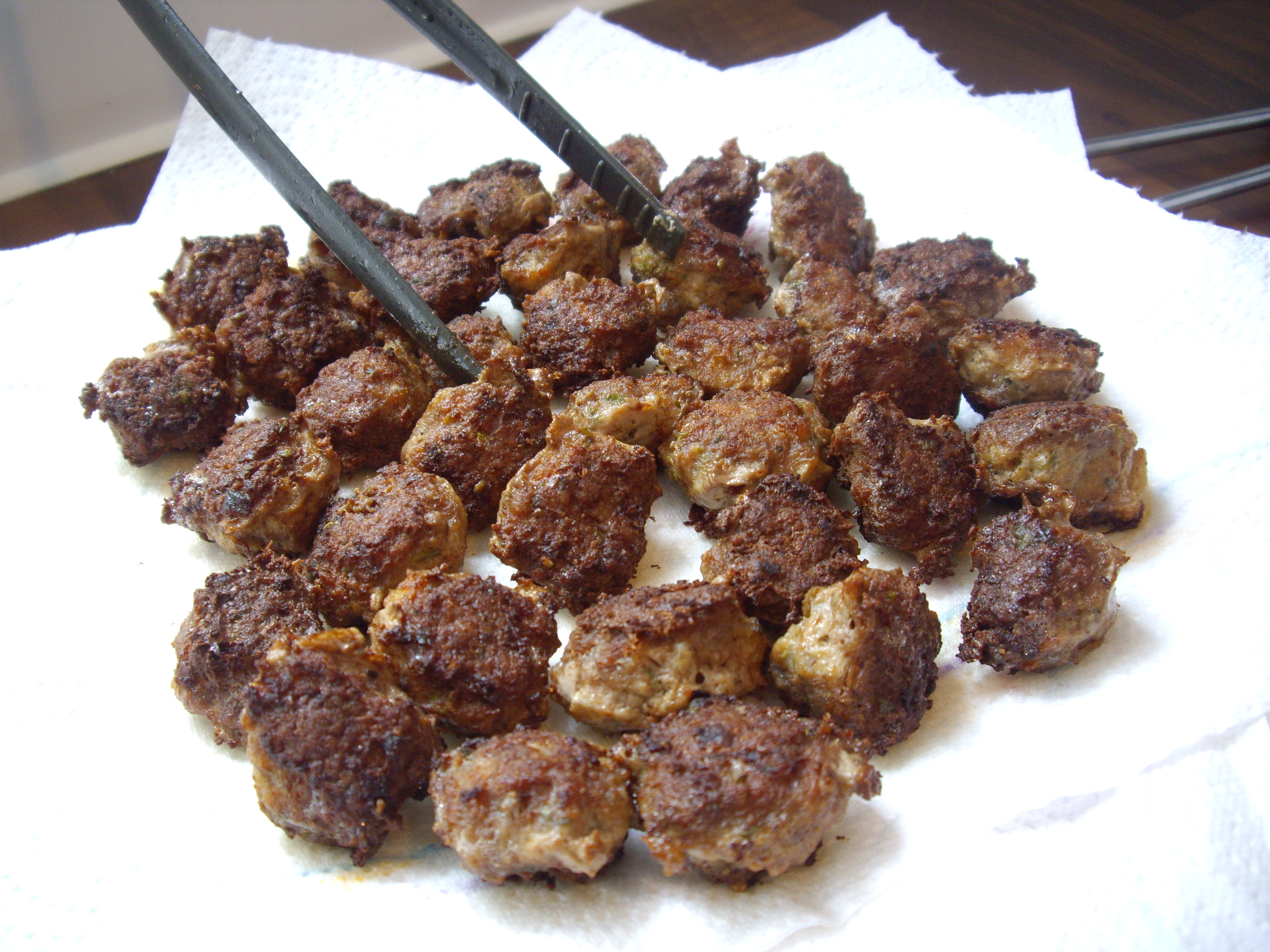
The kitchen paper soaks up excess oil.

Place the cooked meatballs on a plate with some kitchen paper and finish cooking all of the mixture.  You can serve these hot or cold and once they’re cool, they can be refrigerated for a day or two.  Just make sure to reheat them fully if you want them hot.  As a child, I used to love raiding the fridge the day after we’d had meatballs.  I would sneak into the kitchen, grab a plate and squirt tomato ketchup onto it so that I could dip the cold meatballs in it before dinner.  For the meze, I assumed that my guests would be expecting something a little more authentic.  Maybe next time…

Keftedes and tzatziki are a good match.

Things got meze- part 1

As a child, when I went to a friend’s house “for tea”, I was never given stuffed peppers, pastitsio, stifado or any other dish that my mum would spend hours preparing.  I was well aware that mum had special cooking powers that she had acquired whilst in Crete and that other mums (poor souls) had access only to their native cuisine.  Therefore, I did not expect anything more than pizza and chips or fish fingers and chips or something similar (with chips).  What interested me, even as a youngster, was the reaction of my peers to some of the meals that I’d grown up on.  Let’s just say that not all children are as open-minded as one would hope.

In the global society that we inhabit today, children are exposed to a variety of different cuisines, sadly many of them will be in some form of take away.  I say sadly because it’s unlikely that the majority of children that eat food from different cultures will be enjoying an authentic experience that truly represents the country of origin.  However, it’s certainly encouraging to see children eating new and diverse food.  Children tend to pick up on the types of food eaten in different countries and often use this as a way to identify those places.  Food associations can be very strong.

Last year I invited friends and family round for a Greek night.  It was a chance for me to cook some of the food that I loved and to share it.  I was most surprised about the perceptions of Greek food that people had and how little people knew about it.  In that respect, the night was a success because lots of people were able to widen their experience of Greek cuisine beyond, the almost ubiquitous, moussaka.  This week, some friends came round for meze- small portions of (Greek) food traditionally served with drinks.  I was excited about seeing them and not least because they had requested some Greek food.  No fish fingers then.

I’d like to share two of the recipes from the meze that I think are fun to make and really tasty.  The first is a vegetarian snack that could be easily adapted for other vegetables and ingredients.

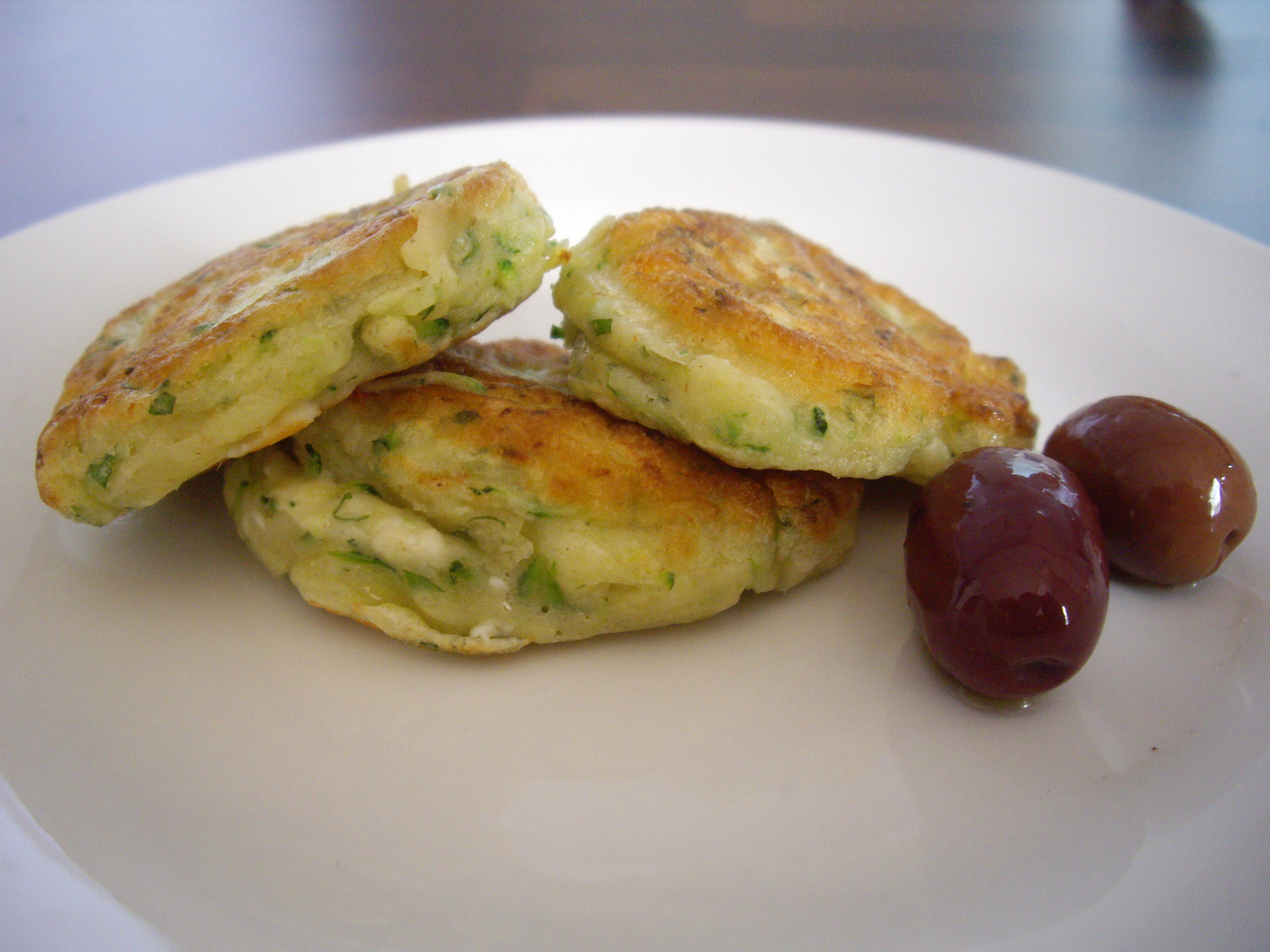
Courgette and feta fritters

150g feta

2 courgettes

2 eggs

200g plain flour

2 tspoons baking powder

100ml soda water

handful fresh mint (chopped)

salt

pepper

olive oil

Courgettes pack serious amounts of water.

Begin by making the batter.  Throw all of the dry ingredients into a medium-sized bowl and then add the eggs and water whisking constantly.  The more air you get into the batter, the lighter the fritters will be.  I used to make these with just a little water added, but after spotting Annabel Langbein‘s addition of soda water, I’ve not looked back!

Grate the courgettes into a bowl lined with either a tea towel or kitchen paper.  Lift the courgettes out and squeeze as much water out as you can.  Discard the water and mix the grated courgettes into the batter with lots of chopped fresh mint, plenty of beautiful black pepper and salt to taste.  Finally, crumble the feta into the batter and gently stir it.  Don’t break the feta up too much or it’ll be lost in the mix.  It’s nice to get little chunks of feta throughout the fritters.
Heat a frying pan and drizzle a little circle of olive oil around it.  When hot enough, drop spoonfuls of the batter onto the oil at intervals.  When the underneath is golden, flip the fritters over.  It’s possible to dry fry these in a non-stick pan, but the fritters will look pale and wan.  Place the fritters on a plate with some kitchen paper to soak up excess oil.  To be honest, the fritters retain most of the oil and are not greasy to touch.  I like to sprinkle sea salt over them when they are first cooked and they’re great with tzatziki.  The batter mix is a winner and works really well with a host of different vegetables.  It’s very versatile and perfect for summer!  Enjoy.

The Curse of Boredom or: Why I have to create.

The sun has got his hat on.  In fact, he’s had it on all day and promoted numerous gardening activities in the neighbourhood and general lethargy in our household.  The heat coaxes you into slowing down and the brightness makes it much easier to just let those eyelids drop.  Summer sure can be pleasant, no doubt.  Left to my own devices while N and the baby napped, I was going to be able to soak up every generous ray of sun and have a few chilled drinks.  Settling into a hot garden chair and kicking off my flip flops, there was only one thing that could possibly spoil this blissful peace.  Me.

No matter how idyllic the beach, forest, mountain or garden, there’s no keeping me still for very long.  I need to do stuff.  I need to be active.  I need to be making things.  There are exceptions to this rule and I’m incredibly lazy when I wish to be.  Today, however, I could not sit still.  I crept into the kitchen to see what was in the fridge/cupboard/freezer/fridge again.  Nothing jumped out.  Sigh.  I flopped down at the PC and had a quick browse on the internet.  Then, suddenly, I spotted something that I had all of the ingredients for.  A quick glance over my shoulder to check the fruit bowl and yup, there was a solitary lemon available.  Great!  Former pastry chef and now citizen of Paris, David Lebovitz was about to provide me with my entertainment for the next hour.

Of course, I couldn’t resist messing around with the recipe and adding my own bits and bobs.  The main ingredient, however, was not going to change.  A single lemon.  Not just the juice.  All of it!  I added blueberries and some mace and ginger to the recipe for my own taste, but kept most things the same including the timings.  I quite enjoyed making these lemon and blueberry slices.  I think they’d work well as tartlets.

What to do with a solitary lemon?

Lemon & blueberry slices (adapted from David Lebovitz)

For the base-

140g plain flour

120g melted butter

50g caster sugar

1/2 tspoon vanilla extract

1/4 tspoon ginger powder (optional)

1/4 tspoon powdered mace (optional)

1/4 tspoon salt

For the topping-

1 lemon

200g caster sugar

3 eggs

4 tspoons corn flour

45g melted butter

1/4 tspoon salt

handful of fresh blueberries

After lining a small, rectangular tin with foil, I began making the base for the slices.  First, I combined all of the ingredients in a bowl to form a sandy coloured dough.  I pressed this into the lined tin and baked it for twenty-five minutes at 180 degrees Celsius.

Meanwhile, I prepared the lemon topping using a hand blender.  I cut the lemon into chunks and blended it with the sugar, eggs, vanilla, corn flour, butter and salt until smooth.  There were still some bits of lemon that would add plenty of what Lebovitz calls “zing”.

When the base was golden, I pulled it out of the oven and poured the yellow lemon mixture over it all. I then dotted it with the fresh blueberries. I turned the oven down to 150 degrees and baked the mixture for another twenty-five minutes until it wouldn’t wobble.

After that, I went for a stroll along the beach with the dog, the baby and N, who was wondering why I hadn’t spent the afternoon sunbathing.  When we got back, everything had cooled and was ready to be cut and dusted with way too much icing sugar!

Upon tasting the slices, I was quite impressed, but being completely honest, they weren’t sweet enough for me.  I agree that using the entire lemon is a stroke of genius (nice one, Mr. Lebovitz), but they were a little tart- pun definitely intended.  I’m a big fan of mace, but again, I don’t think it’s for everyone.  This is definitely a recipe that I’ll return to this summer and perhaps update with something new.

Blame it on the baby.

Most of the time, what I choose to cook is based on factors like the time of year, what’s in season, what I haven’t eaten in a while and perhaps an idea for something new that I’d like to try.  My wife (N), is usually happy to be the guinea pig and give me some constructive criticism.  We tend to agree on meals for the coming week and then shop for the ingredients we need if we’re super organised.  Other weeks seem to be a blur of what I can throw together with the impulse buys from a previous trip to the supermarket.  It’s not very often that N will make a specific request, but when she does, boy, do I get excited!  I get a real kick out of preparing stuff to order, as it were.  There’s just enough pressure to make me aim for perfection and I find that making food for others feels very different to making it for myself alone.

A couple of nights ago, N happened to say, “Ooh, d’ya know what I could just eat right now?  A nice chocolate mousse!  Not that I want you to make one now.  I’m just thinking aloud.”  It was all I could do to remain in my seat and passively comment, “Hmmm..I’d eat one too.”  The next day, I rushed out to get enough eggs so that I could prepare the mousse while N was out with friends.  Chocolate mousse is very easy to make, but I managed to mess up just about every stage of it and can only blame it on my baby boy, who was curiously watching me drop eggs on the floor, spill yolk into the bowl of egg whites and generally make a silly mess.  I’m happy to say that no adults were present to stifle sniggers as I went from one disaster to the next, though I could have done with someone sensible to assist guide me.

The lavender in my garden has exploded this year and I haven’t used it much in the kitchen yet.  The chocolate mousse was a perfect chance to add some background flavour.  I cut about five or six buds and steeped them for 20 minutes in boiling water in a mortar.  I then used the pestle to grind the buds for a minute before passing the liquid through a fine sieve.  Next, I passed the liquid through a couple of paper kitchen towels and then once more through a single piece of kitchen paper into a white ramekin so that I could make sure the liquid was completely clear.  It sounds like a chore, but I ended up with a good amount of lavender water that I could use to add flavour to food.  The taste is not a dominant one, so if you decide to do the same, don’t expect the flavour to be obvious.

The recipe for dark chocolate and lavender mousse below is a good one, in my humble opinion.  One element falls short of being completely successful though.  The dark chocolate overpowers the lavender and I regret not using milk chocolate instead.  Here, it was my own taste rather than my common sense that determined what should be in the mousse.  Dark chocolate works much better with equally powerful colleagues such as chilli, cinnamon, cardamom, orange or ginger.  Milk chocolate is light enough to take on the flavour of lavender.  The method for making the chocolate mousse is still useful and I hope you get as much pleasure out of the result as N did.  You may wish to substitute the dark chocolate for milk chocolate if you want to really taste the lavender.  Alternatively, you could just leave out the lavender and enjoy a bit of dark indulgence on its own!

Dark chocolate and lavender mousse

175g dark chocolate

4 eggs (separated)

50g caster sugar

5 tblspoons lavender water (optional)

Break up the chocolate and melt it gently in a glass bowl over some hot water.  Melting it too quickly will give you a grainy texture, so patience is the name if the game.  You could melt it while separating the eggs.  Beat the yolks with lavender water and in a separate bowl, whisk the whites until they form soft peaks.  Add the caster sugar to the whites and whisk again for a couple of minutes until incorporated.

Take the chocolate off the heat and stir until there are no lumps left.  Allow it to cool slightly before pouring in the yolks and stirring well.  Add the chocolate mixture to the whites and fold in with a spatula.  After whisking lots of air into the whites, you don’t want to undo your work by stirring.  As the proteins in the egg whites unravel, they link to one another forming tiny structures that we see as air bubbles.  Stirring destroys these bubbles which is what can make your mousse dense and gloopy.  Take your time and you will see the colour of the mixture change gradually as the whites take on the brown chocolate.  Once it is completely brown, pour the mousse into glasses or ramekins and refrigerate for two or three hours.  With this recipe, I was able to fill four small white ramekins to the top.  It works out roughly as one egg per person, but you will need to increase the amount of chocolate too if you plan on making larger quantities.

This slideshow requires JavaScript.

A creamy, comforting, cuddle in a bowl.

Has anything good ever come along and then remained unchanged?  I very much doubt it.  All things change, it’s the nature of our universe.  Besides, people always want to have things their way.  Folk have their tastes and preferences.  Pizza is perhaps the worlds’ most popular take away food and comes in so many different forms.  It has changed a great deal since it was first created.  In fact, many of those “pizzas” offend Italians who often have very clear perceptions of what constitutes a genuine pizza.  Gino D’Acampo finds it all a bit perplexing in Buonissimo!  He encourages readers to make a Margherita and add some ingredients to make it more exciting “as long as it’s not pineapple – what is that all about?”

I’ve touched upon this subject before when sharing a recipe for paella.  One has to be very careful about recipe titles because when it comes to food with heritage, it is very easy to incur the wrath of proud and passionate people.  This is no bad thing.  It does mean that food bloggers need to write sensitively about regional food and be clear about what something is, or in many cases, isn’t.

Pasta Carbonara.  It’s a dish that I actively avoid at restaurants.  I’ve eaten gloopy, eggy, garlicky, salty heaps of the stuff and rarely felt like doing anything afterwards except perhaps having my arteries cleaned.  In its simplest form, Carbonara should be silky and smooth and made with little more than egg yolks and a few simple ingredients.  My own version of this dish includes double cream, which for many, will instantly relegate the recipe to the rubbish restaurant examples mentioned earlier.  However, there are no gimmicks in this dish, only good ingredients and simple cooking methods.  My version is by no means traditional or definitive, but neither is it an attempt to insult or distort the original.  I’m not too worried though, since Pasta Carbonara is a 20th Century recipe and less likely to fire up any genuine anger from would-be pasta experts.  In any case, what passes for Carbonara  in my house, is a creamy, comforting, cuddle of pasta and dairy decadence.  It never fails to satisfy.

Creamy, comforting Carbonara

200g dried pasta (I used spaghetti)

200g bacon lardons

75ml double cream

2 eggs

50g parmesan cheese (grated)

2 tblspoons fresh Greek oregano (finely chopped)

50g butter

sea salt

pepper

This slideshow requires JavaScript.

I boiled up the pasta as per the packet instructions and then heated a large amount of butter in a separate pan to fry the bacon in.  When the butter had melted, I added the bacon lardons and the oregano.  I fried them until just brown and poured in the cream.  I then took the pan off the heat and stirred everything.  I then ground quite a lot of pepper into the sauce and tipped all of the cheese in before giving it another good stir.

In went the cooked and drained pasta, but I didn’t add any of the pasta water as chefs often make a point of recommending these days.  I tossed the pasta in the sauce before adding the eggs and stirring continuously until everything was silky and ready to devour.  The real beauty of a good Carbonara is the glossy coat that the eggs give to it.  If you make the mistake of adding the eggs while the sauce is cooking, or indeed while the sauce and pasta are still on the heat, you’ll end up scrambling the eggs and getting the same texture as egg fried rice.  It’s really important that the pan is off the heat and also that your eggs are pretty fresh.

All that’s left is to enjoy it with a grating of some more cheese and a good glass of white wine.  Now that’s what I call comfort food!

Matzo, matzo man.

Reading Ruth Reichl‘s Garlic and Sapphires left me with among other things, a curiosity about the tastes and origins of some of her home-cooked food, as well as her restaurant experiences.  The simplest recipe included in her autobiographical story of food criticism in The Big Apple is called Matzo Brei.  Living in a pocket of North West England means that culture is something you have to actively look for.  A few miles out of town and the streets begin to display more diversity and a glimpse of the cultures beyond this sceptered isle.  Here though, in a coastal resort town with a transient population and a seasonal tide of unemployment and washed-up tourism, you’d have to look carefully to identify different faith communities and ethnic groups.  Growing up here means that children aren’t exposed to anything more than white Western culture.  It’s easy then, to understand my curiosity when reading a Jewish recipe for what has become a popular breakfast and comfort food for Jews all over the world.

It was with some excitement that I purchased a box of Matzo crackers a few weeks ago in my local supermarket’s world food section.  To be perfectly honest, I’ve been buttering the crackers and chomping noisily on them whilst preparing dinner each evening.  It wasn’t until today that I decided to make Matzo Brei using Ruth Reichl’s simple recipe.  As a big fan of scrambled eggs, I was hoping to find a new fun breakfast for Saturday mornings and was keen to sample this Jewish dish.

The crackers are broken up into pieces and soaked in some water in a colander until they are damp and beginning to soften.  Once added to a bowl with a couple of eggs, they’re seasoned with a little salt and stirred.  Butter is melted in a pan and the mixture cooked gently.  The mixture can be formed into little pancakes, or as in Ruth Reichl’s recipe, broken up like scrambled eggs.  I followed the recipe carefully (how could I go wrong?) and sat down eagerly with the finished dish and a glass of iced coffee (my new addiction).  I’m glad that I tried this out and it was certainly interesting, but lets just say that I won’t be in a hurry to ditch my buttery scrambled eggs each Saturday…

This slideshow requires JavaScript.

On the menu this week.

Aside

Making the fritters and meatballs was fun and I hope you enjoy the recipes.  What next?  Well, I think a home-made pizza is on the cards and something a little different too.

Also, I bought some filo pastry the other day and I’m not sure what will come of that.  Any ideas?

Strangers in the night exchanging pasties.

Goodness knows why I chose to start making them so late, but it was after midnight before I’d finished photographing my piping hot pasties!  Now, I can guess what you’re thinking.  “You said that Saturday was pie day”.  Yes I did.  Truth be told, I had my heart set on a big steak and ale pie with a deep, dark gravy and tender pieces of fatty beef within.  No sooner had I made my decision and begun to plan my recipe, then I was distracted by a recipe that looked like lots of fun.  So I write to you now with mixed feelings because first of all, I’ve made some pasties which are a type of pie, but not what I had planned, and secondly, the recipe is not my own.  The last point is particularly hard for me to admit because I so wanted to share with you a pie recipe of my own design.  However, I won’t dwell on it because the recipe turned out to be magnificent and has given me lots of ideas for future pastry-based concoctions!

Since my overriding intention is to share good food and ideas that really work, it would be a shame to omit a good recipe just because it didn’t originate in my butter-filled mind.  It would also be downright dishonest to claim this joyous medley of ingredients as my own.  I thoroughly enjoyed testing this recipe out and was delighted with the results.  My only issue was the timing of the cooking.  I’d started very late and this meant that there was no daylight left when it came to photographing the end product.  Food doesn’t look its best when photographed at night and the yellow tinge, coupled with shadows, gives things an unappealling look.  I decided to go ahead regardless.  My photography is anything but professional, but my insistence on showing what actually comes out of the oven pushed me to do my best.  The fact that the spotlights in the kitchen have stopped working means that for the next couple of recipes, I’ll be trying to take pictures while the sun is still out.  Meanwhile, let me assure you that this recipe is well worth trying and that cooking the pasties late at night was oddly exciting.  I think I’d enjoy being a nocturnal pie man.

Cheesy bacon and leek pasties

1 pack puff pastry

250g smoked bacon lardons

2 leeks (sliced)

150g Cheddar cheese (grated)

1 Golden Delicious apple (peeled and finely cubed)

1 potato (peeled and finely cubed)

75ml double cream

1 egg (beaten)

1 tspoon Dijon mustard

vegetable oil

knob of butter

pepper

Fry the bacon lardons in a little vegetable oil until brown and crispy and then add the leeks with the butter.  Cook them until soft and then stir in the double cream and the mustard.  Grind plenty of black pepper in at this point.  Remove from the heat and stir in the grated cheese.  Keep stirring until the cheese has completely melted.  Now it’s time to fold in the apple and potato.  They should be uncooked when added.

Flour your work surface and rolling-pin and roll out the pastry until it is about half a centimetre thick.   Place a small plate on top and cut round it.  Take a large spoonful of the cheesy mixture and place it on one half of the pastry circle.  With some water, wet the edges of the pastry and bring the empty half to meet this edge.  Press down firmly and use a fork to help seal all the way around.  You’ll have to crimp the edges now by folding over the pastry a little at a time from the edge inwards.  This will create a good seal and prevent all of the filling oozing out during cooking.

Brush the whole pasty with egg wash and bake in the oven at 170 degrees Celsius, on the middle shelf, for forty-five minutes.  I would let these beauties cool for a few minutes before serving.  They also taste great cold.  I reckon I’ll be making some mini versions for a picnic soon!

This slideshow requires JavaScript.

Colour me summer.

One thing that I’m keen to point out to people when talking about my love of food and cooking is that my passion for it far outweighs my skill.  Interestingly, most people assume that I have lots of skill in the kitchen and that I’m a very adept amateur chef.  If only.  After years of experimenting with different flavours and tipping countless plates of food into the bin, I’m simply more in tune with what will work and what will turn my stomach.  Now, I’d be doing myself a disservice if I was too disparaging about this acquired skill.  When asked about the difference between a cook and a chef, Michel Roux said that a chef was someone with an exceptional palate that had been developed over the course of a minimum of ten years.  Well I wouldn’t say that my judgement was exceptional, but I’m usually able to avoid disasters.  My failures in the kitchen tend to be lack-lustre dishes, the odd mismatched combination of flavours or some overcooking.  A far cry from the horrors produced as a student.

Cooking every day has given me an eye for good quality vegetables and an appreciation of what goes well together.  Once you’ve established a dish using certain ingredients, it’s often easy to transfer everything to another type of recipe.  For me, where there’s Chorizo, I know coriander and onions will not be far behind.  The following recipe came about by accident, but turned out to be a really cheerful meal that I’ll be making again in the future.  It was just a case of putting together a team of ingredients who would get on with one another.

Summer fritatta

3 eggs

5 baby new potatoes

2 ripe tomatoes (roughly chopped)

100g Chorizo (thinly sliced)

1 onion

1 red chilli (deseeded and sliced)

1 green chilli (deseeded and sliced)

handful coriander (roughly chopped)

grated Cheddar cheese

olive oil

salt and pepper

Boil the potatoes for twenty minutes, cut into thick slices and set aside.  Slice the onion thinly and fry in a drop or two of oil until beginning to brown and set aside too.  Season the eggs and whisk them vigorously for a couple of minutes until you can see plenty of air bubbles. Next, pour into a small heated frying pan (mine’s 23cm) with a little olive oil.  Start adding all of the ingredients, making sure that you spread them out evenly.  Push the potatoes and tomatoes down into the egg to allow room for everything else.  Finish the fritatta with lots of grated Cheddar on top and a little more seasoning.  Leave it to cook on the lowest heat until most of the egg mixture has coagulated.  When only the very top is still running, finish it under a very hot grill until just golden.

Fritatta is great for slicing and sharing.  It makes a really versatile brunch dish, or could be eaten for lunch with a salad.  I love the fact that it tastes marvellous whether it is served hot or cold.

This slideshow requires JavaScript.

Where’s the skill in that?

Not long ago, I used to watch a programme called Market Kitchen that showcased recipes using seasonal, well sourced ingredients.  Every now and again, short clips of famous chefs and food writers would be shown in which they were asked to tell viewers what their guilty (food) pleasure was.  Since the show championed home cooked meals and fresh ingredients, it was a nice little reminder that even the most dedicated of chefs enjoy the odd bit of commercial rubbish.  Answers ranged from kebabs to fish finger butties with ketchup to shop bought coleslaw.

For the average viewer, there might be a few raised eyebrows.  “What’s wrong with shop bought coleslaw?”  Chefs and food writers obviously want their eating habits and their opinions on food to be respected.  I love fish finger sandwiches with ketchup, but I don’t run a restaurant in London and people won’t question my palate if I admit to it.  It was nice to hear that French trained, fussy chefs were humans with childhood memories and the odd craving for something they ate in their days as students.

Food snobbery is definitely rife on television and perhaps in our kitchens.  I’m definitely guilty of it.  In one instance, I can look down my nose at someone stocking up on boxes of frozen meals, and in the next, shove a frozen pizza in the oven after work.  That kind of hypocrisy is easy to spot and rather dumb.  Convenience has come to define late twentieth Century food, and this, combined with the global impact of growing, farming, processing, packaging and transporting food on a massive scale, has led to a growing interest in the origins and quality of food.  It also means that foodies like me have become very judgemental about food that might be processed, artificially flavoured, microwavable or worryingly cheap to buy.

I’m making an effort to be less snobby and more realistic about what is possible in the kitchen when working full-time and trying to have a life.  Does one really have to make stock from scratch?  Am I a barbarian for using Oxo cubes?  Should I be shot at dawn because I sometimes use a jar of Thai curry sauce instead of blending my own paste?  There has to be a balance.  I’d like to say that the food I make on a daily basis combines lots of fresh ingredients with a few of the conveniences we’ve come to rely on in modern times.  I don’t have the equipment to make my own sausages and I’m happy to get mine from the butcher.  I will, however, make my own bread when the mood takes me.  I love throwing in a frozen pizza when time is against me, but there’s nothing like making your own dough and the satisfaction that you get from pulling out a bubbling home-made pizza from the oven.  Essentially, it comes down to being able to control what is on your plate.  How much salt, fat or sugar do you want?  How big do you want your portions to be?  How does your family like a dish to be served?  What is the best way to cook it?  How can you use what’s in the fridge so that nothing goes to waste?  Do your meals give you what you need each day to lead a healthy life?  Does what you eat taste exactly the way you want it to?  If the answers to these questions aren’t important to you, then shopping for and cooking food is going to remain very straight forward.  For me, it’s a daily consideration.  Trying to balance my best intentions with a realistic and manageable approach to cooking is challenging at times, but it is extremely enjoyable.  In writing this blog, I’m keeping a record of the recipes which I feel achieve that balance.

Feeling naughty?  I am.  Especially after making this little pudding using a few bits that I had in the kitchen.  There was zero effort and so much guilty fun in eating it.  I was almost too embarrassed to write about it, but it was so good that I have to.

Toffee crumble sundae

3 scoops vanilla ice-cream

2 all butter shortbread fingers

handful of pecans

toffee fudge sauce

I poured some toffee sauce into the bottom of a dessert cup and then crumbled shortbread on top.  Then I pushed a scoop of ice-cream in and repeated these layers until I got to the top.  I toasted the pecans for a couple of minutes in a dry pan, threw them on top and poured lots more toffee sauce on.  I know what you’re thinking, “Gosh!  What a skillful cook!”

Definitely a guilty pleasure.

Pie time.

Don’t ask me what will be in the pie or what type of pastry I’ll go for, but come what may, I’m making a pie on Saturday.  I’m playing around with two ideas.  One is a steak and ale pie.  The other is a bacon and leek pie.  However, there is a wild card.  Having recently watched someone make a hand raised pie, I’m beginning to plan something along the same lines for the future.  I may need a new pie tin for this, so we’ll see what happens.  There will be pastry, hearty fillings and high fives on Saturday evening.  All I need to do now, is come up with a recipe worthy enough and try to steer clear of pie puns.

I want the moon on a stick!

I just wanted a fun recipe that would bring together chicken and Chorizo.  That’s not a tall order.  I came up with the idea of combining the two in the simplest of forms- meatballs!  As I’ve already mentioned, chefs with painted grins on Youtube had beaten me to it.  Not to be defeated, I bought a few ingredients and made my mind up to keep everything very simple.  Big flavours, satisfying result.  That was the goal.  All I had to do was control my urge to add lots of different spices, herbs and random bits that would end up robbing the meatballs of their distinctive taste.

Chicken and Chorizo meatballs

500g minced chicken

120g Chorizo sausage (skin removed)

1 green pepper (diced)

1 lime

1 egg

vegetable oil

sea salt

black pepper

Chop the Chorizo into small pieces.  This isn’t easy because of the high fat content and the firm texture that comes with cured meat.  Put the Chorizo into a large bowl with the minced chicken and the egg.  Season with plenty of salt and pepper, squeeze the juice of one lime over everything and work the mixture with your hands until thoroughly combined.  Mix in the diced green pepper and then begin to roll the mixture into little balls.  Try to push the green pepper into the centre of each ball so that it won’t break away when it cooks.

Heat some oil in a frying pan and brown the meatballs in continuous batches until there is no mixture left.  I managed to make just over forty, but it all depends on how much mixture you use for each one.  You could always make these into burgers if you wanted something more substantial.  Transfer each set of browned meatballs to a baking tray and when it’s full, slide onto the middle shelf of a preheated oven at 180 degrees.  Cook the meatballs for about fifteen to twenty minutes until they’re done all the way through.  Don’t be tempted to eat them if they’re still pink in the middle.

I liked the idea of threading these meatballs onto wooden skewers and I served them like that with Mexican rice and a Chipotle relish.  Sour cream and guacamole would be great to dip into, but to be honest, these little beauties are best appreciated on their own.  For once, I didn’t mess up a perfectly good idea by tinkering too much with decent ingredients.  As always, there are lots of things that could be added to the meatballs, but I’m very happy with how small the list of ingredients is.  This time, I’ll agree that less is definitely more.

Chopped fresh coriander and another squeeze of lime does the trick.

Great artists steal? Are you sure?

Deciding on what recipe to write about next was quite easy.  Well, deciding what ingredients I’d use was simple.  I’ve not eaten chicken for some time so I made up my mind to do so this weekend.  I then began to think about what kind of interesting flavours I could use to liven things up.  Chorizo popped into my head straight away.  Then the fun part started: How could I combine the two in a fun dish on Saturday night?  I came up with the answer quite quickly, but then realised that if it only took a short time to come up with a recipe, perhaps others had done the same.  I Googled the title of my recipe and found that there were quite a few results.  I was disappointed, but not surprised.  Chicken and Chorizo is a good combo and there are plenty of ways to create interesting dishes with both of them.  Still, when I watched a chef on Youtube knock up the exact dish that I’d decided to make, I was annoyed.  I don’t like copying and I try to be as original as possible in pretty much every aspect of my life.

That said, I’m going to find a way to make my recipe unique so that I can share it with you guilt free.  Now that’s the kind of challenge I like!

The Sausage Strikes Back.

Hearty, yes. Healthy? Not so much.

Should I feel guilty about my blatant love of bacon?  Should I look at the floor in shame the next time I see a sausage?  I think not.  Sausages are awesome and the English are not alone in their affection for them.  The Spanish, the French, the Germans and even the Greeks produce their own types of sausage using a range of ingredients and techniques.  There are sausages on every continent and over four hundred and seventy varieties of sausage in England alone.  Among my favourites, Cumberland sausages stand out, but today I chose to use Linconshire sausages in a famous dish called toad in the hole.

I say famous, but it’s the title that has made it so, rather than the qualities of the dish itself.  Perhaps I’m being unfair because it can be a very tasty dish.  I’d love to tuck into this on a cold winter evening when the wind is whistling through the trees and the tiles on the roof chatter like teeth in the storm.  Ahem, where was I?  Ah, yes, sausages in batter.

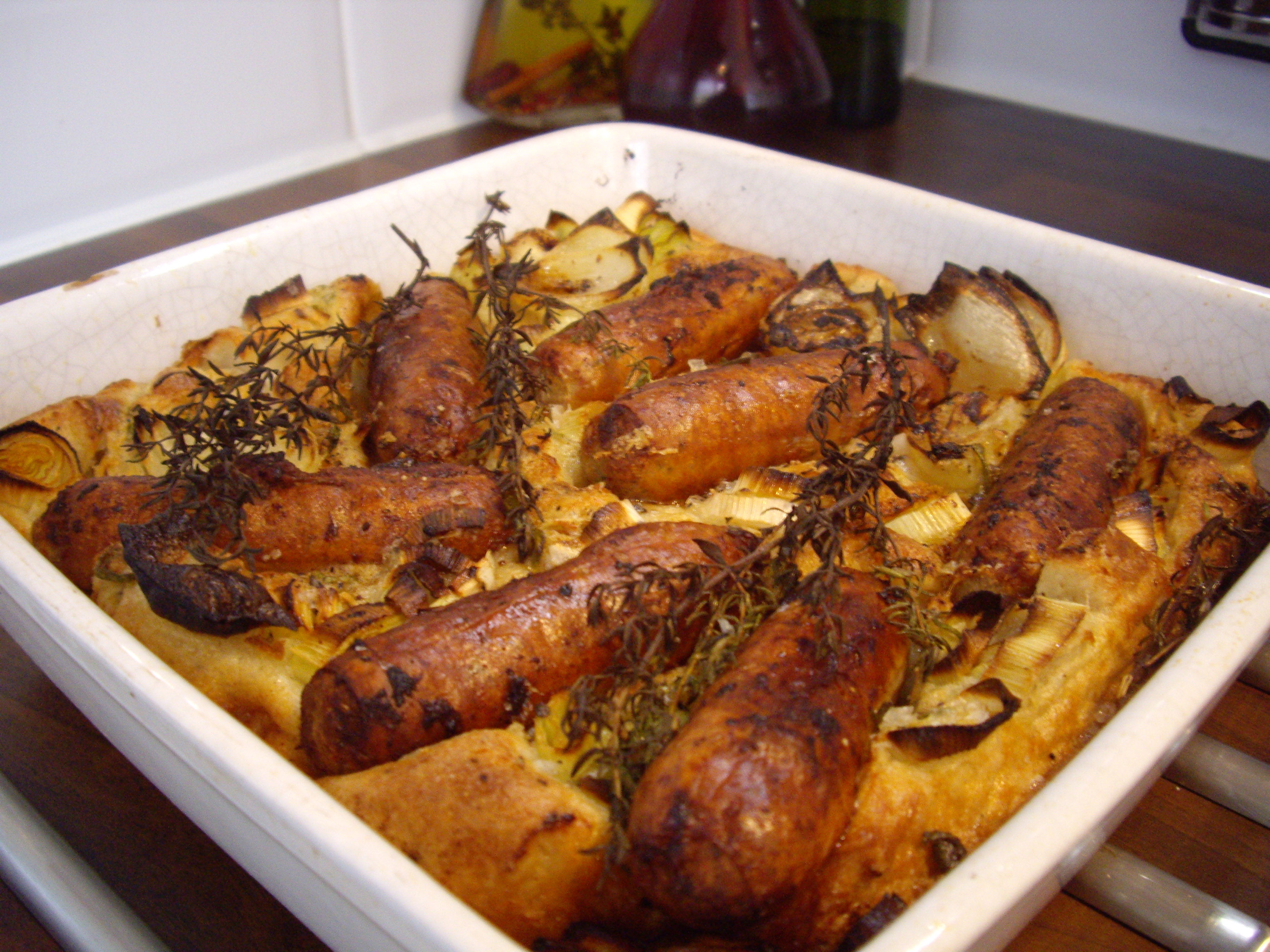
Toad in the hole

7 Linconshire sausages

300ml cold water

1 onion (quartered)

3 cloves garlic (peeled and halved)

1 leek (sliced)

1 egg

130g plain flour

3 sprigs fresh thyme

3 sage leaves (sliced)

sea salt

pepper

vegetable oil

I’ll be perfectly honest, I had never made toad in the hole before this and there was a certain amount of trepidation when I made the decision to try it out.  How hard could it be?  Batter, sausages, cook until golden.  Surely everyone can manage that!  I decided to brown the sausages first in the frying pan before adding them to the baking dish.  It should be a one pot wonder, but I don’t like pale sausages.  I fried the sausages on the lowest heat for about fifteen minutes until browned and cooked through.  I then beat the egg with the water and made a thick batter by adding it to the flour and whisking.  I ground some black pepper into the batter.  For me, this is almost a reflex action and sometimes I have to stop myself adding pepper to things!  I had to prepare the herbs and vegetables which gave me some time to heat the oil in the dish I was to cook the toad in.  I chose a shallow, square dish, but it doesn’t matter too much as long as you can get all your sausages in and get the oil hot enough.  I set the oven to the highest heat possible and put the dish in the centre with enough oil in it to just cover the base.  The oil needs to be smoking hot.

When the oil was ready, I removed the dish from the oven, poured the batter in and then began to arrange the ingredients.  I started by placing the sausages in the batter and then spread out the leeks and onion.  Next, I pushed the halves of garlic here and there and sprinkled the sliced sage over.  I finished off by laying the sprigs of time across the batter and sprinkled a generous amount of sea salt over the whole dish.  This all had to be done in a matter of seconds so as not to let the oil cool.  Straight back into the oven for 30-40 minutes.  Once the top was golden and the onions beginning to burn, I took the toad out and served it with peas and roasted carrots.  Gravy?  Of course.

I Heart Bacon

I’ve worn the crest of bacon proudly and held the banner aloft for many years.  In conversation, I’ve made sure that bacon has been represented well and that the merits of this delicious food have been fully discussed.  Of course, the question of sausages has arisen.  “Are sausages better?”  This has sparked nothing but passionate reiteration and the urge to eat a large breakfast barm cake.  It is only in the last five or six years that my eyes and stomach have begun to wander.  Sausages come in a variety of sizes and with diverse flavourings.  This means that the humble sausage has a lot of appeal to someone like me, who constantly looks for new things to try.  Bacon has a limited range of guises, but this does not really lessen the appeal.  Good bacon, hitting a hot pan has to be one of the kitchen’s greatest sensory moments.  The hiss of the water as the fibres in the meat release it and curl up, the sight of the edges caramelising and of course, the irresistible aroma that promises salt, fat and a satisfying chew.

BLT sandwiches are perfectly enjoyable, but I have to be honest and say that bacon is best on white bread with tomato ketchup.  No frills.  If you’ve had your hit of bacon and ketchup, you may find yourself looking for alternatives and this weekend I made a BLT that ticked plenty of boxes and kept me happy all day.  It was actually a bacon, basil and tomato sandwich.  As with all food of this sort, it is almost laughable to call the following a recipe, but I enjoyed every mouthful and really wanted to share it with you…the recipe, not the sandwich.

I fried a few slices of smoked back bacon.  While the bacon got crispy, I toasted some thick white crusty bread and smothered each slice in really good butter.  I added some mixed lettuce leaves and a great dollop of mayonnaisse before placing some halved cherry tomatoes on top.  Next I put some large fresh basil leaves on top of the tomatoes and finished with the bacon.  I wasn’t aiming to reinvent the wheel, I just wanted to use up some basil that was leftover.  I’m so glad I did!  It was a lovely addition to this classic sandwich.  

What would we do without bacon?


Respect for garlic.

Backpacking brings with it numerous food atrocities and experiences worth sharing if only to warn would-be adventurers.  Each trip is filled with moments to savour and moments to forget about, but each is unique and I guess that’s one of the many attractions of independent travel.  Last year, me and my intrepid wife returned to Eastern Europe to visit new countries and enjoy the rich culture of towns and cities we’d read about.  On the final leg of our journey, we stopped for a couple of days in Bar, Montenegro.  This coastal town had some great seafood and wonderful wine.  It was on a balmy night, at a rather basic-looking eaterie, that we sampled the best squid we’d ever eaten.  Grilled over an open fire and dressed in oil, lemon and garlic.  It was served with a potato salad and was one of the food highlights of our entire three-week trip.

Since then, I’ve been looking for ways to recreate what we’d enjoyed so much.  Part of that experience has found its way into a really simple pasta dish that I made tonight.  The dish includes king prawns, squid, lemon and chilli, but without doubt, the most important ingredient is the garlic.  Now I for one am a sucker for any dishes that feature large amounts of the stuff.  Used appropriately, garlic can really make a meal.  However, garlic is not something that everyone treats with respect in the kitchen and I have to say that my feelings on this are perfectly expressed by Anthony Bourdain when he writes, “Garlic is divine. Misuse of garlic is a crime. Old garlic, burnt garlic, garlic cut too long ago,  garlic that has been smashed through one of those  abominations, the garlic press, are all disgusting.” 

I stopped buying garlic from supermarkets a long time ago.  generally overpriced and anorexic, the specimens available for consumers is pretty embarrassing.  One trip to your local green grocer will confirm the disparity between the quality in supermarkets and what local veggie shops stock.  In fairness, the food miles clocked up for this quality produce is huge because I buy Chinese garlic.  Despite this, the sheer size and wonderful taste mean there’s no contest.  It’s the same with lemons, which again, are some of the poorest quality fruit on offer at supermarkets.  The insatiable urge to wipe out local independent stores by providing the widest range of produce possible, is not matched by well-sourced, high quality food.  This means that at some point in the near future, consumers will be left with no choice, but to buy all their  fresh fruit and vegetables from supermarkets because their choices locally have been reduced so much.  While some will be happy to part with their cash for bottom of the barrel produce, many will be disappointed unless they demand quality now.  I’m voting with my feet and supporting local suppliers.  It’s the only way to guarantee decent food!

Spaghetti with rocket, garlic, chilli and squid

150g dried spaghetti

4 squid

200g raw peeled king prawns

rocket leaves

1 red chilli

1 lemon

3 cloves garlic (finely chopped)

2 tblspoons fresh parsley (finely chopped)

olive oil

sea salt

pepper

Cook the spaghetti according to the instructions.  Meanwhile, prepare the seafood.  Cut the squid into thin rings and make sure that the beak has been removed by your fish monger.  Butterfly the king prawns by carefully running a sharp knife along the back of each one.  Grind plenty of pepper over the prawns and squid and set aside.

Next, heat some oil in a frying pan and add the chilli and garlic for a minute.  Throw in the seafood and toss to coat it all in the garlic.  Add the zest of the lemon and the juice of half of it.  The seafood needs to be cooked on a high heat for a short time to prevent it from becoming chewy.  Once cooked, add the parsley and make sure that everything is coated evenly.  You may need to add a little more oil at this point.  You don’t want it to be too dry.  Add the cooked spaghetti and fresh rocket leaves and season with sea salt and more pepper if you like it.  Make sure that the pasta and seafood are mixed well and add more lemon and oil to taste.  Serve immediately.  White wine’s a winner with this!

The simplicity of this dish is obvious. The flavours? Full on.

The slower, the better.

Our best intentions are challenged daily and we often find ourselves making choices we thought we wouldn’t.  This applies to food too.  When I’m tired, grumpy, or both, what sort of food do I crave?  What sort of meals do I end up preparing?  Certainly not the kind that will benefit my family or my heart.  That’s why planning meals is useful.  Shopping for specific ingredients rather than random items that may or may not make a meal or two is definitely wisest.  Even so, there are times when unplanned meals come together with the ingredients in the fridge.  That’s what happened today and the results were tasty, filling and chalked up some brownie points with my wife.  She loves it when we, “use things up”, although, if we shopped smarter, we wouldn’t need to do so!  The temptation to resort to frozen pizzas or take away is not always easy to resist when you’re exhausted.  That’s one of the battles being fought by food lovers the world over, particularly the Slow Food movement.  Today, quality food prevailed.  I wanted to sit down and eat some cake, but you’ll be glad to hear that I chose instead to fight the good fight.

I decided to make an omelette with lots of my favourite things in it.  This is a fantastic opportunity to use up various bits and bobs.  It was also a good way of getting a variety of healthy ingredients into my body without resorting to making a salad.  Nice as they can be, I’m just not a salad fan, and listening to the rain hit the windows didn’t inspire any urges for a leafy dinner.  The variations on this recipe are too numerous to list, but I definitely would have use more herbs from the garden (thyme, Greek oregano, parsley, mint, marjoram) if the rain hadn’t been bouncing off the ground.  Use what’s in and try to keep it colourful.

Mediterranean Omelette

3 or 4 large eggs

2 ripe tomatoes (sliced)

1 courgette (diced)

1 red onion (sliced)

1 onion (sliced)

2 garlic cloves (sliced)

1 handful Kalamata olives (pitted & halved)

2 tblspoons fresh basil (sliced)

1 tblspoon dried oregano

olive oil

sea salt

pepper

Use a high heat to stop the courgette becoming soggy.

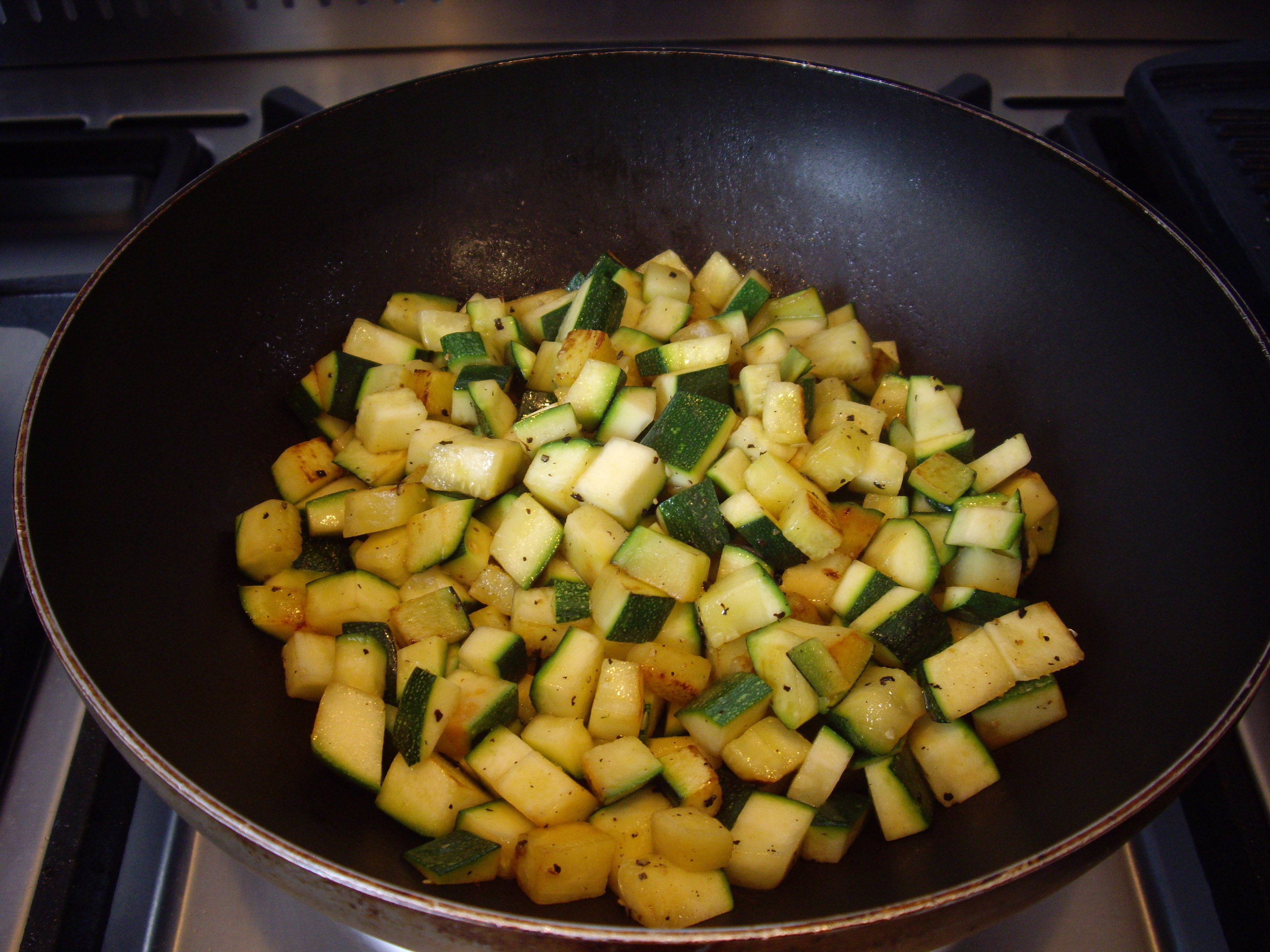
Heat some oil in a frying pan or wok and fry the courgette on a high heat.  Courgettes have a high water content and low temperatures will simply allow the courgette to release that water and go soggy.  Once it begins to brown, take it off the heat and set it aside in a bowl.  Next gently fry the onion and garlic until soft and just cooked.  Don’t brown them.  Set these aside too.

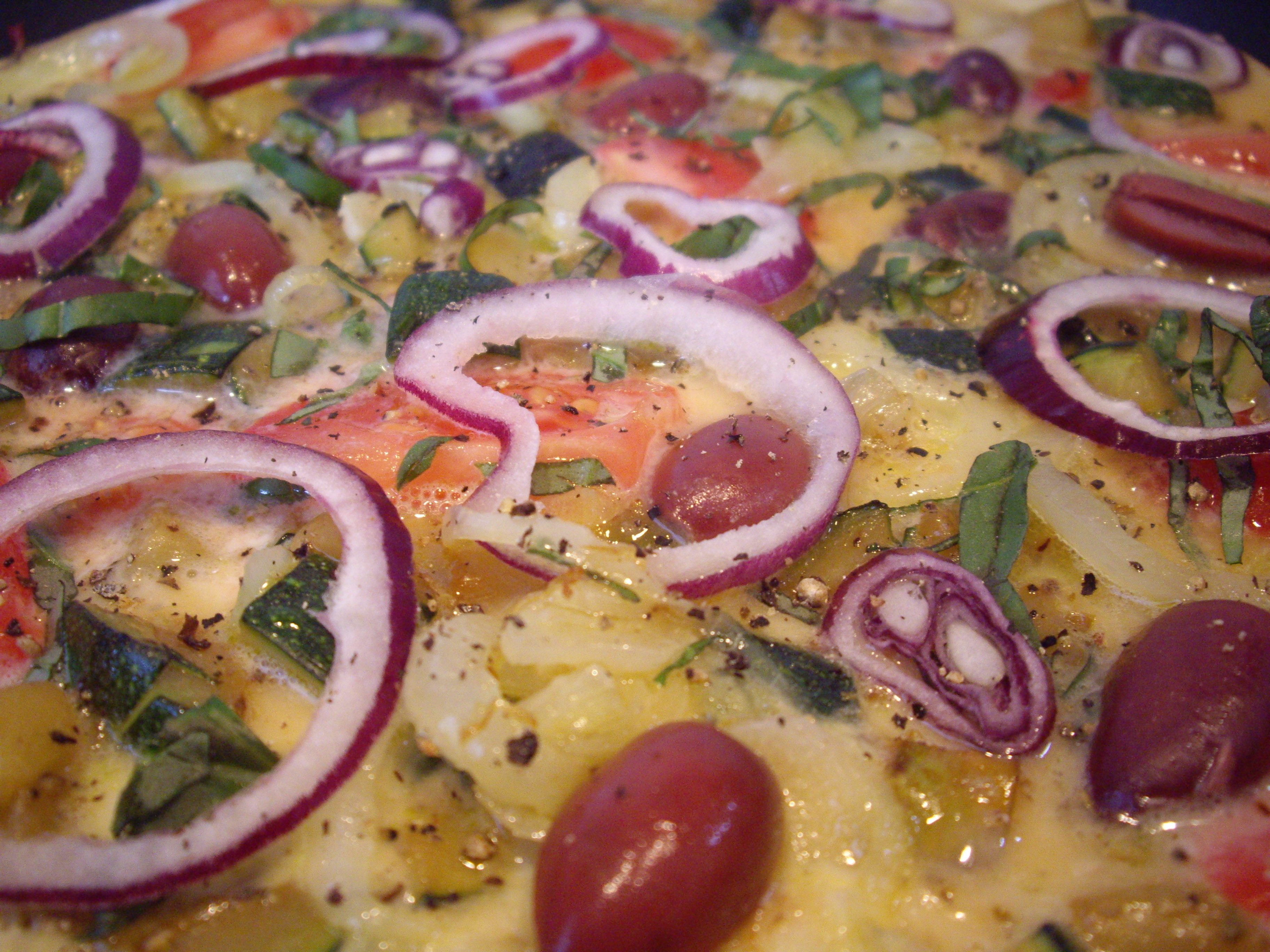
Beat the eggs and season with salt, pepper and oregano.  Heat a large frying pan and add a little oil before pouring the eggs in.  Quickly add the courgette, tomatoes, basil, onion and garlic and Kalamata olives.

Do they need to be from Kalamata?  Nope.  A huge variety of olives are available.  Spanish olives are the most common, though these tend to be poor quality unless you’re willing to spend more.  Be careful.  Some companies are well aware of the desirability of Greek olives and package their Spanish produce cleverly, going as far as displaying a small Greek flag on their jars.  The easiest way to spot dodgy olives is by looking out for phrases like Greek-style olives.  Like all things, paying a little more will give you a completely different product that is worth your time.  Simple dishes rely on the quality of the ingredients.  Perhaps I’m a little too passionate about olives.  Let’s get back to the omelette.

The simpler the dish, the better the ingredients need to be.

Cook the omelette on a low heat so that it can cook through without needing to be turned over.  I’ve included red onion in the recipe for colour and because I like the fresh, sweet taste.  It doesn’t really need to be cooked.  The white onion and garlic would be overpowering if left uncooked, hence the quick fry.  Add the red onion last and grind some pepper over the omelette as it is cooking.  Once the egg has cooked through and is no longer runny on top, slide it onto a plate and season again if necessary.  I think this is a great summer meal that could be shared and eaten with salad (if you want to live your life like that).  A little drizzle of extra virgin olive oil helps it go down a treat!

Eating colourful food makes you feel good!