Unknown's avatar

About Dimitri @ The Last Piece of Cake

A greedy Greek boy who shares his passion for food and recipes on his blog, thelastpieceofcake.com

Meatless Mexican munchables.

Are you sure this is vegetarian?

If there’s one thing that my little brother loves to eat, it’s meat.  There are few things that he would prefer to have on his plate and to have a meal without it is not something he relishes.  Therefore, my invitations have usually contained a reference to an exciting meat dish that we can share while we catch up on what’s been going on in our lives and have a laugh.  It was with some trepidation, then, that I arranged to cook a meal for him that did not contain the magic ingredient.  My anxiety was heightened because I had only decided at the last minute to cook a vegetarian meal and I wasn’t sure how he would react.

My wife is a vegetarian and  loves Mexican food.  I’ve managed to cook up some Mexican style stuff on a regular basis using veggie ingredients and even I don’t miss the meat because there’s always lots going on flavour-wise.  I make sure that I’ve got lots of fresh coriander, red chillies and tomato salsa to keep things interesting.  If we’re having fajitas, I use Quorn chicken pieces.  If we are in the mood for chilli, I use Quorn mince or something similar from other supermarkets.  At first, I found it disappointing and slightly strange, but I’ve stopped thinking of Quorn as a replacement for meat and just use it like an ingredient.  The taste is good.  It’s the texture that doesn’t always work in certain dishes.  I’m very confident when cooking with Quorn now because I’ve used trial and error to learn how to use it best.  Mexican food is perfect for it because the cooking methods stay the same as with meat and the results are very good indeed.

For my bro, I served up two dishes hoping to hit the mark with at least one of them.  Chilli beef tacos made with Quorn mince and chicken quesadillas made with Quorn chicken style pieces.  He loved the quesadillas, so that’s the recipe I’ve included below.  I’m slightly embarrassed because as you’ll see, it’s hardly a recipe at all.  However, it is a very quick meal to prepare and they’re surprisingly filling.  Quesadillas are also about as versatile as it gets so they’re great for using up ingredients or just experimenting.  My carnivorous sibling certainly ate his fill!

Veggie quesadillas (made with Quorn pieces)

300g Quorn chicken style pieces

6 flour tortillas

1 red chilli (sliced)

handful of fresh coriander (chopped)

1 bunch spring onions (sliced)

1 red pepper (sliced)

1 tspoon smoked paprika

1 tspoon dried oregano

300g Cheddar cheese (grated)

vegetable oil

salt & pepper

Heat a little oil in a wok or frying pan until almost smoking and then add the Quorn pieces, paprika and oregano.  Toss until the pieces are coated and season with salt and pepper.  Heat a large frying pan and place a tortilla in it without any oil.  Sprinkle large amounts of grated cheese onto the tortilla and top with the remaining ingredients.  Add more cheese on top and press another tortilla onto this to make something resembling a pizza-sandwich.  When the cheese has melted and the bottom is golden, turn the quesadilla over and continue to heat it gently.

These are great with the usual suspects: guacamole, sour cream and salsa.  Cut them into quarters and serve immediately.

Summer is definitely here!

Always take your culture with you.

Leaving Crete behind was a doddle for me.  I was five and plane journeys are another adventure with disappointingly small windows.  It was only as me and my younger brother grew older that we began to cling more and more to the scraps of Crete that were still within our grasp.  Vital to our connection was, and still is the food.  Our food.

We were blessed with a fantastic cook in the shape of our mum and even more important was her own passion and skill for creating Greek dishes.  Our weekly menu might include at least one well cooked Greek meal among the chips and potato waffles prevalent on English dinner plates.  The smell of cinnamon in meat dishes and oregano sprinkled on for good measure.  These are lingering memories that mingle with images of whole roasting trays lined with rows of stuffed peppers and bubbling pans of deep red lava dotted with meatball islands.  Finishing every meal by casting aside the fork and tearing up crusty white bread to get every last drop of flavour off the plate.  Every last drop of Crete.

One of our family favourites is without doubt pastitsio (pass-teech-ee-oh).  A dish of this lasted a couple of meals because of its size and in my opinion, the second sitting was always superior- the flavours had completely developed and the dish held itself together well.  Mum reckons it’s best straight out of the oven, but I think that’s her English attitude towards food and I can’t convince her otherwise.

Essentially, pastitsio is a construction job that yields a satisfying outcome.  I would love to demonstrate some sort of skill in preparation or dazzle with exotic ingredients that evoke rural Greece and its traditions.  However, the ingredients are basic and the method couldn’t be simpler.  I’ve adapted the recipe to suit my own taste and lifestyle.  This is another way of saying that I season it just the way I like it and I use ingredients that will allow me to get in from work and still get it on the plate without major effort.

Pastitsio.  My pastitsio.

500g minced beef

1 packet thick macaroni

1 large onion (finely chopped)

1 tin chopped tomatoes

1 glass red wine

1 tblspoon tomato puree

2 tblspoons dried oregano

2 tspoons ground cinnamon

1 tspoon ground nutmeg

Cheddar cheese (grated)

olive oil

salt & pepper

1 jar white lasagne sauce

The sauce must be thick.

I always chop the onion and fry it with the mince to begin with.  Before the meat is fully cooked, I add the cinnamon.  Adding it at the start means that the flavour will carry through the whole dish.  Too much cinnamon ruins everything so go easy.  It’s a nice background flavour and nothing more.  I also add the oregano and stir the beef thoroughly.  Once you’re happy that the mince is browned, add the tomatoes and gently simmer.  Add the puree at the same time and stir through.  Once it has reduced a little, add the wine.  I tend to bring everything to a rapid boil to get rid of the alcohol and then reduce the heat after a couple of minutes and simmer.

Tesco started selling this pasta last year.

At this point, it’s a good idea to get the pasta going.  If you can’t get the long macaroni in the photograph, do what my mum had to do for years- use penne.  Cook it according to the packet instructions and set aside in water until needed.  I season the meat sauce towards the end and keep tasting it.  The sauce needs to be quite thick, but not dry.  Once you’re happy with the sauce, it’s time to begin construction of the pastitsio.  I begin with a layer of the macaroni and then alternate between that and the sauce. until I reach the top of whichever deep dish I’m using.  Recently I’ve tended to use a circular ceramic dish because it’s the deepest thing I’ve got and pastitsio is a tower of awesomeness, not a flimsy lasagne.  When you’re nearly at the top, use a final layer of macaroni and then pour on the cheat ingredient- white sauce from a jar.  Some may tut in disgust, but it’s not very often that I make my own bechamel.  If you want to, fill your boots.  Grate or sprinkle the nutmeg onto the white sauce and then top with as much grated cheese is you can lay your hands on.

Macaroni, sauce, macaroni, sauce. You get the idea...

The best thing here is that you don’t need to do anything else until you want to eat.  This can be made in the morning and then put in the oven later that day.  Middle shelf at 180 degrees is enough to heat this through.  Obviously it will depend on how deep your dish is.  Mine was large and needed a while.  It is really important that you let the cheese melt and then go really brown and golden before removing it from the oven.  You can always grill the cheese if it isn’t brown and crispy enough.  My advice on serving is to eat it the next day.  If you really can’t wait, then give the pastitsio time to cool so that it firms up.  This will make it so much easier to cut and serve.  This is key to making a good pastitsio.  It should be able to stand on its own once cut.  It’s filling, but serving it with a nice cabbage salad with oil and lemon really helps cut through the rich flavours.  This is a slice of culture, memories and hearty nourishment.  It’s great at any time of year too.  Enjoy.

Is it as good as mum's?

Twice cooked pork.

As enjoyable as a dish might be, it is rare for me to want to eat the same meal two days in a row.  It would have to be very special or pizza or both for me to consider it.  Having roasted up a treat with the jerk pork, I had the task of eating my way through quite a lot of meat.  What could I do with meat that was already cooked?  Sandwiches?  Yes, some pork with chutney or apple sauce would be good, but not for dinner.

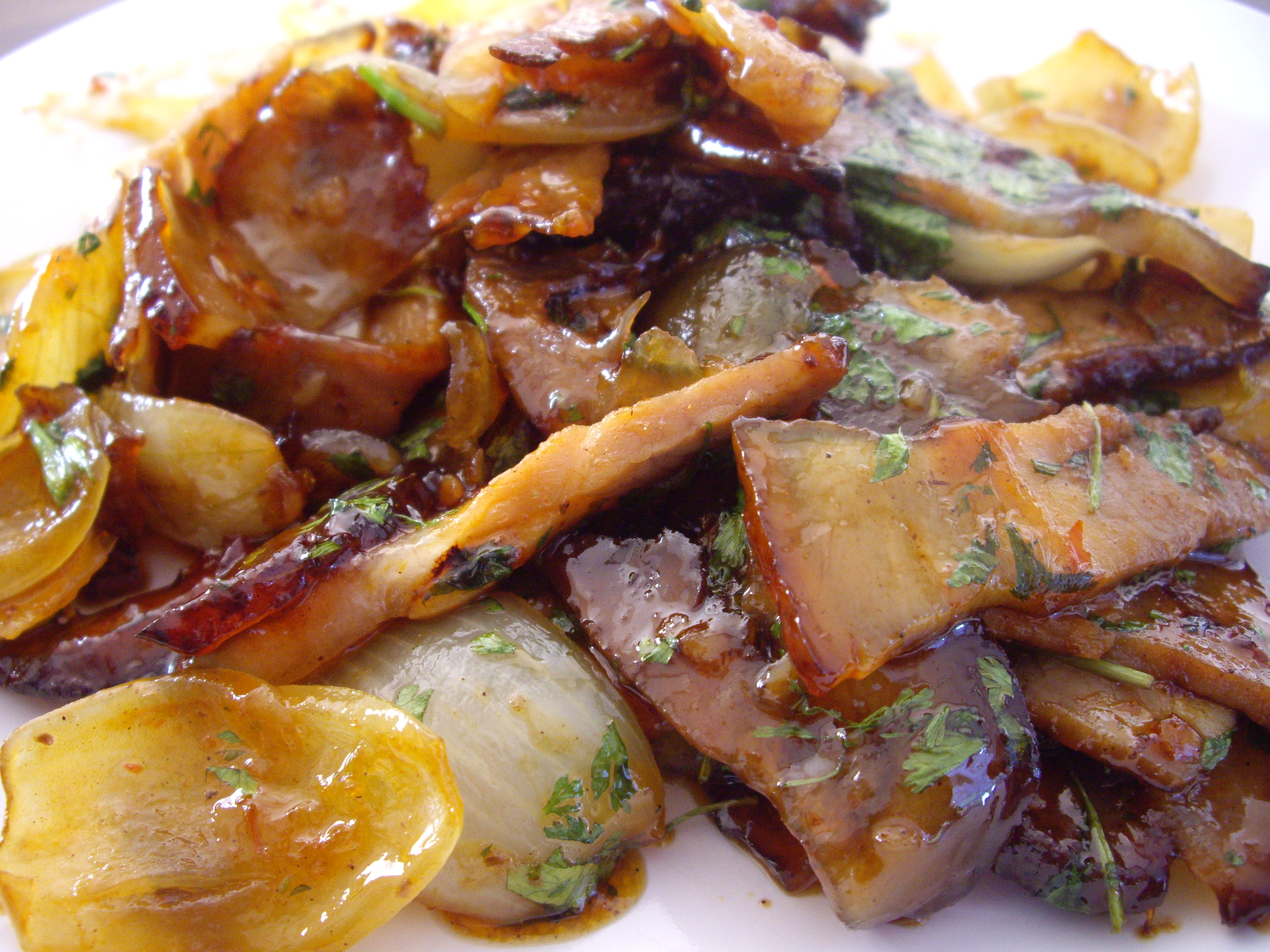
In Szechuan cuisine, there is a dish cooked on lunar feast days called twice cooked pork in which boiled pork belly is sliced thinly and fried with vegetables to create a new dish.  The roasted pork had a lovely, firm, yet moist texture that I thought would be ideal for slicing and frying.  Before I knew it, I was quartering onions and reaching for my big bottle of Thai sweet chilli sauce.  I’m not talking about something that looks like it came from a hotel mini bar with a blue dragon on the front.  I’m talking about a big daddy bottle of the real deal.  Tonnes of garlic, beautiful chillies and a very runny texture.  All at a fraction of the price, I might add.  Once done, I made some egg fried rice and tucked in.  I’ve found a new favourite in this dish.  It’s simple and ready in five or six minutes.  If only everything in life was such.

Thin slices fry quickly.

Twice cooked pork.

Thin slices of roasted pork

2 onions quartered

Handful of fresh coriander (chopped)

2 tblspoons vegetable oil

Enough Thai sweet chilli sauce to coat the pork

Slicing the pork was fun.  I then cut it into pieces ready for frying.  I heated up the oil in a wok until it was almost smoking and then threw in the pork.  I was greeted with a satisfying hiss and lots of spitting as the water in the pork made contact.  I added the onion, tossed it together and poured in four seconds worth of chilli sauce which was enough to satisfy my craving for sweet and spicy fun and sufficiently cover the pork.  I added the chopped coriander which gave the dish nice colour and freshness.

This dish ticks all of my boxes for a quick and tasty meal.  I’ve said that I don’t like to eat the same meal on consecutive days, but I might make an exception in this case.

The flavours in this dish are really fresh.

Salty and sweet?

It’s frustrating if you find yourself wishing to buy particular products that are unavailable because of high demand or worse still, because they don’t exist.  I’ve found the latter to be almost unbearable and being a resourceful young man, I often resolve the situation by making things myself.

A few years ago, Nestle brought out chocolate covered pretzels in the UK.  They were a flop, but they won my undying love.  Salty and sweet at the same time, they had the same qualities that drew me to peanut butter (another food that seems to polarize opinion).  Needless to say, the packets of salty awesomeness began to dwindle on local shelves and it wasn’t long before I was forced to take matters into my own greedy hands.

I find that these chocolate covered pretzels last only a matter of hours because they are very easy to munch on.  Today I dunked some in melted white chocolate (because it’s what was in the cupboard), but I adore dark chocolate and would sooner use that to coat the pretzels.  I used giant pretzels and laid them out on baking paper, but the normal sized pretzels are great too.  You can throw a load into a bowl of melted chocolate and gently fold them into the silky sweet fun!  Great for sharing?  No!  I can’t think of anything worse!

A half dunk looks cool.

Jerk pork roast.

Wonderful friends of ours live a couple of hours away and have access to numerous varieties of ethnic cuisine.  Thriving ethnic communities with distinct identities and sumptuous food culture pepper the residential areas close by and allow my friends the option of sampling these delights every now and again.  One place that they rave about on account of the “amazing gravy”, has become a by-word for spice and home-cooked soul food and I haven’t even been there!  I was the grateful recipient of a jar of their sauce which can be used in a number of ways including as the base for a rich and spicy gravy.

As I said, my cultured friends of food live a couple of hours away and I’m not prepared to drive there and back every time I run out of this special sauce.  That was part of the motivation behind my attempt to create a really strong marinade that could perhaps take the place of the amazing gravy.  It’s taken a few weeks of trial and error, but I think I’ve made a recipe for a very potent and versatile sauce.  It’s easy to make and I reckon it would work with chicken as well as pork.

Jerk pork roast.

1-1.5kg pork shoulder

110g soft light brown sugar

As much all spice powder as you can stand

8 cloves garlic

1 bunch spring onions (chopped)

2 red chillies (chopped)

Large chunk of fresh root ginger

2 tblspoons soy sauce

2 tspoons salt

1/2 tspoon cinnamon

1/2 tspoon ground nutmeg

I used a hand blender to combine all of the ingredients into a thick, strong-smelling mixture.  I made cuts into the pork and wore a pair of gloves to rub the mixture into it.  The combination of garlic and chillies have the potential to really make your hands stink so it’s worth wearing some thin plastic gloves.  I made sure that the sauce was worked into every part of the meat and I left a really thick covering all over.  I wrapped the whole shoulder in cling film and put it in the fridge for twenty-four hours.

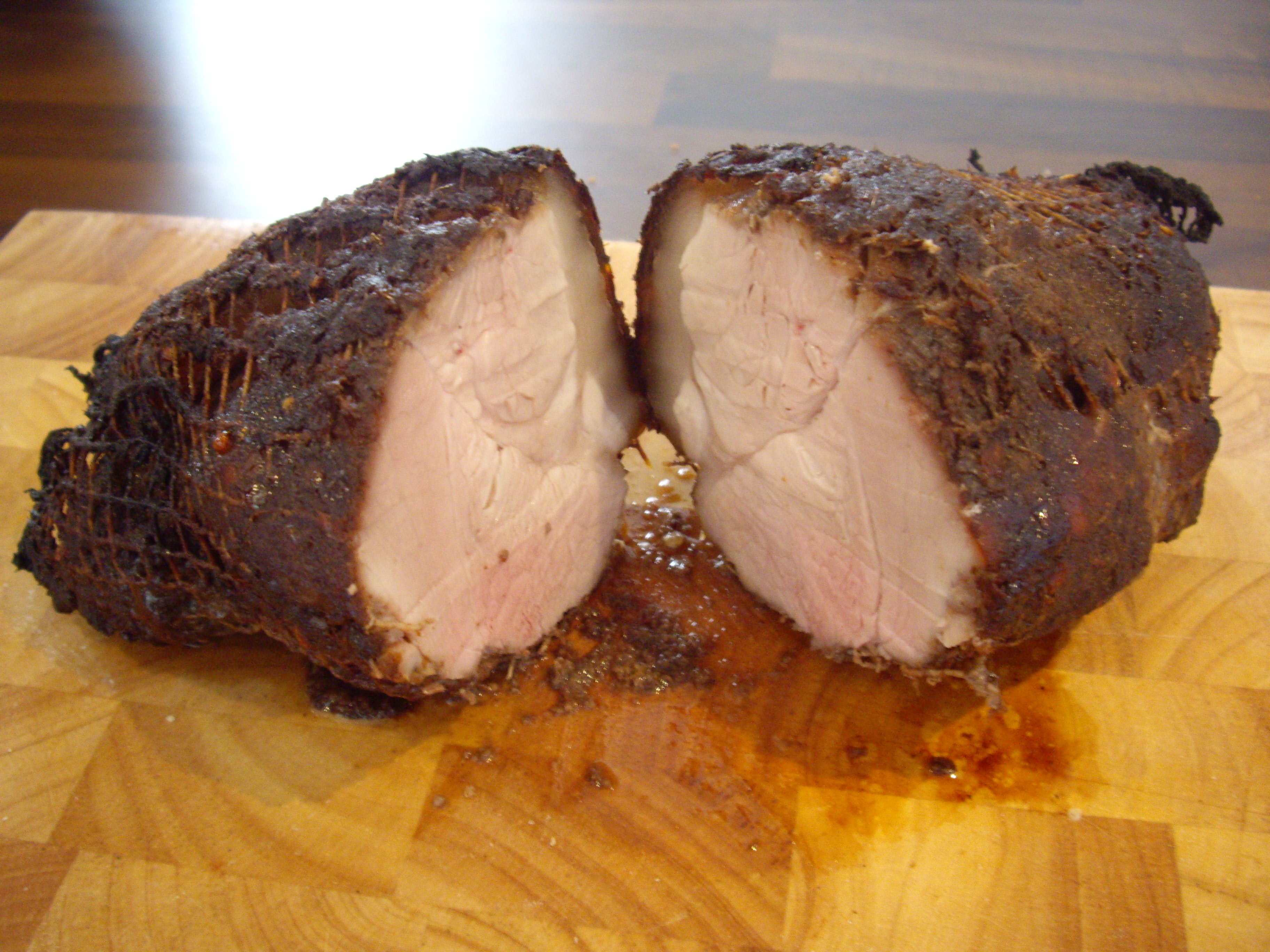
I brought the meat back up to room temperature for an hour before cooking.  I roasted the pork uncovered at 230 degrees for half an hour and then lowered the temperature to 160 degrees.  I cooked it for another hour.  Normally, I would have taken the meat out after an hour and a half or so.  However, the sun was blazing and the dog needed walking and I had to think quickly.  I turned the oven down to 75 degrees and went out.  When I got back an hour later, I tentatively lifted the pork out of the oven and inspected it.  Sure enough, it had a thick, black, crusty coating as I’d hoped.  The sugar had caramelized to form a casing over the meat and had prevented flavoursome juices from escaping.  There was hardly anything in the bottom of the roasting tin so it was lucky that I hadn’t planned on making gravy from the pan juices.  Upon cutting into the pork I found it was cooked all the way through and luxuriously moist!  I’ve included an exclamation mark there because I was genuinely surprised.  I’d expected the meat to be dried out and tough.

Ready to be carved.

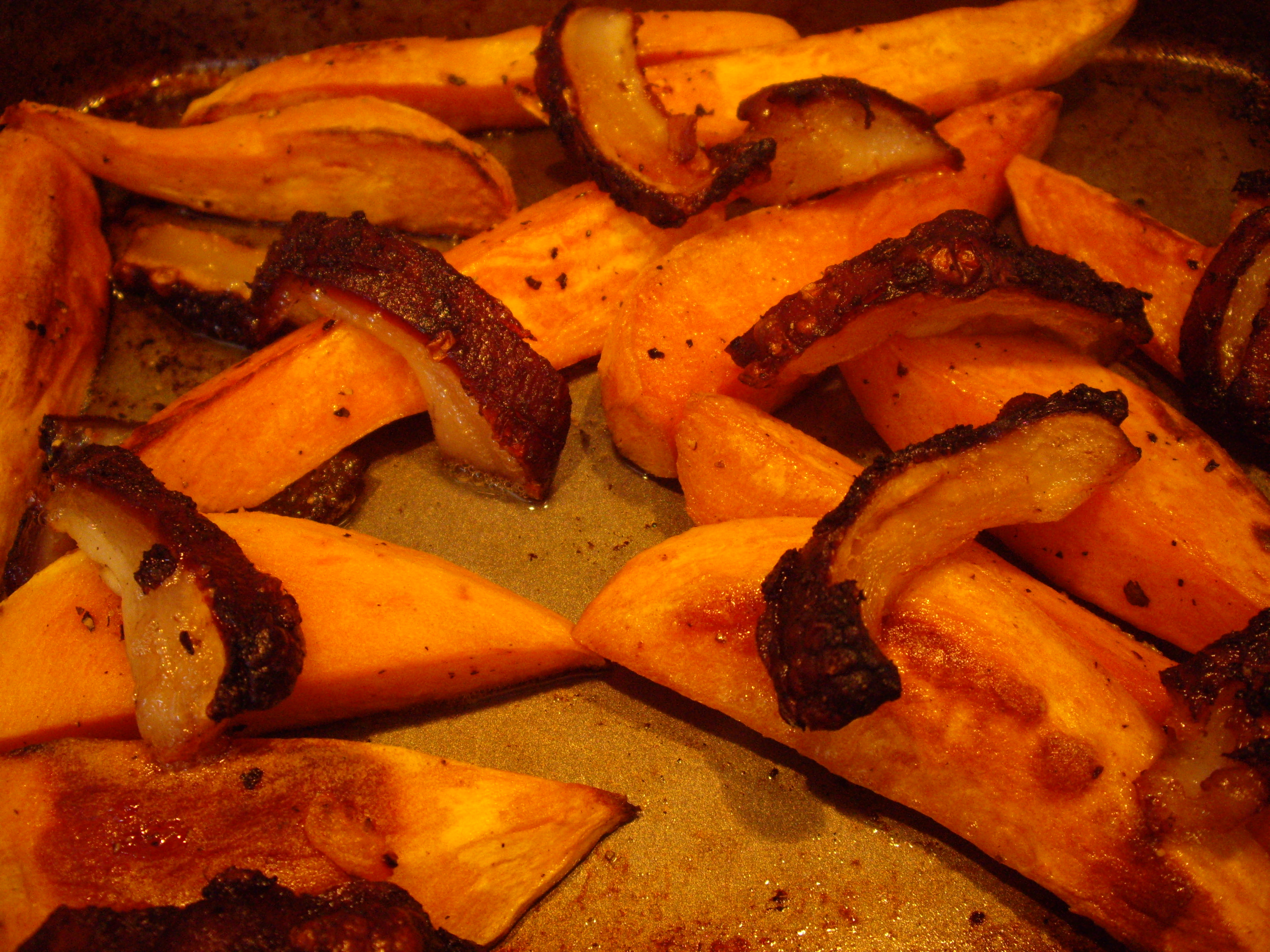
Carving the pork was a joy and I dished it up with roasted sweet potatoes and sweetcorn.  I don’t know if it’s authentic, but it was very tasty.  I cut off some of the fat from the pork into strips and threw them in with the sweet potatoes to crisp them up and add flavour.  I have to say, that I’m looking forward to using the marinade on some chicken thighs and serving them with rice.

Crispy pork crackling and roasted sweet potatoes!

Rainbow bright.

The marinated pork is roasting as we speak.  Just got enough time to throw in a simple rainbow trout recipe from last week.  My skills with fish are limited, but I make an effort to buy fresh fish once a week to keep everyone in good health and prevent myself defaulting to pizza.  Last week I spotted some really fresh rainbow trout that stood out from the display of ocean delights.  The eyes were really bright and clear which is a good indication of freshness.  Don’t bother checking the gills as everyone tells you.  They can be cleaned and don’t really guarantee a fresh catch.  There’s no disguising a milky, lack-lustre eye.  I decided to buy a whole trout and use fresh herbs from the garden to flavour it.  We enjoyed it with salad and baby new potatoes.

Fresh as it comes.

Steamed rainbow trout with lemon & fresh herbs.

1 whole rainbow trout (cleaned with head removed)

2 lavender stems with buds

1 handful fresh scented thyme

1 handful fresh Greek oregano leaves

1 handful fresh parsley

3 garlic cloves (halved)

1 lemon (sliced)

butter

olive oil

sea salt

pepper

After cleaning the trout and making sure that the cavity was clear, I simply arranged slices of lemon and garlic inside.  I washed and drained all of the herbs because they were straight from the garden and I didn’t fancy enjoying the nuances of our mini ecosystem on my tongue.  With that done, I kept all of the herbs in tact and stuffed them firmly into the trout.  I was tempted to tie the fish to prevent the herbs falling out, but this was supposed to be a quick meal with no fuss so I put a knob of butter on top, seasoned the fish and drizzled some olive oil over it and wrapped it in foil.  I find it easier to lay the fish on the foil at the very start so that I can just bring up the edges to form a parcel without having to move the fish.

Into the oven (middle shelf) at 180 degrees for 25-30 minutes.  By sealing the fish within foil, the water and lemon juice evaporates, but can’t escape.  This effectively steams the fish giving it a very soft texture and mellow flavour.  The skin comes away easily once cooked and all that needs to be done is to remove the herbs and pour the juice over the fish before serving.  Almost any herbs will work and I’ve had good results with salmon fillets too.  Definitely one for summer.  I think a few of these in separate foil parcels could easily be served up with bowls of salad and potatoes for folk to dig into.  One trout can serve two which again, means less effort.

24 hour Party Pork.

I rarely make the decision to cook or bake something for the same reasons.  Hunger is not usually the driving force.  Even eating is sometimes sidelined when the sheer need to create something takes me.  Today, curiosity has dared me to make a very strong marinade for pork and by golly I’ve done it.  Said pork is now covered in the marinade and is wrapped in clingfilm in my fridge.  Tomorrow I’ll be roasting the pork and finding out if a whole load of garlic and spices can yield something special.  I’ll share the results and the recipe regardless of outcome.  Until tomorrow, friends of food!

Lettuce doesn’t make it healthy.

Not only does a love of food bring endless joy through the cooking and eating experiences that come each day, it can also lead to a heart attack.  Cheerful, yes, but if you’re greedy and prone to smothering things in butter, sugar, oil and more butter, then you have to be realistic about these things.  Sadly, I am a man of excesses when it comes to food.  I don’t smoke, so I’ve bought myself an extra few years.  I drink rarely and usually in moderation.  It’s my need to eat large amounts of things that I love that I suspect will be my undoing.

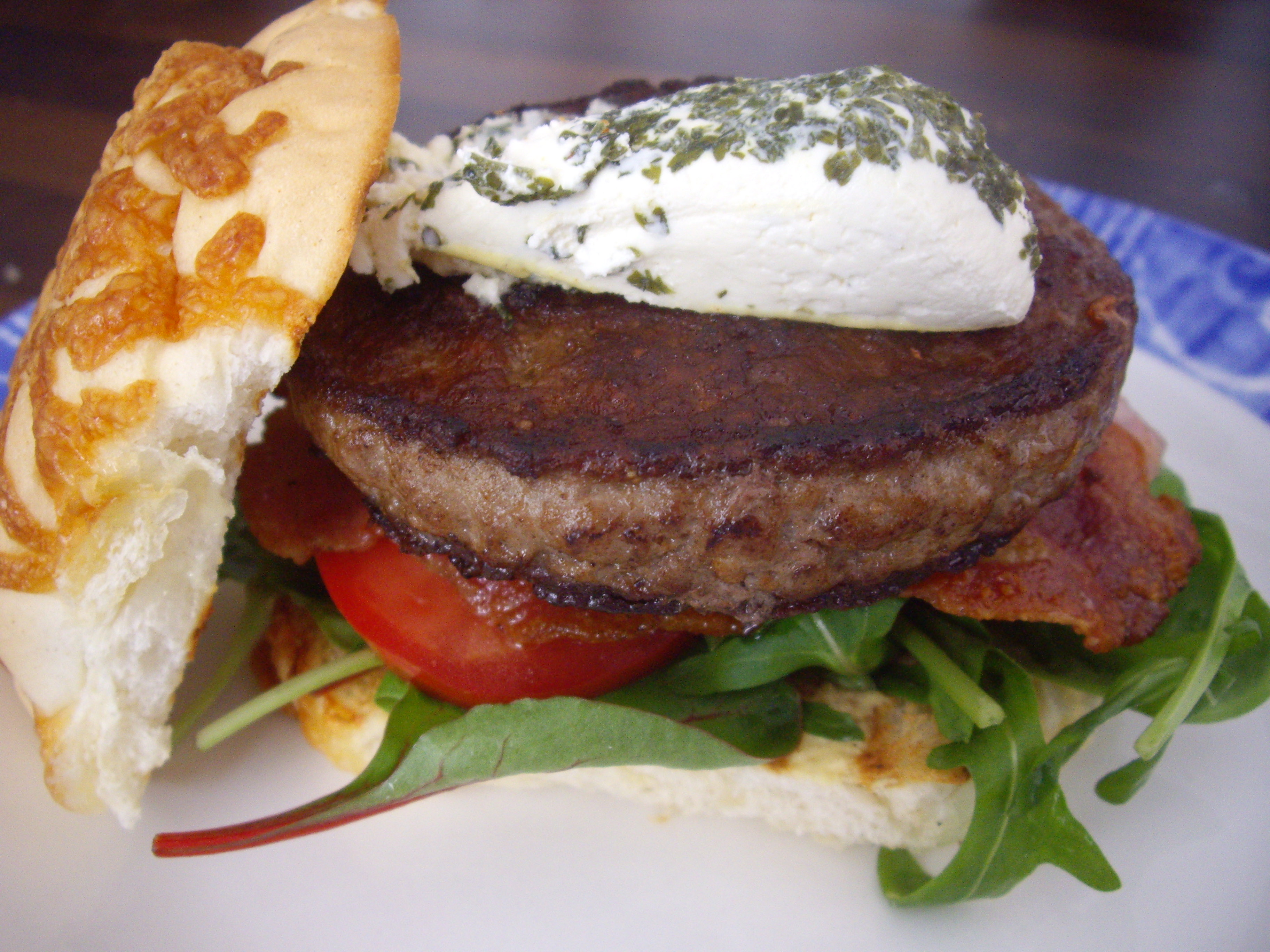
I love eating different things and trying new dishes.  However, I can’t resist a good burger.  When I choose to have a burger, I make a real effort to make it interesting.  My view is in for a penny, in for a pound.  Yesterday was no different.  I whacked a burger in the frying pan, threw in some back bacon, and added some sliced onion rings too.  When the burger was cooked and the bacon crispy, I began piling everything onto a toasted cheese-topped bun.  Below is a list of how it all stacked up (top to bottom).

Really fresh leaves and tomatoes are important.

Top of cheese-topped bun

Le Roule

Beef patty

Fried onions

Crispy bacon

Sliced vine tomatoes

Baby lettuce leaves

Dijon mustard

Bottom of bun

No revelations here, but man, it was a real treat.  Le Roule and bacon burgers rule.

Honey & cinnamon smoothie

I’ve never liked the taste of milk.  Even as a youngster, I was one of the children who did not have milk at school and though I tried desperately to like it, my opinion did not change over the years.

Chocolate milk is a different story altogether.  Early memories of drinking it through a straw dropped into the triangular hole made by my mum’s tin opener remain with me to this day.  There was a rabbit on the front of the tin and complete contentment in my whole being.  Chocolate milk soothes me in a way that very few other food stuffs do.  Super cold, super sweet and super refreshing.  It evokes memories of being in my mum’s kitchen in Greece and it comforts me no end.  Childish, yes, but it has benefits too, since I need my share of calcium and protein too.  Okay, the sugar doesn’t benefit my teeth, but ask me if I’m worried.

Chocolate milk may be my go-to drink at any time of day, but after years of hitting the stuff hard, my eyes began to wander.  I needed a new sweet milky drink.  Drinking Carnation condensed milk wasn’t gonna be sustainable.  Thankfully, upon moving to Hong Kong, I found a wonderful smoothie joint that had an endless menu of smoothies with all kinds of exciting ingredients and combinations.  I quickly became hooked on these fruit-filled blends of health and goodness.  It wasn’t long before I’d purchased my own blender, partly so that I could experiment, and largely because my wife could see that I was spending a silly amount of money on what was essentially ice and mushy fruit.

I’m not the biggest fan of fruit so blending them up with other tasty ingredients is ideal for me.  After moving back to England, the blender went into the back of the cupboard.  “Next to the toastie machine?” I hear you ask.  No!  I make toasties all the time!  What’s the matter with you?
Now I’m back in full blender mode and throwing in all sorts to appease my monstrous desire for tasty fun.  I went through a phase of adding milk, chocolate milk powder and a slice of cherry pie before blending it all.  I’ve been going through packets of Oreos in recent weeks as they have found themselves thrown into the milky depths of my blender.  Today, I tried something a little more healthy.  I blended 450ml semi-skimmed milk, 5 tablespoons of honey flavoured Greek style yoghurt, half a teaspoon of cinnamon and a tablespoon of Greek mountain honey.  It was delicious, but not sugary enough for me, so I threw in a load of Demerara sugar to make it hit the spot.  I’ll be trying lot’s of different things over the next few weeks, but if anyone has any suggestions, let me know and I’ll give ’em a whirl!

There seems to be a theme here…

Mushroom & black pudding ravioli.

Almost two years ago, my mum came round for dinner and I made a small starter of wild mushroom ravioli served with a little rocket and some crispy slices of black pudding. The combination of black pudding and mushrooms worked well and since then, lots of different ideas have been floating around in my subconscious.

The success of my first pasta attempts emboldened me enough to resurrect this flavour combination and see if I could make it work as a whole dish. Here is my recipe and a few photographs of that successful experiment. Is it something you’d eat?

Mushroom & black pudding ravioli with creamy mediterranean herb sauce

For the pasta-

300g ’00’ flour

3 eggs

1 tablespoon olive oil

2 tsp salt

For the filling-

250g chestnut mushrooms (sliced)

150g Bury black pudding

3 tablespoons olive oil

2 tsp salt

For the sauce-

150ml double cream

large nob of butter

small bunch of thyme

small bunch of oregano

salt & pepper

I combined the ingredients for the pasta in a bowl and mix to a soft dough.  I then kneaded the dough for ten minutes until it was smooth and silky.  Then it was time to chill the dough by wrapping it well in clingfilm and putting it into the fridge for an hour.  I fried the mushrooms on a very high heat until they began to brown and set them aside.  Then I sliced the black pudding thinly and fried it at an equally high temperature, making sure to break it up and cook it until it was crispy.  Once it had cooled, I blitzed it with the mushrooms using a hand blender.  A little seasoning finished the filling.

Back to the pasta.  I don’t have a pasta machine.  I may well invest.  Apart from great results and inner satisfaction, rolling your own pasta also provides you with a workout.  Slightly out of breath (but no less happy), I made sure that I could see through the pasta before stopping.  At this point, I spooned the filling onto the sheet of pasta at regular intervals.  I used a pastry brush to wet all around the filling.  This would act as glue when the top sheet was laid upon it.

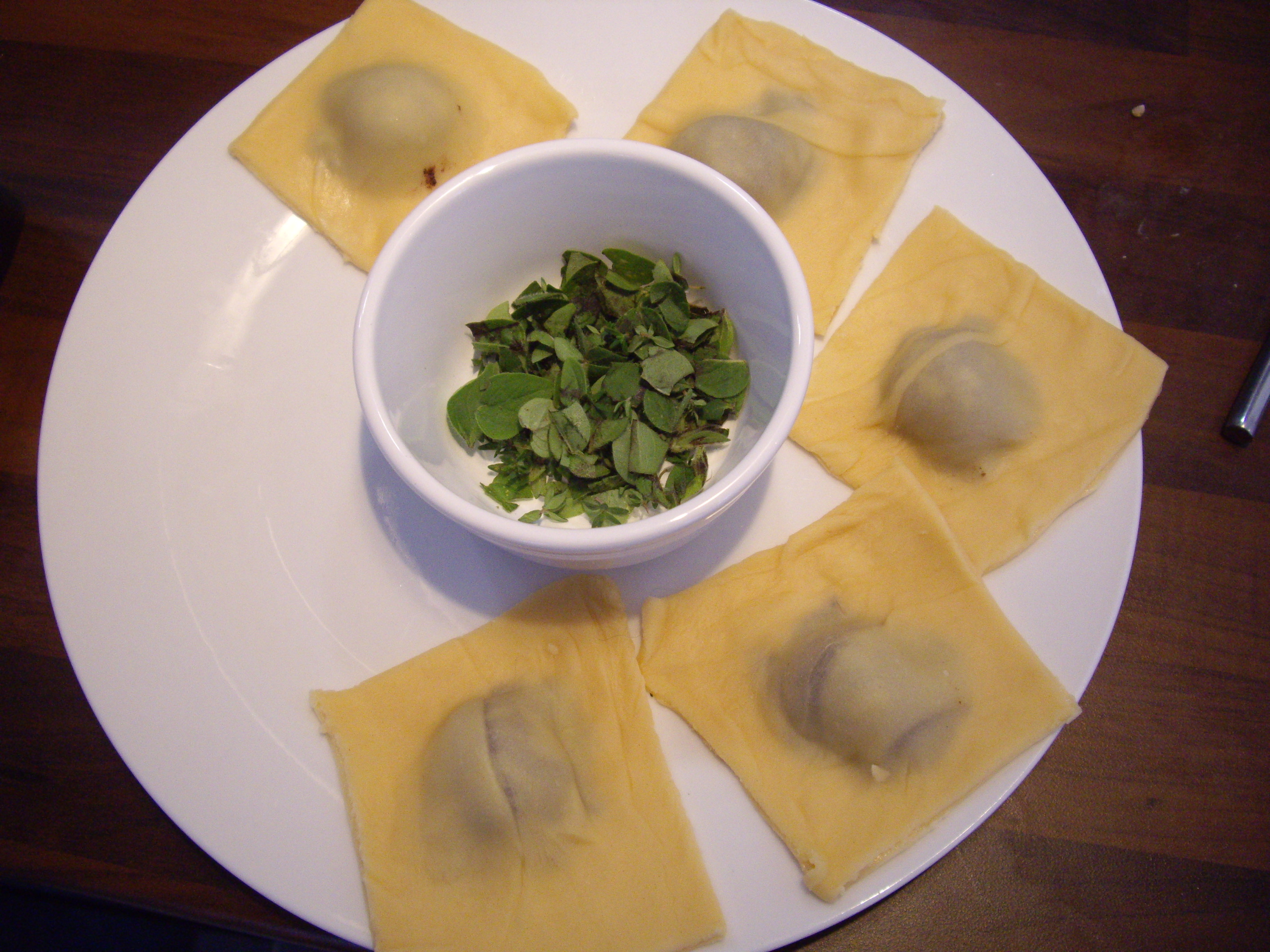
Ravioli waiting to be cut.

The hardest part was laying the top sheet over the filling and getting rid of all the air in between.  This is where the water helped to bind the pasta.  Pressing firmly around the filling, I pushed as much of the air out of the sides as possible.  This would prevent the trapped air expanding in the pan and bursting the ravioli.  Admittedly, as a novice, I hated this part of the process and was extremely relieved when it was accomplished.  I hadn’t done a great job of shaping the pasta sheets into regular shapes.  This made cutting a little tricky.  All went well, though one thing I’ll remember for next time is to leave less pasta between the filling and the edge of the ravioli.  Frightened of the ravioli not being secure, I left far too much pasta around the edges.

Fresh ravioli and some herbs from the garden.

I started the sauce a few minutes before dropping the ravioli into a pan of boiling water.  Loads of butter into a milk pan.  Chopped fresh oregano and thyme straight into the foaming butter.  Then the double cream with brisk stirring and a little salt and pepper.  More butter if necessary and then a gentle simmer.

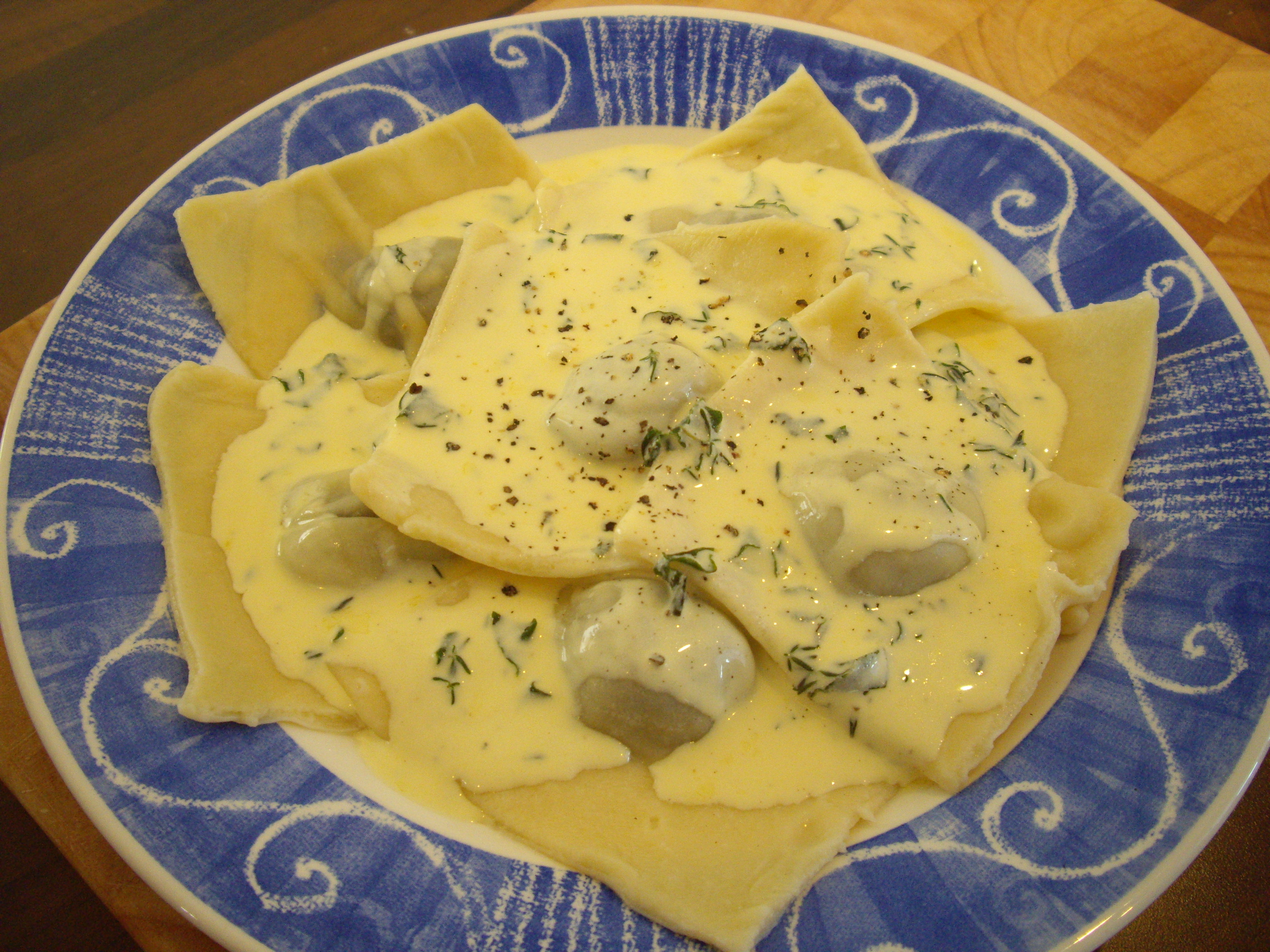
The ravioli needs three or four minutes of cooking once it has risen to the surface of the water.  In terms of taste, the flavours all worked well and the creamy sauce softened what is quite a bold pasta dish.  In retrospect, I would serve two or three ravioli with this sauce as a starter.  It was way too filling as a main.  It’s a really distinctive dish and one that I’m proud of.  It’s certainly a great way to enjoy Bury’s best in a unique format.

A lovely dish, but so filling.

Pasta Master.

First of all, no, I’m not a master of pasta in any sense of the phrase.  I’ve eaten plenty and in the scheme of things, most of it has been poor.  I’ve not visited Italy, but that doesn’t stop me realising the difference between good quality pasta and the stuff I’ve boiled up & thrown in a bowl over the years.  Rubbery, flavorless and less than appealing.  Buying fresh pasta has been a regular choice in recent years since supermarkets have seen the demand for tasty and more authentic pasta.  Given the range available and the convenience, is there reason enough to crack some eggs into a bowl with some flour?  This pasta novice says, “Yes and yes!”

Did someone say rustic?

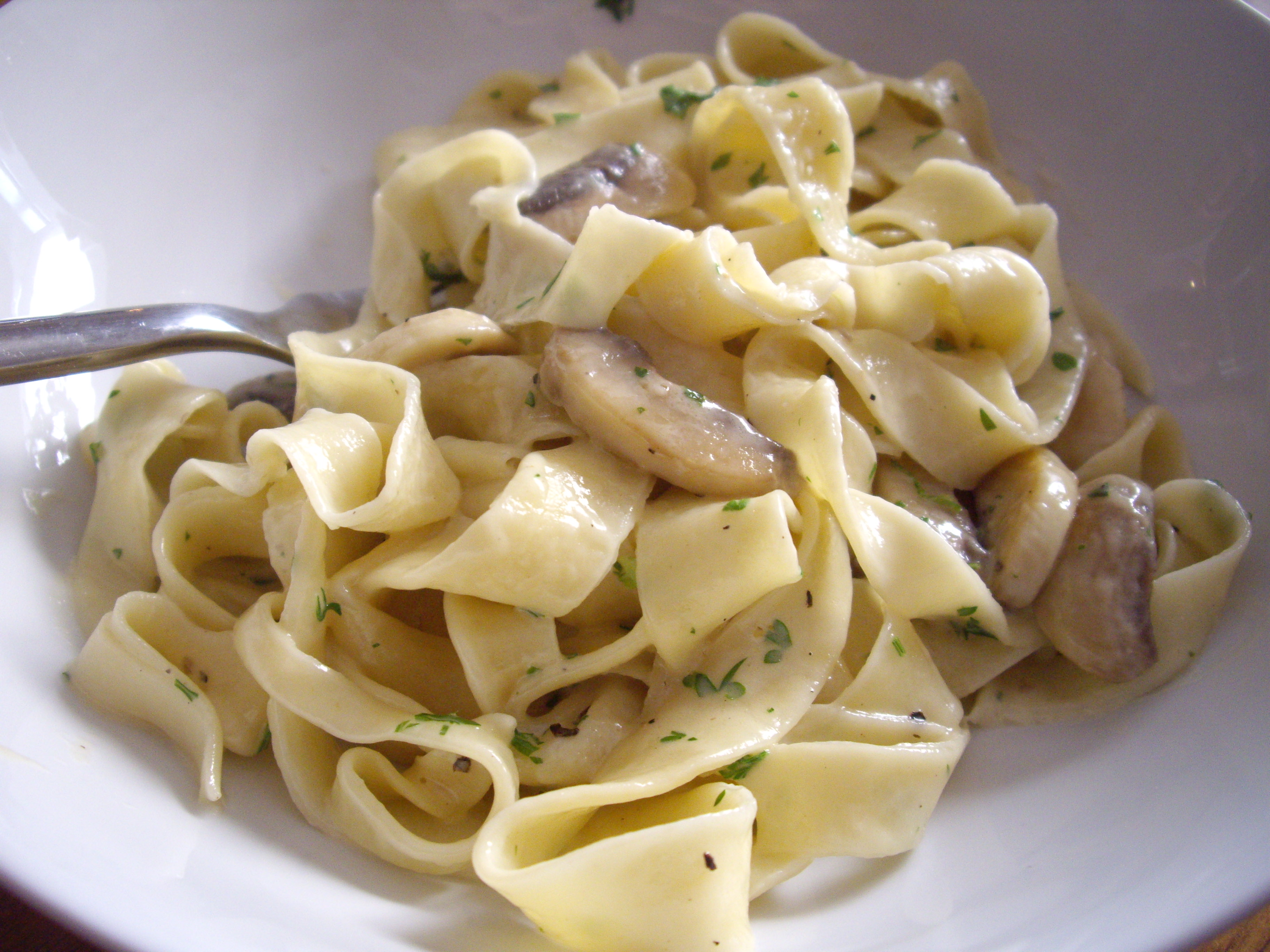
Having invited my mum round for something to eat last week, I decided to try my hand at some pasta and get her opinion on it.  A gamble, since we were both hungry and I’d never done it before.  I found the kneading to be very satisfying in that I could actually see and feel the change in the dough.  I cut some rather rustic ribbons once I’d rolled out the pasta.  I don’t have a machine so it was time-consuming.  The photos below should give you some idea of how things went.  An incredible sense of pride and achievement flowed through me upon serving a successful plate of homemade pasta in a creamy sauce.  Is that really all there is to it?  Well, no.  There’s endless scope for variation, experimentation and of course the development of pasta making skills beyond a few roughly cut ribbons of hand-rolled dough.

That actually looks the way it should!

With that in mind, I decided to make some pasta that was a little less conventional.  Mushroom and black pudding ravioli.

A light and creamy mushroom sauce was perfect.

Don’t risk it, brisket.

I’m not sure if it’s the value for money or the wonderful results that are currently making brisket my go-to cut of beef.  There’s something about brisket that screams, “Weekend treat!” and I guess it’s the amount of cooking time involved.

I first used brisket in a Tuscan recipe from Jill Norman.  The beef was slowly braised for three hours in a combination of red wine, carrots, celery and tomatoes to achieve a rustic and altogether delicious dish.  Despite the success of that first attempt, I wasn’t too excited about the recipe itself because of how predictable it was.  “Next time,” I thought, “I’ll do something very different.”

The wind began to drive against the windows and the sunny morning disappeared behind a gloomy veil of the North Wests’ finest rain.  It was time to bring the beef up to room temperature.  My father-in-law is a massive fan of beef with ginger and spring onions and he makes a bee-line for the local Chinese as soon as he arrives from France.  It’s the combination of tender beef and serious amounts of ginger that really make it for him.  I thought that perhaps brisket would lend itself to these Asian flavours if it was cooked for long enough and given strong ingredients.

Brisket with ginger and spring onions

1-1.5kg rolled beef brisket

12 spring onions (chopped)

2 medium white onions quartered

3 stalks lemon grass (finely chopped)

Copious amounts of fresh root ginger (finely chopped)

2 large cloves garlic (1 chopped, 1 crushed)

1 glass white wine

1 red chilli

butter

olive oil

pepper

salt

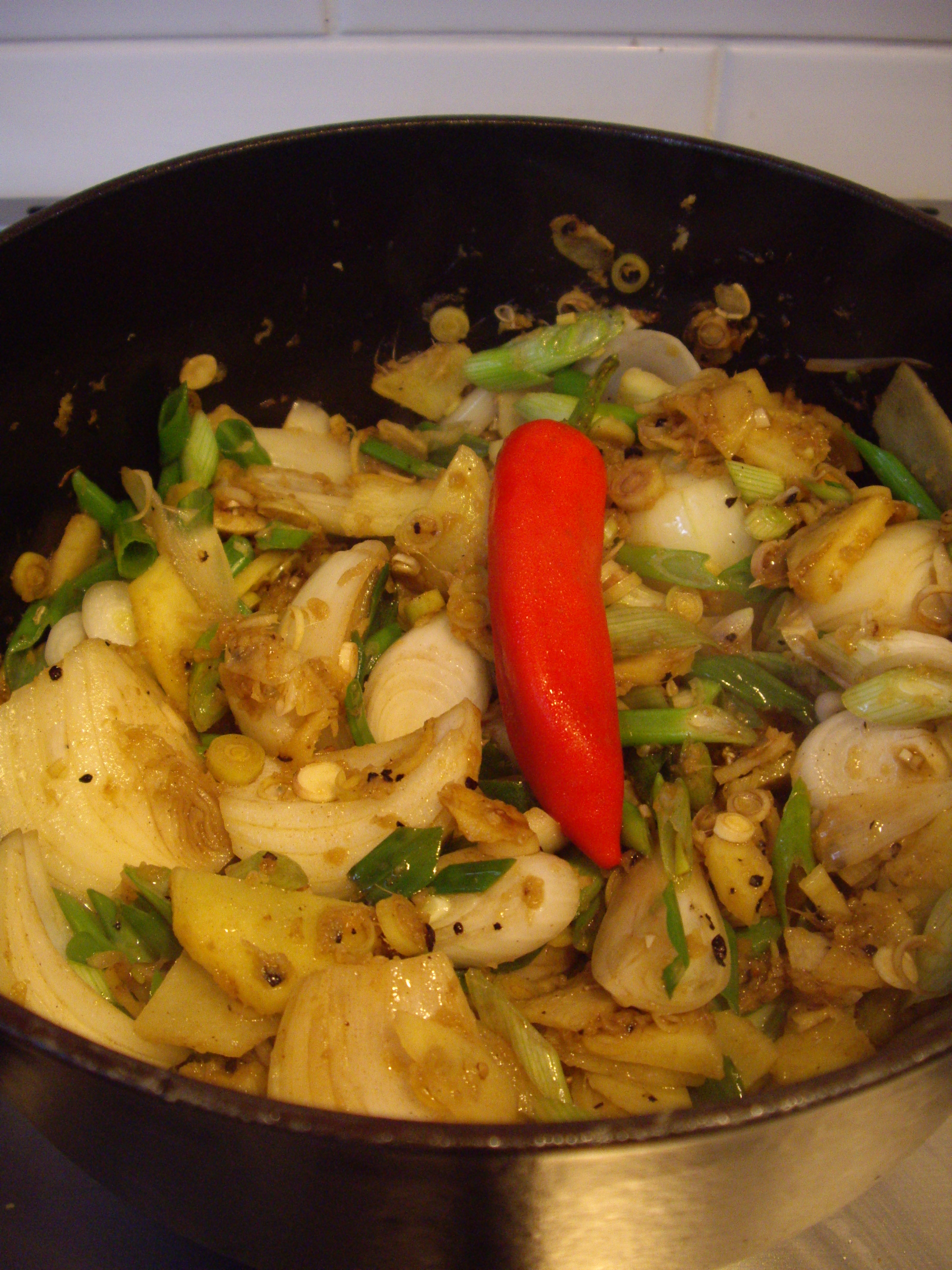
How much ginger? That much.

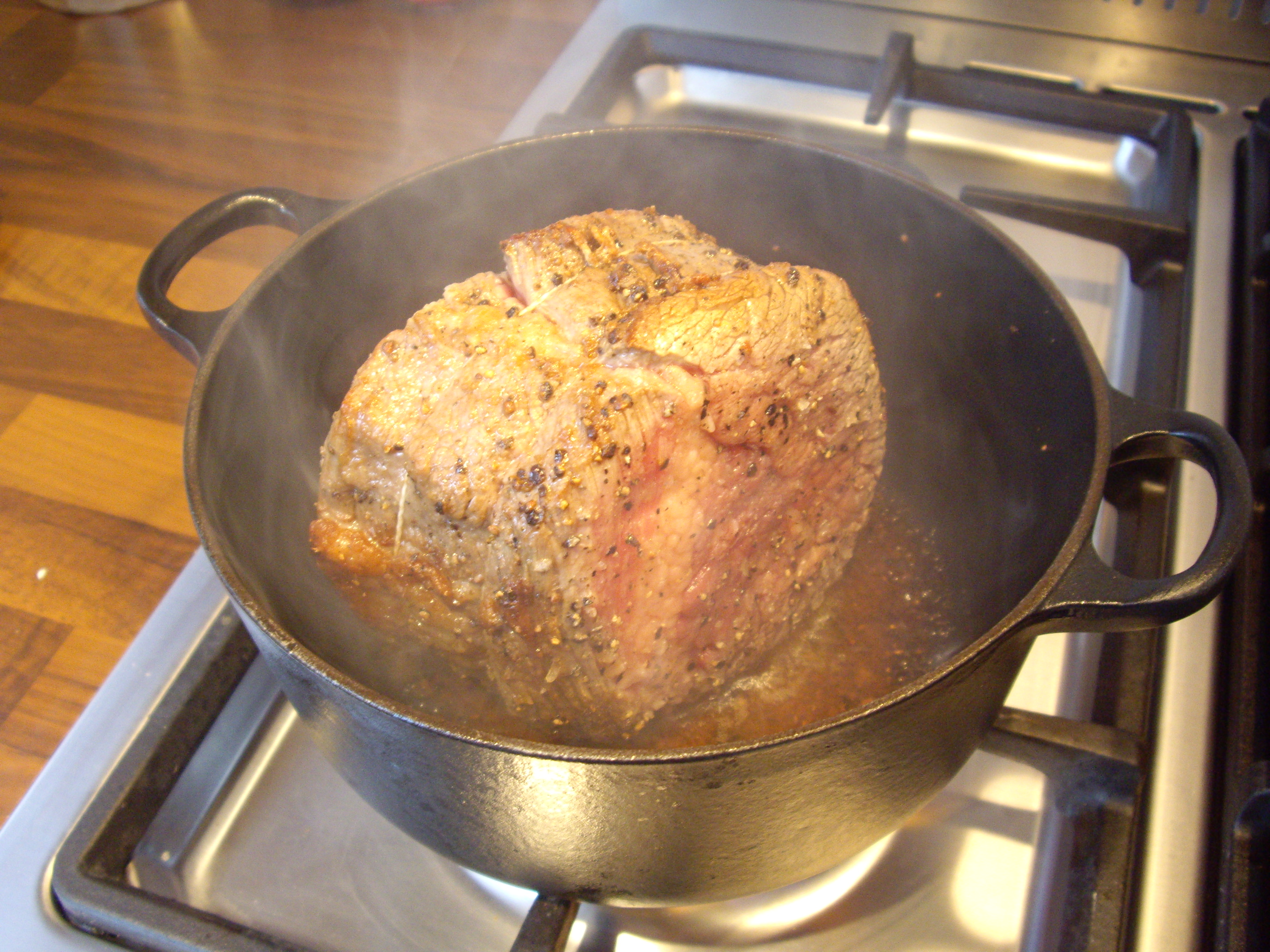
I started by rolling the brisket in a mixture of sea salt flakes and cracked black pepper.  Once coated, I threw a knob of butter into a 20cm casserole with a little oil and browned the meat on all sides on a high heat.  I removed the meat and prepared the vegetables.  I got half way through grating the ginger and decided to chop the rest.  The rain had stopped and I needed to walk the dog.  I added all of the vegetables including the chilli which I left whole.  These cooked gently on a low heat until soft, but not brown.  I added a little hot water if the mix got too dry.

Butter, oil and a satisfying sizzle.

A good stir and it was time to return the meat to the casserole.  At this point, I added the wine and then topped it up with water until the meat was almost covered, but not quite.  A hard boil for 2 minutes got things going before I turned the heat down to the lowest setting and put the lid on.  It’s important that the meat fits snugly into whatever you cook it in and that the lid is on firmly.  You don’t want the liquid to reduce and leave you with tough meat sitting in a salty puddle.

Lots of flavour.

That was it!  Done.  I just had to find something to do for three hours.  I turned the meat over occasionally and I basted it when I got restless, but it really does take care of itself.  Today I used a cut weighing 846g so it only needed two hours of cooking to be really tender.  I rested it for twenty minutes before carving into thick slices.

The beef has a rest next to the spring greens.

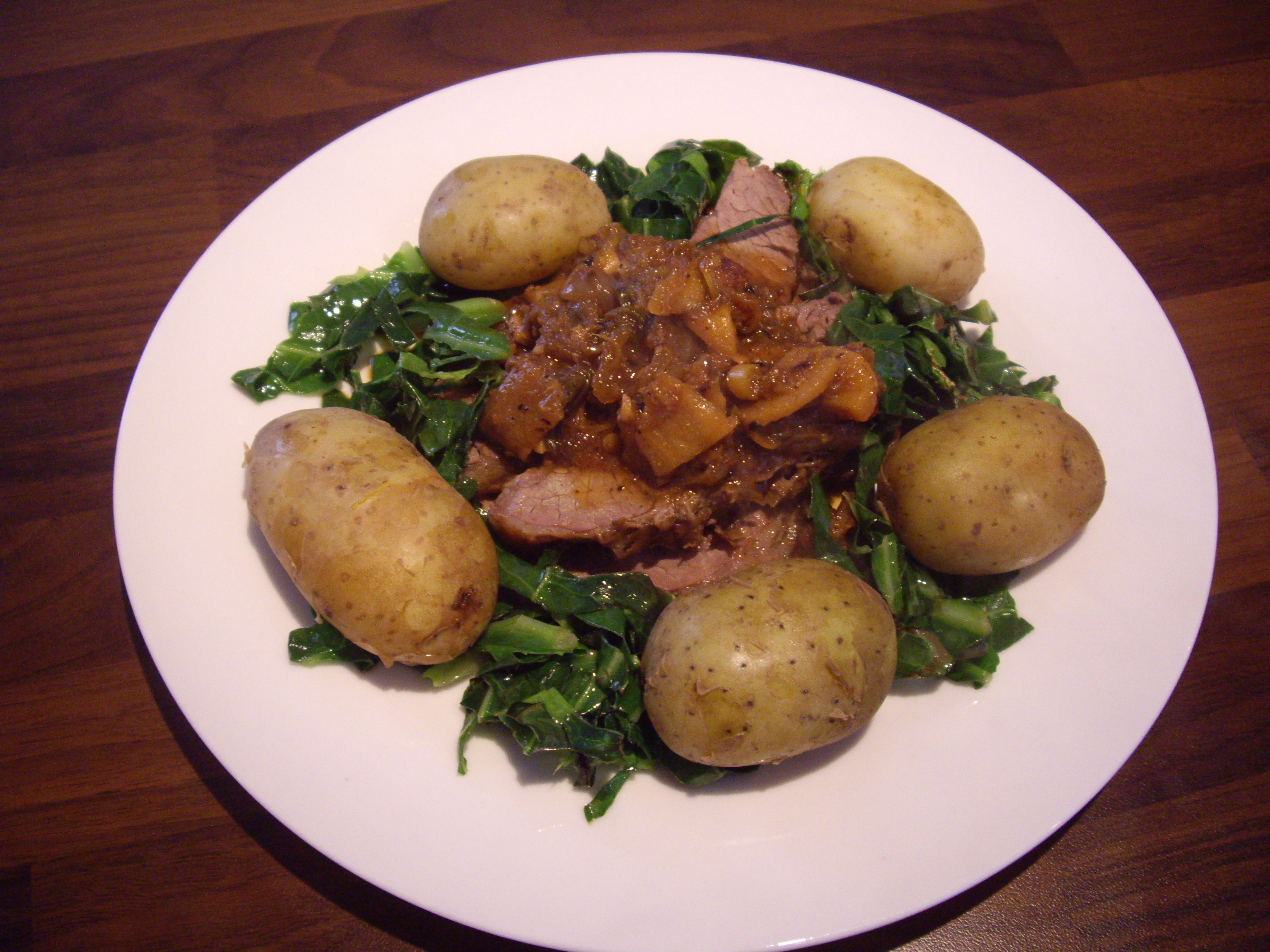
Seasonal food is always a treat and this was no exception.  I’d already used plenty of spring onions and to serve the beef I boiled some Jersey Royals and quickly fried some spring greens in a little butter.  Since the sauce was so punchy, I didn’t need any other strong flavours on the plate.  A nice glass of the same white that went into the beef sauce and you’re laughing!  I can’t wait to make this for my father-in-law.  C’est magnifique!

Beef brisket with ginger & spring onions served with Jersey Royals and spring greens.

Outlandish claims of moisture.

I guess it depends on what you want from food as to whether or not you rate a recipe highly.  In terms of carrot cake, and perhaps cake in general, people seem to respond well to high levels of moisture.  If a cake is dry and mealy, it is deemed a failure.  Shop bought cakes tend to be dry if they have been on the shelf for some time.  The addition of other ingredients to retain that all-important quality are not always welcome.  For those wishing to bake their own cakes, it’s always important to make sure that there is a good texture without sacrificing the structure of the cake itself.  Nobody wants a pile of crumbs, no matter how much sugar is in there.

What I’ve found with recipes that have ‘moist’ in the title or include an introduction that champions the moisture content, is that they often contain an amount of sour cream, creme fraiche or even buttermilk.  Indeed, there are plenty of good brownie recipes that include a good dollop of sour cream.  The carrot cake recipe that I tried last night is no exception.  However, sour cream and creme fraiche were missing from my fridge when the carrot cake urge took me.  I had to think on my feet.  The results were interesting.  Well, that is if you find the outcome of baking a carrot cake interesting.

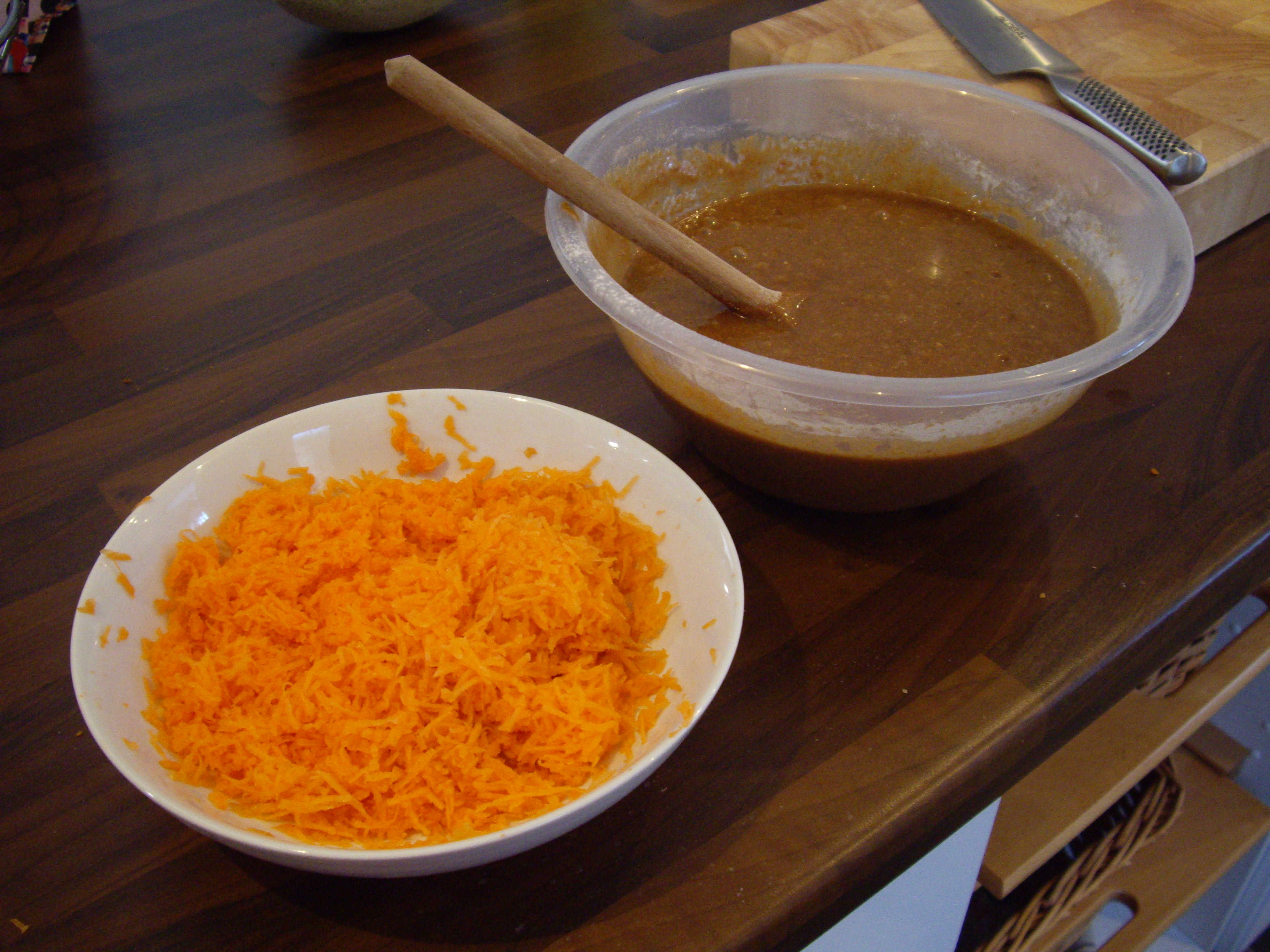
Grated carrots ready to go into the batter.

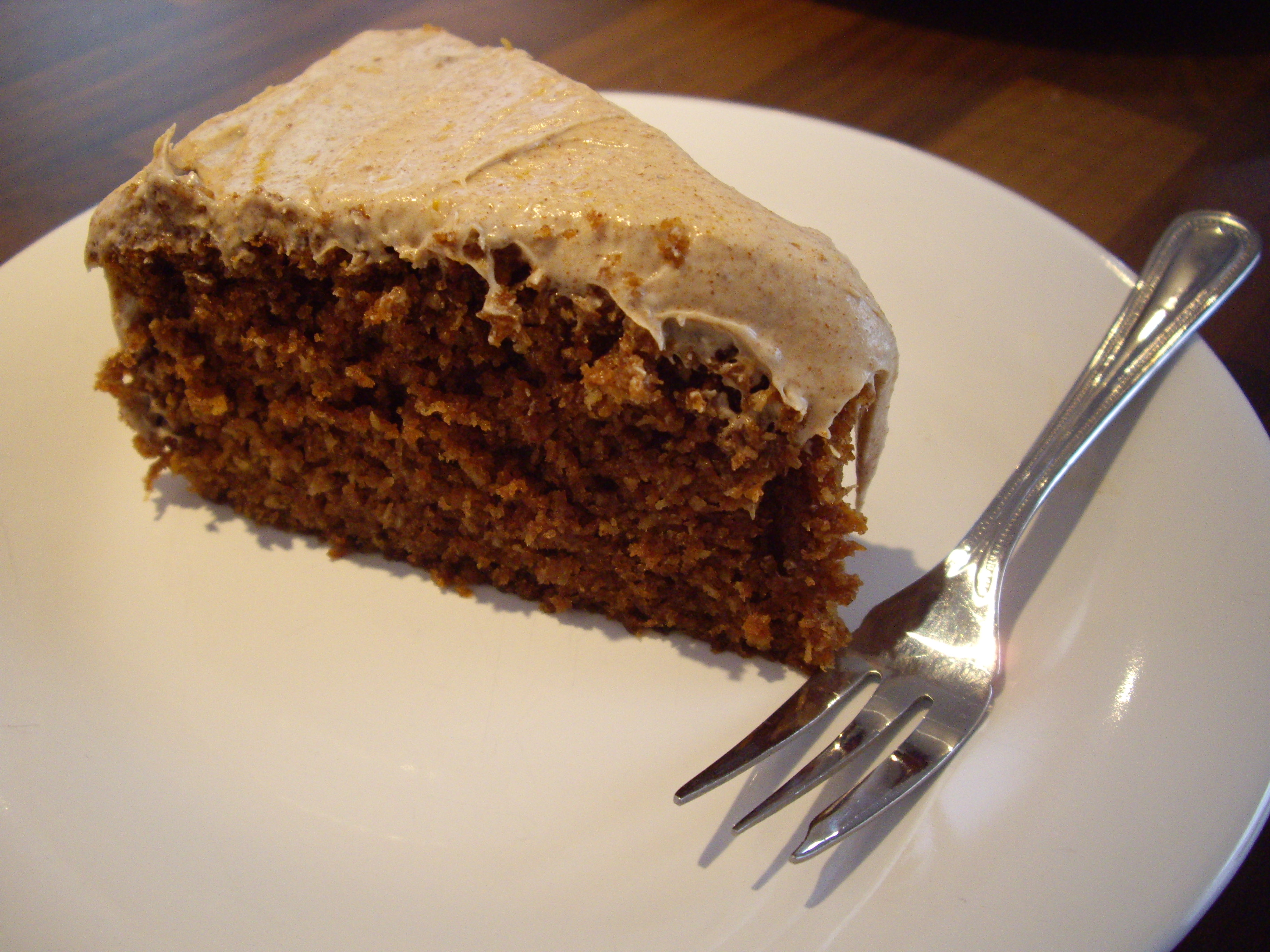
Plenty of nutmeg, cinnamon and even desiccated coconut went into this version.  I added some lavender water after steeping a fresh lavender bud in boiling water for 10 minutes.  It was a nice background flavour, but I don’t think it’s easy to detect.  The lack of creme fraiche didn’t cause too much of a problem.  I didn’t want to leave out that element since it would provide a lot of the softness in the texture of the cake.  I had some Greek style yoghurt in the fridge and put in a couple of table spoons to substitute.  Don’t laugh!  It was coconut flavour so I figured I could get away with it.  The gamble paid off.  The cake cooled and revealed itself to be extremely moist.  Any more, and the cake would be too delicate to cut and serve.  The topping for the cake was a last-minute throw together.  The original recipe called for mascarpone, but again, I didn’t have it in.  Philadelphia to the rescue.  A table-spoon mixed with plenty of double cream and icing sugar did the trick.  I finished it off with cinnamon and some grated lemon zest.  Not too shabby.  I was very pleased with it.

The last minute topping did the trick. I'm not entirely convinced that I can close the case on the search for the perfect carrot cake. This one is certainly soft, moist and full of flavours. I'm going to keep experimenting until I hit the jackpot. This one was very close indeed. I'll put the recipe up soon and see what you think of it. Greedy slice.

This came close to being perfect.

Cheeky little paella

Passion, history and honour bubble and swell in the paella debate.  I don’t wish to enter this arena, but I feel that I may have no choice in the matter.  My paella, and it is my paella, has a lot of ingredients, takes a fair amount of preparation and is neither traditional nor groundbreaking.  “Why make it, then?” I hear you cry.  It’s delicious.  The flavours give you a gentle slapping around your chops and make you beg for more.

I started cooking this as a way to eat more of the things I love.  I include peas and Chorizo, prawns, lemon juice, parsley, olive oil and garlic.  Lots of garlic.  In fact, I use so much garlic that some would find it overpowering.  However, this is something you’ve got complete control over.  I just feel great after eating garlic.  It doesn’t make you popular, but hey.

Arborio rice is great to cook with and I use it to get a nice texture in this paella.  Again, I’m going with what I like and what’s available.  There comes that magical moment when I realise that I have all the ingredients that I need to make paella.  When the moment arrives, I jump into action so that I have time to enjoy preparing it.  The quantities change each time, so I’ll simply recount the events of yesterday that led to this hearty and comforting dish.  Valencian?  Nowhere near, but I love it.

Cheeky paella

250g Arborio rice

900ml strong chicken stock

1 tin garden peas

200g raw peeled prawns

150g Chorizo (chopped)

1 onion (finely chopped)

6 cloves garlic (finely chopped)

1 tsp smoked paprika

juice of 1 lemon

1 tomato (chopped)

2 tsp dried oregano

2 tsp fresh oregano (chopped)

3 tsp fresh parsley (chopped)

Plenty of olive oil

Pepper

A little butter

I began, as always, by heating olive oil in a really wide frying pan.  The oil should cover the bottom of the pan.  I added a little butter at this point and then tossed the rice until coated and glistening.  I let it cook for a few minutes and gently stirred the rice once or twice.  In went the onion until just cooked and then all of the garlic.  All of it, I tell you!  At this point, it’s a little balancing act.  You don’t want the garlic to burn, the onion to brown, or the rice to stick to the pan.  When the garlic is just cooked, add enough stock to almost cover the rice and stir gently.  Throw in the paprika and the dried oregano.

In the past, I’ve cooked the onion at the same time as the Chorizo and then added the rice to the orange-coloured oil.  This works quite well, but I don’t really want the Chorizo to be cooked for so long.  I prefer it to retain most of the flavour.  Onwards!  I continued adding stock each time the rice absorbed it.  Since my wife is heavily pregnant, no open bottles of wine were on hand to add a dash of fun to the rice.  Still, a good squeeze of lemon helped.  I added the Chorizo once all of the stock had been used and stirred in the parsley and fresh oregano.  I’ve been growing these in my garden and this year the parsley has gone crazy.  It’s got a great flavour and if you’ve put as much garlic in as I did, you need it!

So what was left on the work top?  Some prawns, peas and pepper.  All the ingredients were doing their thing.  By adding butter at this stage, I would get a nice, nutty socarrat (the crunchy base of the paella).  The peas went in next, though I was careful not to stir the bottom of the pan and risk disturbing the rice that would gently brown.  A little pepper next.  I always find it hard to restrain myself when it comes to grinding pepper.  Too much just isn’t enough for me.  Finally, I laid the prawns on top and spooned  hot rice over them to cook.  More lemon juice.  Quick taste.  Finished.  Once the prawns were pink and the bottom of the pan was nicely browned, it was time to serve.  More butter or olive oil can loosen up the paella if it is too dry upon serving.  I didn’t need to add salt because of the stock and Chorizo, but it’s better to check the seasoning before you take the paella off the heat.

A few lemon wedges and some more fresh parsley help to garnish this hearty bowl of comfort.